How American Music Actually Shaped the 20th Century
By Helen Poole on October 15, 2026
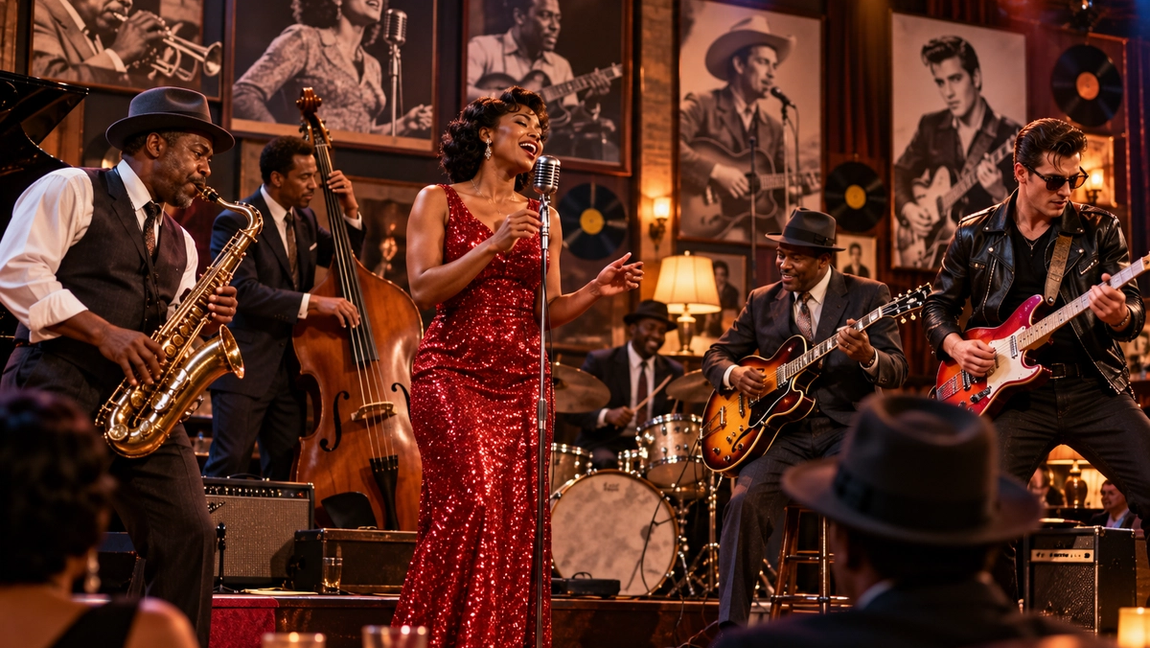
It is difficult to tell the story of the twentieth century without hearing American music somewhere in the background.
Jazz traveled from Black communities in New Orleans to clubs in Paris. Blues helped give birth to rock and roll. Gospel shaped soul. Hip-hop emerged from neighborhoods in the Bronx and eventually became a global cultural force. American records, radio stations, movies, television programs, and later music videos carried sounds across borders faster than almost any previous form of culture.
But American music did more than entertain people. It gave communities ways to express experiences that mainstream institutions often ignored. It influenced fashion, language, race relations, youth culture, politics, technology, and ideas about personal freedom.
Some of the most influential American ideas of the twentieth century did not travel through speeches or textbooks.
They traveled through speakers.
The Blues Turned Hardship Into a New Musical Language
Modern American popular music owes an enormous debt to the blues.
Developed largely within Black communities in the American South, the blues drew from African American musical traditions including work songs, spirituals, field hollers, and other forms of expression shaped by the experience of slavery and its aftermath.
Blues musicians transformed experiences of poverty, migration, heartbreak, discrimination, work, love, and survival into music that was intensely personal but widely recognizable.
Artists such as Bessie Smith, Robert Johnson, Muddy Waters, and Howlin’ Wolf helped develop and popularize different forms of the genre.
As millions of Black Americans moved from the rural South to northern and western cities during the Great Migration, the blues moved with them. In cities such as Chicago, musicians amplified the sound with electric guitars and larger bands.
That electrified blues would become one of the foundations of rock and roll.
The influence did not stop there. Elements of blues can be heard throughout jazz, country, soul, R&B, rock, and eventually hip-hop.
One of America’s most important cultural exports began as music created by communities whose experiences were often excluded from the country’s dominant cultural institutions.
Jazz Changed the Sound of Modernity
If the blues gave American music one of its foundations, jazz demonstrated how far that foundation could be stretched.
Jazz emerged primarily from Black musical traditions in New Orleans during the late nineteenth and early twentieth centuries. It combined influences from blues, ragtime, brass-band music, African rhythmic traditions, and other musical forms.
Improvisation became central to the sound.
A jazz performance did not always reproduce a composition exactly as written. Musicians responded to one another, changed melodies, experimented with rhythm, and created something partly new each time.
Louis Armstrong helped revolutionize the role of the solo performer. Duke Ellington expanded the possibilities of jazz composition and orchestration. Later musicians such as Charlie Parker, Dizzy Gillespie, Miles Davis, and John Coltrane repeatedly transformed what jazz could sound like.
Jazz also became international.
European audiences embraced American jazz musicians, and the music became associated with modernity, nightlife, experimentation, and cultural freedom.
During the Cold War, the U.S. government even sponsored international tours by prominent jazz musicians as a form of cultural diplomacy.
There was an obvious contradiction. America was presenting Black musicians as symbols of American freedom abroad while Black Americans continued facing segregation and discrimination at home.
The musicians themselves were well aware of it.
Country Music Told Another American Story
While blues and jazz were transforming cities, another musical tradition was developing from the folk cultures of rural America.
Country music grew from a mixture of influences, including British and Irish ballads, African American musical traditions, gospel, blues, and the music of working-class communities throughout the South and Appalachia.
Early commercial recordings helped turn local traditions into a national industry.
Artists such as Jimmie Rodgers and the Carter Family became foundational figures, while later performers including Hank Williams, Patsy Cline, Johnny Cash, Dolly Parton, and Willie Nelson expanded the genre’s audience and possibilities.
Country songs often centered on everyday experiences: family, work, religion, poverty, loneliness, drinking, love, migration, and home.
That storytelling tradition became one of the genre’s defining strengths.
Country music also demonstrates how misleading rigid musical categories can be. American genres constantly borrowed from one another. Black musicians influenced country music, country musicians borrowed from blues, gospel shaped both, and commercial recording companies later marketed these interconnected traditions to different audiences.
The musical boundaries often looked clearer on store shelves than they did in real life.
Rock and Roll Changed What It Meant to Be Young
By the 1950s, American teenagers were becoming a powerful cultural and economic group.
Rock and roll gave them a soundtrack.
The genre developed heavily from African American rhythm and blues, while also incorporating country, gospel, and other influences.
Artists such as Chuck Berry, Little Richard, Fats Domino, and Sister Rosetta Tharpe were central to the sound that developed into rock and roll. Elvis Presley later became its biggest mainstream star.
The music frightened plenty of adults.
It was loud, physical, rebellious, and closely connected with Black musical traditions at a time when much of American society remained racially segregated.
Teenagers loved it.
Rock and roll helped establish youth culture as a major commercial force. Young people increasingly had their own music, fashions, dances, celebrities, and language.
By the 1960s, rock had expanded into countless directions. It became connected with counterculture, political protest, experimentation, and changing attitudes toward sexuality and authority.
American rock also traveled internationally and then returned transformed. British bands heavily influenced by American blues and rock and roll became enormously successful in the United States, creating a cultural exchange that reshaped popular music on both sides of the Atlantic.
Gospel and Soul Made Emotion Impossible to Ignore
Some of the most powerful voices in twentieth-century American popular music came from the Black church.
Gospel traditions emphasized powerful vocals, call-and-response, emotional intensity, and communal participation.
Those sounds moved into secular popular music.
Artists including Ray Charles, Sam Cooke, Aretha Franklin, and many others drew heavily from gospel traditions while helping create and popularize soul music.
Soul became closely associated with Black cultural identity during the civil rights era.
Songs could express romantic love while also carrying wider meanings about dignity, freedom, pride, and belonging.
Aretha Franklin’s version of “Respect,” for example, became far more than a successful recording. It resonated with demands for racial equality and women’s independence.
Music did not need to contain an explicit political speech to become political.
Sometimes the way someone sang a single word could capture what millions of people were feeling.
Music Became Part of Protest
Throughout the twentieth century, American movements for social change used music to create solidarity.
During the civil rights movement, activists adapted spirituals and gospel songs into freedom songs that could be sung during marches, meetings, demonstrations, and even arrests.
“We Shall Overcome” became one of the movement’s best-known anthems.
Folk musicians including Pete Seeger, Joan Baez, and Bob Dylan became associated with political and social movements of the 1950s and 1960s. Songs addressed civil rights, war, inequality, and political authority.
Later, music became deeply connected with opposition to the Vietnam War.
The relationship between music and politics was not always straightforward. Artists disagreed with one another, audiences interpreted songs differently, and commercial success could transform rebellious music into profitable entertainment.
Still, music gave political movements something speeches could not always provide.
People could sing together.
That could turn a crowd of individuals into a community.
Disco Changed Nightlife and Dance Culture
Disco is sometimes remembered as glitter, dance floors, and an unfortunate amount of polyester.
Its history is much more interesting.
The genre developed significantly within Black, Latino, and LGBTQ+ nightlife communities in cities such as New York during the 1970s.
Dance clubs created spaces where people who faced discrimination elsewhere could gather, experiment with identity, and build their own social worlds.
DJs became increasingly important because they controlled the continuous flow of music across the night.
That changed how recorded music was experienced.
The extended dance mix, club sound systems, remix culture, and the growing creative role of DJs would influence electronic dance music and hip-hop.
Disco eventually became a massive commercial phenomenon, leading to a backlash at the end of the 1970s.
But the culture surrounding it never really disappeared.
Modern nightlife still operates inside a world disco helped create.
Hip-Hop Turned the City Into an Instrument
In the 1970s, another cultural revolution was developing in New York City.
Hip-hop emerged primarily from Black and Latino communities in the Bronx during a period when many neighborhoods were experiencing economic decline, disinvestment, housing problems, and violence.
Young people created something new from what was available.
DJs such as Kool Herc extended instrumental breaks from records so dancers could keep moving. MCs began speaking rhythmically over those beats. Turntables became instruments. Sampling eventually allowed producers to take fragments of existing recordings and transform them into new compositions.
Graffiti and breakdancing developed alongside the music as elements of the broader hip-hop culture.
Rap gave artists a way to describe urban life directly.
Songs could be funny, competitive, political, autobiographical, aggressive, experimental, or all of those things at once.
By the end of the twentieth century, hip-hop had moved from neighborhood parties to becoming one of the most influential forms of popular culture on the planet.
Words, clothing, production styles, dances, and attitudes that originated in American neighborhoods were being reproduced thousands of miles away.
Technology Changed What Music Could Do
The history of American music is also a history of technology.
Records allowed performances to travel without musicians. Radio brought the same song into millions of homes. Electric amplification changed guitars and live performances. Television transformed musicians into visual celebrities.
Portable radios and record players made music increasingly personal.
Then came cassette tapes, synthesizers, drum machines, compact discs, music videos, and digital recording.
Each technological shift changed not only how people listened but also what musicians created.
The electric guitar helped make rock possible. Turntables helped create hip-hop. Synthesizers transformed pop, funk, electronic music, and R&B. MTV made image almost as important as sound for a generation of performers.
By the end of the century, digital technology was beginning to disrupt the recording industry itself.
Music had gone from something people primarily experienced live to something that could follow them almost anywhere.
American Music Became Global Culture
Perhaps the most remarkable thing about twentieth-century American music is how far it traveled.
Jazz clubs appeared across Europe and Asia. Rock bands formed almost everywhere. Hip-hop developed local scenes from France and Germany to Japan, Brazil, South Africa, and beyond.
But those cultures did not simply copy America.
They adapted American musical forms to their own languages, politics, traditions, and experiences.
The result was a continuous cultural exchange.
American music influenced the world, and musicians from around the world influenced America in return.
That is why the story is bigger than a list of famous singers or bestselling albums.
The Soundtrack Was Part of the History
American music did not simply document the twentieth century from the sidelines.
It participated in it.
The blues carried the experiences of Black Americans through migration and industrialization. Jazz challenged musical conventions and became an international symbol of modern culture. Country preserved and reinvented rural storytelling traditions. Rock helped define youth rebellion. Soul gave emotional force to an era of civil rights struggle. Disco transformed nightlife. Hip-hop turned neglected urban spaces into centers of cultural innovation.
Again and again, people with limited access to traditional power created music that eventually influenced the people who had it.
That may be the most important part of the story.
Presidents and governments shaped the twentieth century through laws, wars, and institutions.
Musicians shaped how the century felt.
And sometimes, what people heard through the radio, the record player, the club speakers, or their headphones changed them just as much.