The Hidden American Stories That Deserve a Second Look
By Gil Cohen on October 15, 2026
American history is often taught as a sequence of enormous events led by familiar people. The Revolution belongs to Washington and Jefferson, the Civil War to Lincoln and Grant, industrialization to Carnegie and Rockefeller, the civil rights movement to Martin Luther King Jr., and the space race to astronauts whose names became part of national mythology. Those figures deserve their place in history, but focusing on them can create the impression that the American story moved forward through a relatively small collection of famous individuals.
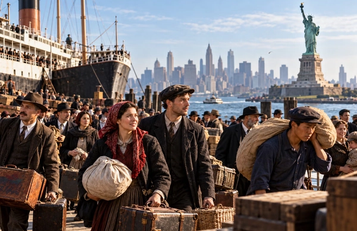
Look slightly beyond the standard timeline and a different country appears. There are communities destroyed by racial violence and later rebuilt, workers whose deaths transformed labor law, immigrants who changed American cities while being told they could never become American, women who performed essential wartime and scientific work before disappearing from popular memory, Native nations that shaped diplomacy long before the United States existed, and ordinary people whose individual acts eventually changed federal law.
These are not obscure stories simply because they were unimportant. Many became obscure because the traditional version of American history had limited space for people who did not occupy the presidency, command armies, or fit comfortably into the national story Americans wanted to tell about themselves.
Giving these stories a second look does not replace familiar American history. It reveals how much was happening around it.
The Great Migration Quietly Remade the United States
Between roughly 1916 and 1970, millions of Black Americans left the South and relocated to cities in the North, Midwest, and West. It was one of the largest internal migrations in American history, yet it can receive surprisingly little attention compared with wars and presidential elections occurring during the same decades.
The people participating in the Great Migration were escaping a South shaped by segregation, racial violence, voter suppression, and limited economic opportunity. Industrial cities offered jobs and possibilities that were difficult to find under Jim Crow, although migrants encountered discrimination in housing, employment, and education in their new communities as well.
Their movement transformed cities including Chicago, Detroit, Cleveland, Philadelphia, New York, and Los Angeles. It changed electoral politics because Black voters gained greater influence in areas where voting rights were more accessible. It transformed labor markets and reshaped neighborhoods.
Its cultural consequences were equally enormous. Blues, jazz, gospel, literature, journalism, visual art, and eventually rhythm and blues, rock and roll, soul, and hip-hop were shaped by communities created or expanded through these migrations.
The Great Migration did not simply move people around the country. It helped create modern American culture.
Black Wall Street Was More Than the Story of Its Destruction
The Tulsa Race Massacre of 1921 has received much greater public attention in recent years, but the story of Tulsa’s Greenwood District deserves attention for what existed before the violence as well as what was destroyed.
Greenwood was home to a prosperous Black community containing businesses, professionals, restaurants, hotels, shops, newspapers, churches, and other institutions. The district became associated with the phrase “Black Wall Street.”
Its prosperity developed within the hostile environment of segregation. Because Black residents were excluded from many white institutions and businesses, money often circulated within the Black community, supporting local entrepreneurs.
In late May and early June 1921, racial violence devastated Greenwood. White mobs attacked the district, killing residents and burning homes and businesses across a large area. The precise death toll remains uncertain.
For decades, the massacre received remarkably little attention in mainstream American education.
But another part of the story is sometimes overlooked even now.
Greenwood rebuilt.
Survivors returned, reopened businesses, reconstructed buildings, and recreated community institutions despite enormous losses and attempts to prevent rebuilding.
Remembering Greenwood only as a place where terrible violence occurred risks turning its residents into victims without recognizing what they built before and afterward.
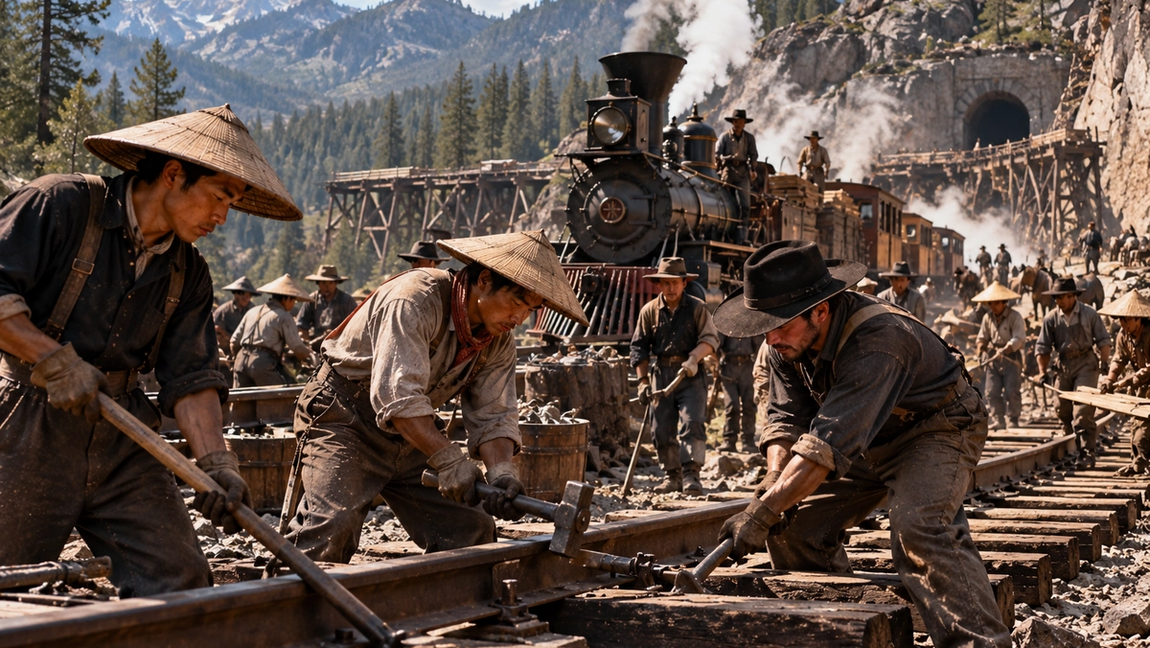
The Chinese Workers Who Helped Build the Transcontinental Railroad
Photographs celebrating the completion of the transcontinental railroad in 1869 became symbols of American technological achievement.
The labor behind that achievement was far more diverse than the photographs suggested.
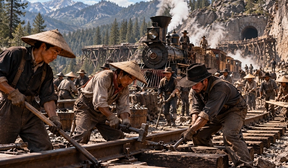
Thousands of Chinese immigrants worked on the Central Pacific Railroad, particularly through the mountains of California and Nevada. They performed physically demanding and dangerous labor, including blasting routes through rock, constructing track across difficult terrain, and working through severe weather.
Their contribution was essential.
Yet Chinese immigrants faced intense discrimination. They were frequently portrayed as permanently foreign and accused of taking jobs from white workers.
Anti-Chinese hostility eventually became national policy through the Chinese Exclusion Act of 1882, which severely restricted Chinese immigration.
The contradiction is striking.
Chinese workers helped construct infrastructure that physically connected the United States while American law increasingly told people like them that they did not belong.
Their labor became part of the national landscape even when their place in the national identity remained contested.
The Triangle Shirtwaist Fire Changed the Meaning of Workplace Safety
On March 25, 1911, a fire broke out inside the Triangle Shirtwaist Factory in New York City.
The factory employed hundreds of garment workers, many of them young immigrant women.
The fire spread rapidly.
Workers attempting to escape encountered disastrous conditions, including inadequate exits. Some jumped from upper floors because they had no other way out.
One hundred forty-six workers died.
The tragedy horrified New York and became a turning point in labor reform.
Investigations exposed dangerous workplace practices, while reformers pushed for stronger fire codes, building regulations, inspections, and worker protections.
The fire is sometimes treated as an isolated industrial disaster.
Its larger importance lies in what happened afterward.
Modern Americans often enter workplaces assuming that exits must remain accessible, buildings must meet fire codes, and employers have legal responsibilities for safety.
Those protections did not simply appear because industrial society became more enlightened.
Many were written in response to people dying.
The Influenza Pandemic of 1918 Was Once Strangely Easy to Forget
The influenza pandemic beginning in 1918 killed enormous numbers of people worldwide and disrupted communities across the United States.
Hospitals became overwhelmed.
Public gatherings were restricted.
Schools and businesses closed in some communities.
Cities debated mask requirements and public-health measures.
Families lost multiple members within remarkably short periods.
Yet for decades, the pandemic occupied a surprisingly small place in American popular memory compared with World War I, which unfolded at the same time.
There were several reasons. The war dominated newspapers and national storytelling. People were exhausted by years of crisis. Survivors often wanted to move forward rather than memorialize disease.
Then COVID-19 arrived.
Suddenly, the 1918 pandemic became intensely relevant again.
Americans searched historical records for comparisons involving masks, school closures, public gatherings, misinformation, government responses, and waves of infection.
The history had not changed.
The questions people wanted it to answer had.
Native American Code Talkers Used Language as a Weapon
During both world wars, Native American servicemen used Indigenous languages to help secure military communications.
The most famous example involves Navajo Code Talkers during World War II, particularly in the Pacific.
The system they developed used the Navajo language combined with specially designed code terminology, allowing military information to be transmitted rapidly and securely.
Other Native nations also contributed code talkers during the world wars.
The story contains a remarkable historical contradiction.
For generations, federal policies and boarding schools had attempted to suppress Indigenous languages and encourage Native children to abandon their cultures.
Then, during wartime, some of those same languages became strategically valuable to the United States.
The languages once treated as obstacles to assimilation became military assets.
Recognition of the Code Talkers grew significantly decades after the war, demonstrating how national memory can take a remarkably long time to catch up with national service.
The Bonus Army Brought Veterans to Washington
In 1932, during the depths of the Great Depression, thousands of World War I veterans traveled to Washington, D.C., demanding early payment of bonuses that had been promised for their military service.
Many were unemployed and struggling financially.
They established camps and became known collectively as the Bonus Army.
The protest became a national political crisis.
After Congress rejected immediate payment, federal authorities eventually moved to remove the veterans from their camps. Army troops participated in the operation, producing extraordinary images of American soldiers confronting American veterans in the nation’s capital.
Among the military officers involved were figures who would later become famous during World War II.
The episode damaged President Herbert Hoover politically and became a powerful symbol of the government’s response to Depression-era hardship.
It also influenced later approaches toward veterans, contributing to a broader political understanding that returning servicemen required meaningful economic support.
The GI Bill after World War II emerged in a country that remembered what had happened when veterans of the previous war felt abandoned.
Japanese American Soldiers Fought While Their Families Were Incarcerated
After the attack on Pearl Harbor, the federal government forcibly removed and incarcerated around 120,000 people of Japanese ancestry from the West Coast, most of whom were American citizens.
Families lost homes, businesses, property, and years of ordinary life.
At the same time, Japanese American soldiers served in the U.S. military.
The 442nd Regimental Combat Team, composed primarily of Japanese American soldiers, became one of the most highly decorated American military units for its size and length of service.
The contradiction was extraordinary.
Some soldiers fought in Europe for a country that was confining members of their families behind barbed wire at home.
Their service complicates simple definitions of patriotism.
They did not need to believe that their country was treating them fairly in order to believe they had a claim to the country.
Decades later, the U.S. government formally acknowledged the injustice of the incarceration and provided reparations to surviving detainees.
The recognition arrived long after the damage had been done.
The Port Chicago Disaster Exposed Inequality Inside the Military
During World War II, Black sailors at Port Chicago Naval Magazine in California were assigned dangerous work loading ammunition onto ships.
On July 17, 1944, a massive explosion killed 320 people, many of them Black sailors.
The disaster exposed dangerous working conditions and racial inequality within the segregated Navy.
After the explosion, hundreds of Black sailors resisted returning to ammunition-loading work under conditions they believed remained unsafe.
Fifty were eventually convicted of mutiny.
The case attracted the attention of civil rights activists and raised difficult questions about segregation, military justice, and workplace safety.
The Port Chicago story rarely receives the attention given to major World War II battles, but it belongs to the larger history of the civil rights struggle.
The military eventually became one of the first major American institutions to undergo formal desegregation after President Harry Truman’s 1948 executive order.
Changes rarely come from one event.
Port Chicago was part of the pressure building toward that transformation.
The Women Behind America’s Space Program Were Doing the Math
The American space program is remembered through rockets, astronauts, engineers, and dramatic images from the Moon.
Behind those achievements were thousands of people whose work was far less visible.
Among them were women mathematicians working at NASA and its predecessor, NACA, including Katherine Johnson, Dorothy Vaughan, and Mary Jackson.
Black women faced both racial segregation and gender discrimination while performing complex calculations essential to aeronautics and spaceflight.
Johnson’s mathematical work contributed to major missions, including calculations connected with John Glenn’s orbital flight.
Their stories eventually became widely known through historical scholarship and the book and film Hidden Figures.
The title captured something larger than those individual lives.
The American space program was never simply a collection of astronauts.
It was a massive institutional effort involving mathematicians, engineers, technicians, factory workers, programmers, administrators, scientists, and support staff.
The people photographed climbing into spacecraft represented only the visible end of an enormous human system.
The Disability Rights Movement Changed Everyday America
Many Americans use ramps, curb cuts, accessible bathrooms, elevators, workplace accommodations, and other accessibility features without thinking about the political struggle that helped make them widespread.
The disability rights movement fought for the principle that people with disabilities should not be excluded from public life simply because buildings, transportation systems, schools, or workplaces had been designed without them in mind.
One dramatic episode occurred in 1977, when disability rights activists occupied a federal building in San Francisco for weeks while demanding implementation of Section 504 of the Rehabilitation Act.
The protest involved people with different disabilities working together and receiving support from other community organizations.
Years of activism eventually contributed to the passage of the Americans with Disabilities Act in 1990.
The movement changed the physical landscape of the United States.
A curb cut looks like infrastructure.
It is also the result of political activism.
The Stonewall Uprising Was Important, but LGBTQ+ History Did Not Begin There
The 1969 Stonewall uprising in New York became a major symbol of LGBTQ+ activism.
Its importance is undeniable.
But treating Stonewall as the beginning of LGBTQ+ history erases decades of earlier organizing.
Groups such as the Mattachine Society and Daughters of Bilitis had already been organizing during the 1950s.
Earlier communities had developed networks in cities despite police harassment, discriminatory laws, employment discrimination, and intense social stigma.
Other protests occurred before Stonewall.
What Stonewall helped provide was a powerful catalyst and symbol around which a broader movement could organize.
This pattern appears throughout history.
A famous event is often remembered as the beginning of something that had actually been developing quietly for years.
The dramatic moment becomes visible because earlier people created the conditions that made it possible.
The Young People of the Civil Rights Movement Were Often Really Young
Photographs of the civil rights movement can make participants look like distant historical figures.
Many were remarkably young.
The Student Nonviolent Coordinating Committee was driven by young organizers who traveled into some of the most dangerous areas of the South.
Students participated in sit-ins challenging segregated lunch counters.
Freedom Riders risked violent attacks while testing desegregation requirements in interstate transportation.
Young activists organized voter-registration campaigns while facing arrests, beatings, threats, and murder.
The movement’s famous national leaders mattered enormously, but much of its daily work happened through local organizers whose names never became household knowledge.
They knocked on doors.
They arranged transportation.
They held meetings.
They taught classes.
They raised money.
They documented violence.
They persuaded frightened people that political change was possible.
Movements become famous through speeches.
They usually succeed through logistics.
The Farmworkers Who Changed What Americans Saw in Their Grocery Stores
Agricultural labor is easy to overlook because consumers encounter food at the supermarket rather than where it is grown.
During the twentieth century, farmworkers, many of them Mexican American and Filipino American, organized against low wages and difficult working conditions.
César Chávez became the most famous figure associated with the United Farm Workers, but the movement included many other organizers.
Dolores Huerta played a major leadership role.
Filipino American farmworkers led by figures including Larry Itliong were crucial to the Delano grape strike that began in 1965.
The eventual coalition between Filipino and Mexican American workers became one of the most important labor alliances of the era.
Yet simplified versions of the story sometimes reduce the movement to one famous leader.
Looking again reveals something much more interesting: different immigrant communities overcoming divisions because they recognized that employers could exploit those divisions against them.
The Freedom Riders Tested Whether Federal Law Meant Anything
In 1961, interracial groups of activists traveled through the South to challenge segregation in interstate bus travel.
Court decisions had already declared important forms of segregation in interstate transportation unconstitutional.
The problem was enforcement.
The Freedom Riders deliberately tested whether federal law would actually be respected.
They encountered mob violence, arrests, beatings, and the firebombing of a bus.
Their strategy exposed the gap between legal decisions and everyday reality.
That gap is an important part of American history.
Passing a law does not automatically change behavior.
Court decisions do not enforce themselves.
Rights become meaningful only when institutions are willing to protect them and people are willing to insist on using them.
The Freedom Riders turned an abstract legal principle into a national confrontation.
The Battle of Blair Mountain Was a Labor Conflict on an Extraordinary Scale
In 1921, thousands of armed coal miners confronted law enforcement and private forces in West Virginia during the Battle of Blair Mountain.
The conflict grew out of years of dangerous working conditions, labor organizing, company control over mining communities, and violent confrontations between workers and mine operators.
At its height, the confrontation became one of the largest armed labor uprisings in American history.
Federal forces eventually intervened.
Despite its scale, Blair Mountain remains unfamiliar to many Americans.
Labor history often occupies less space in national narratives than presidential politics and military wars, even when labor conflicts involved thousands of people and helped determine fundamental questions about wages, working conditions, unionization, and corporate power.
The weekend, workplace safety rules, limits on working hours, and many other protections associated with modern employment emerged from generations of conflict that could become remarkably intense.
Loving v. Virginia Began With Two People Who Wanted to Live at Home
Some major constitutional cases begin with abstract legal theories.
Others begin with ordinary people trying to live ordinary lives.
Richard and Mildred Loving were an interracial couple from Virginia who married in Washington, D.C., in 1958.
Virginia law prohibited interracial marriage.
After returning home, they were arrested.
Their case eventually reached the Supreme Court, which ruled in 1967 that laws prohibiting interracial marriage violated the Constitution.
The decision invalidated remaining state bans.
Today, the legal principle can appear obvious.
It was not obvious to the governments that had maintained those laws.
The Lovings did not initially set out to become national civil rights symbols.
They wanted to be married and live near their families.
History often changes because ordinary life becomes impossible under an unjust law and someone decides to challenge it.
The People Who Built Modern America Were Often Invisible While Doing It
Infrastructure has a way of hiding the people who created it.
Railroads remain after the workers disappear.
Bridges survive after engineers die.
Cities grow over old neighborhoods.
Factories close.
Mines are abandoned.
Fields change ownership.
The physical United States is filled with traces of people whose names rarely appear in national history.
Immigrant laborers built railroads and tunnels.
Black workers constructed communities under segregation.
Women performed industrial work during wars and then were encouraged to leave many of those jobs afterward.
Mexican and Filipino workers harvested food.
Native laborers worked across industries while their communities faced federal policies designed to reshape their identities.
Millions of ordinary workers produced the material country celebrated by politicians and industrialists.
The famous people often received the photographs.
Everyone else built what was in the background.
Why Were So Many of These Stories Overlooked?
Some were intentionally suppressed.
Others simply did not fit the dominant historical narrative.
For much of American history, textbooks focused heavily on presidents, wars, territorial expansion, diplomacy, and major legislation. Those subjects matter, but they naturally privilege people who possessed formal political power.
Once historians began asking different questions, different people appeared.
What was life like for workers?
How did women influence politics before they could vote?
How did Black communities build institutions under segregation?
How did Native nations understand American expansion?
How did immigrants change American culture?
What happened to disabled people before accessibility laws?
What did ordinary families experience during war, migration, industrialization, and economic collapse?
Suddenly, the background became history.
Rediscovering History Does Not Mean Replacing It
There is sometimes a temptation to treat historical rediscovery as a competition.
If more attention goes to overlooked people, does that mean Washington, Lincoln, Roosevelt, or other familiar figures must become less important?
Not necessarily.
The better historical picture simply becomes larger.
Abraham Lincoln’s story becomes more meaningful when placed alongside the actions of enslaved people who escaped to Union lines and forced the government to confront emancipation.
The civil rights movement becomes more impressive when Martin Luther King Jr. is placed within the enormous network of organizers surrounding him.
The space race becomes more remarkable when astronauts are placed alongside the mathematicians, engineers, programmers, technicians, and factory workers who made their missions possible.
History becomes richer when the camera pulls back.
The Second Look Often Changes the Whole Picture
Hidden history is not valuable merely because forgotten stories are interesting.
Sometimes recovering them changes our understanding of events we thought we already understood.
The Great Migration changes how we understand American cities, music, and politics.
Chinese railroad workers change the story of western expansion.
Japanese American soldiers complicate simple definitions of wartime patriotism.
Port Chicago connects military history to the civil rights movement.
The Triangle fire reveals why workplace regulation exists.
Disability activism explains why modern public spaces look the way they do.
The stories do not sit separately from mainstream American history.
They are the mechanisms through which mainstream American history happened.
The Most Important Question Is Often “Who Is Missing?”
Every historical photograph has people outside the frame.
Every famous speech depended on someone organizing the event.
Every political victory required people knocking on doors, raising money, printing materials, arranging transportation, gathering information, and persuading others.
Every economic boom depended on workers.
Every migration involved families making decisions that statistics cannot capture.
Every war affected civilians whose names never appeared in military histories.
That makes one question especially useful whenever a historical story seems too simple: who is missing?
Sometimes the answer is women.
Sometimes workers.
Sometimes immigrants.
Sometimes Indigenous communities.
Sometimes Black Americans whose experiences were deliberately minimized.
Sometimes it is simply ordinary people who never became famous enough to leave enormous archives behind.
Finding them does not weaken the familiar story.
It explains how the story actually happened.
American history is not running out of things to discover because historical discovery does not always require finding a lost document or an unknown archaeological site. Sometimes the evidence has been sitting in front of us for decades.
We simply have to turn the page, look beyond the famous photograph, and ask who else was there.