The Primary Sources That Bring American History to Life
By Roy Kaden on October 15, 2026
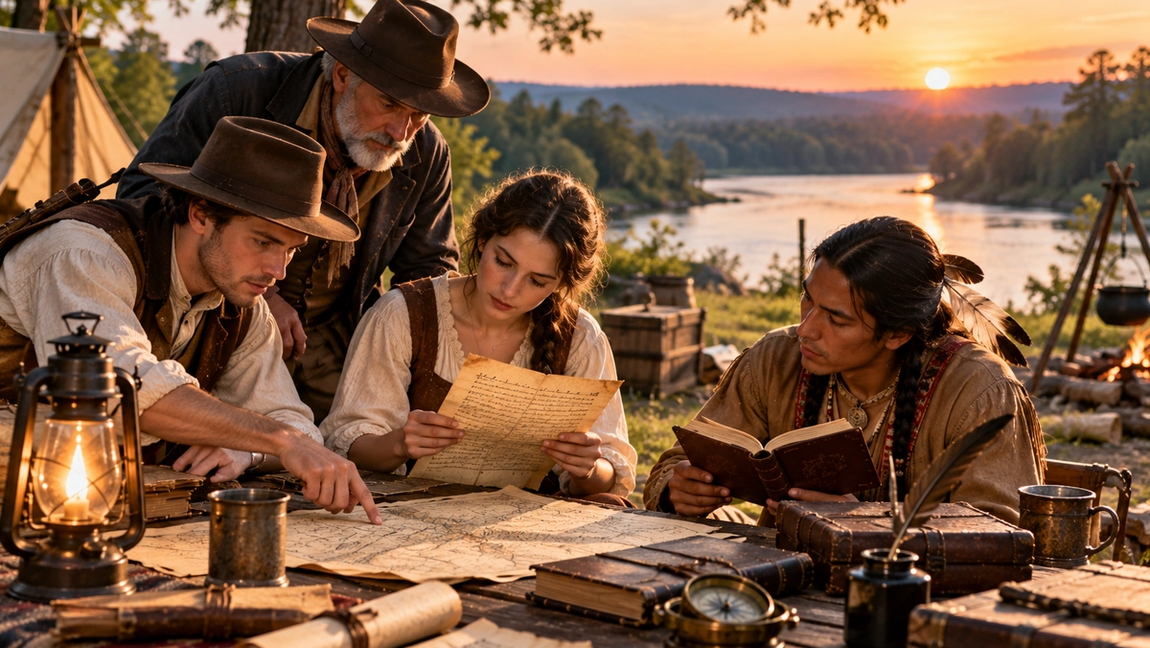
History changes when you stop reading only about the past and start reading the words of people who were actually there. A textbook can explain that the Civil War divided families, that immigrants struggled to build new lives, or that the Great Depression left millions unemployed. A letter from a soldier to his wife, an immigrant describing a first week in New York, or an unemployed father writing to the president can make those facts feel entirely different.
These materials are known as primary sources: documents, photographs, recordings, objects, diaries, newspapers, government records, oral histories, and other evidence created during the period being studied. They do not automatically tell us the truth. People lie in diaries, politicians manipulate audiences, newspapers publish rumors, photographs can be staged, and memories change over time. But primary sources allow us to encounter history before later generations have organized it into a clean narrative.
The most revealing sources often contain uncertainty. People living through famous events did not know how the story would end. Their letters, speeches, photographs, and journals preserve that uncertainty, which is precisely what makes the past begin to feel alive.
The Declaration of Independence Is More Interesting When You Read the Whole Thing
Most Americans know a few lines from the Declaration of Independence, particularly its statement that “all men are created equal” and possess unalienable rights.
Reading the complete document creates a different experience.
The Declaration was not simply a philosophical statement about equality. It was a political argument intended to justify separation from Britain. Much of the document consists of accusations against King George III explaining why the colonies believed revolution had become legitimate.
Reading it as a primary source also exposes one of the central contradictions of American history. Some of the men endorsing universal language about liberty were enslavers, and the political community they were creating excluded enormous numbers of people.
That contradiction did not make the Declaration historically meaningless.
It made its language extraordinarily powerful.
Later abolitionists, suffragists, civil rights activists, and other reformers would repeatedly return to those words and demand that the country apply them more broadly.
Abigail Adams’s Letters Reveal a Revolution Happening Inside a Marriage
Political history often makes the American Revolution look like a conversation among male political leaders.
The correspondence between John and Abigail Adams makes the period considerably more human.
They wrote frequently while John was away participating in revolutionary politics. Their letters discussed government and independence, but also children, health, money, loneliness, war, household responsibilities, and the difficulties of separation.
In one of the most famous exchanges, Abigail urged John to “remember the ladies” as new laws were created.
Her request did not produce political equality for women.
But the letter demonstrates that women living through the Revolution were already thinking about how revolutionary ideas concerning liberty and representation might apply to their own lives.
The Adams correspondence also reveals something textbooks struggle to capture: national events do not replace ordinary life.
Even during revolutions, people worry about their families.
The Federalist and Anti-Federalist Papers Show That the Constitution Was Never Inevitable
The Constitution often appears in retrospect as though the Founders gathered, designed a government, signed the document, and created the political system Americans know today.
The ratification debates reveal something much messier.
Supporters of the Constitution wrote essays explaining why the new framework was necessary. The most famous became The Federalist Papers, written by Alexander Hamilton, James Madison, and John Jay.
Opponents produced their own arguments.
Anti-Federalists worried about centralized power, distant government, executive authority, and the absence of explicit protections for individual liberties.
Reading both sides removes the illusion that everyone agreed about what the Constitution meant.
The document was controversial from the beginning.
Some of the political questions Americans continue debating, including federal power, individual liberty, executive authority, and the danger of political factions, were already being argued about before the Constitution had even taken effect.
George Washington’s Farewell Address Shows the First President Already Worried About the Future
Washington’s Farewell Address is useful precisely because it was written so early.
The United States was still a political experiment.
The Constitution had been operating for less than a decade.
Washington nevertheless warned about sectional divisions, political factions, foreign influence, and excessive party loyalty.
Those concerns are sometimes presented as though Washington was observing problems that later generations created.
He was not.
Partisan conflict had already developed within his own administration.
Alexander Hamilton and Thomas Jefferson represented competing political visions, and organized parties were beginning to form.
The source therefore destroys another comforting myth: there was no long period of perfect national unity before Americans began fighting about politics.
They began almost immediately.
Slave Narratives Make the Institution Impossible to Abstract
Slavery can become dangerously impersonal when reduced to economic statistics, plantation maps, and political debates.
First-person accounts restore the human reality.
Frederick Douglass’s autobiographies are among the most famous examples. Douglass described violence, family separation, literacy, resistance, escape, and the psychological system required to maintain slavery.
Harriet Jacobs offered another essential perspective in Incidents in the Life of a Slave Girl. Her account emphasized experiences that male-centered narratives could overlook, particularly the vulnerability of enslaved women to sexual exploitation and the impossible choices created by slavery.
Thousands of interviews with formerly enslaved people were also collected during the 1930s through the Federal Writers’ Project.
Those interviews must be read carefully. They were recorded decades after emancipation, and the race and behavior of interviewers could influence what elderly former slaves felt comfortable saying.
Even with those limitations, the testimonies preserve voices that official records frequently reduced to names, ages, prices, and property descriptions.
Runaway Slave Advertisements Reveal More Than Their Writers Intended
Some of the most revealing evidence about slavery comes from documents written by enslavers.
Newspaper advertisements seeking the capture of people who escaped slavery often included detailed physical descriptions.
An enslaver might describe someone’s height, clothing, scars, skills, language abilities, family connections, or likely destination.
The advertiser’s purpose was to recover human property.
Modern historians can read the same document differently.
If an advertisement says someone may attempt to reach a spouse living miles away, it reveals a family relationship.
If it mentions that the person can read, play an instrument, work as a carpenter, or speak multiple languages, it reveals skills.
If repeated escape attempts are mentioned, the advertisement becomes evidence of resistance.
Primary sources often contain information their creators never intended to preserve.
Reading them well means asking not only what the writer wanted to say, but what the document accidentally reveals.
Native Treaties Show Two Very Different Understandings of the Same Agreement
Treaties between the United States and Native nations are among the most important primary sources in American history.
They are also among the most complicated.
The written English document may suggest a clear transfer of land or political authority.
But negotiations often occurred across different languages, legal traditions, concepts of sovereignty, and understandings of land ownership.
Native leaders and American officials did not necessarily understand agreements in the same way.
Treaties were also repeatedly altered, ignored, or violated as settlers demanded additional territory.
Reading treaty documents alongside Native oral traditions, council records, correspondence, maps, and later testimony reveals how dramatically perspective changes interpretation.
The same document can represent territorial acquisition to one government and the beginning of dispossession to another nation.
Lewis and Clark’s Journals Reveal Exploration Before It Became Legend
The Lewis and Clark Expedition is often summarized as a heroic journey across an unknown continent.
Their journals provide a much more complicated picture.
The explorers recorded geography, weather, animals, plants, injuries, food shortages, encounters with Native nations, trade, diplomacy, and daily frustrations.
The continent was unknown to the expedition in many respects.
It was obviously not unknown to the Indigenous people who lived there.
The journals repeatedly demonstrate how dependent the expedition was on Native knowledge, trade, diplomacy, and guidance.
Reading the original entries also removes some of the polished adventure-story quality later attached to the expedition.
Exploration becomes repetitive, uncomfortable, uncertain, and sometimes frightening.
That is closer to how the participants actually experienced it.
The Trail of Tears Becomes Different Through Cherokee Voices
Federal Indian removal policy can be summarized through the Indian Removal Act of 1830 and President Andrew Jackson’s administration.
Cherokee petitions, letters, newspaper articles, legal arguments, and personal accounts reveal the experience from another direction.
The Cherokee Nation had developed political institutions, a written constitution, schools, farms, and a newspaper.
Cherokee leaders used American legal and political language to defend their sovereignty and land.
They petitioned the government.
They pursued cases through the courts.
They attempted negotiation.
Removal nevertheless proceeded.
Thousands of Cherokee people were forced westward, and many died during the journey remembered as the Trail of Tears.
Reading Cherokee sources makes it impossible to portray removal simply as the inevitable movement of settlement across a map.
People understood what was happening, argued against it, proposed alternatives, and documented the consequences.
Civil War Soldiers’ Letters Destroy the Idea That Everyone Fought for the Same Reason
Millions of letters survive from the Civil War.
Together they reveal enormous variation in why soldiers believed they were fighting.
Some Union soldiers emphasized preservation of the country.
Others increasingly connected the war with ending slavery.
Some expressed racist beliefs while still opposing secession.
Confederate soldiers wrote about defending homes, communities, political independence, and a social order deeply connected with slavery.
Motivations could also change as the war continued.
A soldier who enlisted expecting adventure might later write primarily about exhaustion and survival.
Letters also contain material that political histories rarely emphasize: bad food, disease, boredom, missing children, arguments over money, rumors about battles, and fear of death.
The Civil War becomes more understandable when the armies stop appearing as colored arrows moving across maps and become collections of individual people.
Alexander Stephens’s Cornerstone Speech Clarifies What Confederate Leaders Said About Their Cause
Debates over the causes of the Civil War often become detached from what political leaders said at the time.
Primary sources can cut through later mythology.
In March 1861, Confederate Vice President Alexander H. Stephens delivered what became known as the Cornerstone Speech.
He explicitly discussed slavery and racial hierarchy while describing the principles he believed distinguished the new Confederate government.
Confederate secession declarations and related documents likewise repeatedly discuss slavery.
These sources matter because historical interpretation should begin with contemporary evidence.
Later generations can reinterpret motives.
People living through events sometimes state those motives directly.
That does not mean every Confederate soldier personally articulated the same reasons as political leaders.
It means that when examining why governments seceded and created the Confederacy, the governments’ own documents deserve enormous weight.
Photographs Changed How Americans Saw the Civil War
The Civil War became one of the first major conflicts extensively documented through photography.
Photographers including Mathew Brady, Alexander Gardner, Timothy O’Sullivan, and others created images of soldiers, camps, landscapes, fortifications, and battlefield dead.
For Americans accustomed to paintings and heroic illustrations, photographs of bodies after battles were disturbing.
War looked less romantic when the dead were visible.
Photography still had limitations.
Long exposure times made combat action difficult to capture.
Photographers selected subjects and compositions.
Some scenes were manipulated or objects repositioned.
A photograph is therefore not a transparent window into reality.
It is evidence created by someone standing somewhere, pointing a camera in a particular direction.
The historian’s job is to ask what remains outside the frame.
The Emancipation Proclamation Is More Complicated Than Its Reputation
The Emancipation Proclamation is often summarized as the document in which Abraham Lincoln freed the slaves.
Reading the actual text immediately complicates that description.
The proclamation applied to enslaved people in areas considered to be in rebellion against the United States. It did not immediately abolish slavery everywhere in the country.
Its legal basis was connected to Lincoln’s wartime powers.
Yet its significance was enormous.
The proclamation transformed the character of the war, officially connected Union victory with emancipation in rebellious territory, and strengthened the path toward Black military service.
Nearly 200,000 Black men ultimately served in the Union Army and Navy.
Slavery throughout the United States would require the Thirteenth Amendment to be constitutionally abolished.
The primary source is therefore more interesting than the simplified version.
It shows emancipation as a process rather than a single magical moment.
Jourdon Anderson’s Letter Shows What Freedom Sounded Like
After the Civil War, a formerly enslaved man named Jourdon Anderson received a request from his former enslaver asking him to return to Tennessee and work.
Anderson was living in Ohio with his family.
His response is one of the most memorable documents of emancipation.
He calmly asked for proof that he would be treated fairly and proposed that his former enslaver send payment for the years of labor performed by Anderson and his wife while they were enslaved.
The letter is witty, controlled, and devastating.
Its power comes from the reversal.
The man who had once been legally controlled by another person could now negotiate the terms of his labor and refuse an arrangement that did not benefit his family.
Political history tells us that slavery ended.
Anderson’s letter shows what that change could mean in an individual life.
Reconstruction-Era Testimony Reveals the Violence Behind Political Change
The constitutional amendments adopted after the Civil War dramatically expanded the legal meaning of citizenship.
But constitutional text alone cannot explain what happened during Reconstruction.
Congressional investigations collected testimony about violence directed at Black voters, political leaders, teachers, Republicans, and others attempting to participate in the new political order.
Witnesses described intimidation, beatings, murders, and organized campaigns designed to destroy Black political participation.
These sources are essential because later historical narratives sometimes portrayed the collapse of Reconstruction as though Southern politics simply returned naturally to local control.
The testimony shows how much violence was involved in producing that outcome.
Political systems do not always disappear because voters calmly choose something different.
Sometimes people are prevented from participating at all.
Immigrant Letters Reveal America Before It Felt Like Home
Millions of immigrants wrote letters to relatives in the countries they had left.
The letters describe jobs, wages, food, crowded housing, homesickness, discrimination, opportunities, disappointments, and the strange experience of learning a new society.
Some writers exaggerated their success because they wanted relatives to admire them.
Others warned family members not to follow.
Many sent money.
A successful immigrant might provide instructions explaining which ship to take, where to arrive, who would meet a relative, and where employment could be found.
Those letters helped create migration chains.
One person’s decision to move could eventually lead siblings, cousins, neighbors, and friends to settle in the same American city.
Immigration therefore becomes more than millions of anonymous people moving across borders.
It becomes millions of individual decisions communicated across kitchen tables separated by oceans.
Jacob Riis’s Photographs Showed Middle-Class Americans a City They Rarely Saw
In the late nineteenth century, journalist and reformer Jacob Riis documented living conditions in New York’s crowded tenement districts.
His photographs, lectures, and 1890 book How the Other Half Lives brought images of urban poverty before audiences who might otherwise have encountered it only through statistics or stereotypes.
The images contributed to reform efforts surrounding housing and sanitation.
They also need to be viewed critically.
Riis approached immigrant communities with assumptions shaped by his own era and reform agenda.
His captions and descriptions could be judgmental.
That makes the collection more useful, not less, when read carefully.
The photographs show living conditions.
The framing shows how a reformer interpreted those conditions.
Primary sources can reveal both their subject and their creator.
The Triangle Fire Testimony Makes Industrialization Personal
The 1911 Triangle Shirtwaist Factory fire killed 146 workers, many of them young immigrant women.
Official reports can describe the building.
Newspapers can provide the death toll.
Survivor testimony reveals the terror.
Witnesses described smoke, blocked escape routes, desperate attempts to reach exits, and workers jumping from upper floors.
The testimony helped turn workplace safety from an abstract reform issue into a public emergency.
After the disaster, New York enacted significant workplace and fire-safety reforms.
Modern building regulations can make dangerous industrial conditions feel distant.
The testimony reminds readers that many protections now considered ordinary exist because earlier workplaces were allowed to operate without them.
Regulations often have biographies.
Behind them are people.
World War I Propaganda Posters Show How Governments Sell Wars
American propaganda from World War I is visually striking.
Uncle Sam points directly at the viewer.
Liberty appears threatened.
Soldiers become heroic symbols.
Enemies are portrayed as dangerous or barbaric.
Citizens are urged to buy bonds, conserve food, enlist, and support the national cause.
These posters reveal how governments attempt to turn complicated geopolitical conflicts into emotionally understandable stories.
They also demonstrate that propaganda does not need to be completely false to be propaganda.
It can use genuine events selectively, emphasize certain emotions, simplify opponents, and encourage conformity.
Modern viewers are often good at identifying propaganda from the past.
Recognizing persuasive techniques in our own time is harder.
That is one reason historical propaganda remains worth studying.
Diaries From the Great Depression Show What Economic Collapse Felt Like
The Great Depression can be described through unemployment figures, bank failures, declining production, and government programs.
Personal diaries and letters reveal a different reality.
Families worried about rent.
Parents reduced meals.
Young people postponed marriage.
People moved in search of work.
Farmers watched land and equipment disappear.
Workers experienced unemployment not simply as lost income but as a threat to identity and dignity.
Thousands of Americans also wrote directly to Franklin and Eleanor Roosevelt.
Some asked for help.
Some praised New Deal programs.
Others condemned them.
Together, these letters reveal how ordinary people understood the relationship between government and personal survival during a national emergency.
Economic history becomes much harder to reduce to ideology once the people living inside the economy begin speaking.
Dorothea Lange’s Photographs Gave the Depression a Human Face
Few images of the Great Depression became as recognizable as Dorothea Lange’s photographs of displaced workers and struggling families.
Her 1936 photograph commonly known as Migrant Mother became particularly famous.
The image appears spontaneous, but understanding its creation adds important context.
Lange took multiple photographs of Florence Owens Thompson and her children, gradually moving closer and creating the composition that became iconic.
Thompson’s own later perspective on the photograph complicated the story further.
This is exactly why primary sources should be investigated rather than simply admired.
A famous photograph is simultaneously evidence, art, selection, and interpretation.
The camera records something real.
The photographer still decides what we see.
Japanese American Incarceration Records Reveal Bureaucracy at Work
The forced removal and incarceration of Japanese Americans during World War II generated enormous amounts of paperwork.
Government orders, registration forms, identification cards, photographs, camp newspapers, diaries, letters, and official reports survive.
The documents demonstrate how extraordinary violations of rights can be carried out through ordinary administrative procedures.
Families received instructions.
Names were entered onto forms.
Property arrangements were documented.
People were assigned numbers.
Trains were scheduled.
Camps produced regulations.
Bureaucracy can make an extreme policy look strangely routine.
Personal diaries and photographs restore what the paperwork removes: the experience of families forced to leave homes and businesses because of their ancestry.
Reading both types of sources together is especially powerful.
One shows how institutions function.
The other shows what those institutions do to people.
Soldiers’ Letters From World War II Complicate the “Good War”
World War II occupies a distinctive place in American memory because the defeat of Nazi Germany and Imperial Japan provides a clear moral dimension.
Letters from servicemen do not necessarily contradict that larger story.
They complicate it.
Soldiers wrote about boredom, terror, friendships, racism, foreign civilians, homesickness, death, food, weather, and the desire to return home.
Some expressed noble ideals.
Others expressed prejudices common to their era.
Many moved between both.
The letters remind us that people participating in historically significant causes remain ordinary humans.
They do not spend every day thinking in the language later used by documentaries.
They think about whether mail arrived.
The Brown v. Board Documents Show How Legal Change Gets Built
The Supreme Court’s 1954 decision in Brown v. Board of Education is remembered through its conclusion that racial segregation in public schools was unconstitutional.
The case becomes much more interesting when readers examine the legal briefs, earlier court decisions, testimony, social-science evidence, correspondence, and strategic discussions surrounding it.
Major constitutional change rarely begins when Supreme Court justices enter a courtroom.
Civil rights lawyers had spent years constructing challenges to segregation.
Cases were selected carefully.
Evidence was developed.
Earlier precedents were tested.
Organizations built legal strategies across decades.
The final opinion is therefore only the visible end of a much longer process.
Primary sources reveal the machinery behind landmark decisions.
Rosa Parks’s Arrest Record Challenges the Simplified Story
Rosa Parks is frequently introduced as a tired seamstress who spontaneously refused to surrender her bus seat in Montgomery in 1955.
Her arrest was real.
Her exhaustion has often been misunderstood.
Parks had a history of civil rights activism and had worked with the NAACP.
Documents surrounding her activism and the Montgomery Bus Boycott reveal planning, organization, fundraising, transportation networks, legal strategy, church involvement, and community participation.
The simplified story focuses on one moment on one bus.
The primary sources reveal a movement.
This distinction matters because social change rarely occurs because one heroic person suddenly decides to act.
Individual courage matters enormously.
It becomes transformative when communities are organized enough to turn that courage into sustained action.
Martin Luther King Jr.’s “Letter From Birmingham Jail” Should Be Read, Not Quoted
King’s 1963 letter from Birmingham jail is frequently reduced to a handful of famous lines.
The complete document is far more challenging.
King was responding to white clergymen who criticized demonstrations as poorly timed and disruptive.
He defended nonviolent direct action and explained why demands for patience could become a method of preserving injustice.
The letter discusses just and unjust laws, moderation, religious responsibility, disappointment, and the emotional consequences of segregation.
Reading the entire text makes it harder to transform King into a harmless symbol of national unity.
He was criticizing people who claimed to support racial equality while objecting to the pressure required to achieve it.
Primary sources frequently do this to historical heroes.
They make them less comfortable.
That usually makes them more interesting.
Television Footage Changed Civil Rights History
Primary sources are not limited to written documents.
Television footage became enormously important during the civil rights era.
Americans could watch police dogs and fire hoses being used against demonstrators in Birmingham.
They could see violence directed at marchers.
They could watch speeches and protests rather than merely reading descriptions afterward.
Television did not create the civil rights movement.
Black activists had organized for generations.
But visual evidence helped nationalize events that local authorities might otherwise have controlled or minimized.
The same principle would later shape coverage of war, protest, police violence, natural disasters, and political crises.
Once history could enter living rooms through moving images, public memory changed.
The Pentagon Papers Revealed the Gap Between Public Statements and Private Knowledge
In 1971, portions of a classified government study concerning American involvement in Vietnam were leaked to the press.
The documents became known as the Pentagon Papers.
They revealed internal government discussions and decisions spanning multiple administrations.
Their significance went beyond individual military strategies.
The papers demonstrated substantial gaps between what officials sometimes understood privately and what governments told the public about the war.
The resulting legal battle over publication also became an important press-freedom case.
Primary sources possess particular power when they were never intended to become public.
A press conference shows what officials want citizens to know.
A classified memorandum may show what officials themselves believed.
The difference can change how an entire period is understood.
The Nixon Tapes Let Americans Hear Power in Real Time
Richard Nixon installed a recording system that captured conversations inside the White House.
The tapes eventually became central to the Watergate scandal.
Their historical importance is difficult to overstate.
Historians normally reconstruct private political conversations through diaries, notes, memoirs, and recollections.
The Nixon tapes allow listeners to hear presidential conversations directly.
The pauses, language, tone, strategy, anger, jokes, and calculations remain preserved.
They also played an immediate political role.
The struggle over access to the recordings reached the Supreme Court, and the eventual release of crucial evidence contributed to the collapse of Nixon’s political support.
Here the primary source did not merely help historians understand the event later.
The evidence became part of the event itself.
Oral Histories Preserve Experiences That Paper Records Miss
Not everyone leaves diaries.
Not everyone writes letters that survive.
Not everyone appears prominently in government documents.
Oral history attempts to preserve experiences that might otherwise disappear.
Interview projects have recorded veterans, civil rights activists, immigrants, factory workers, Holocaust survivors, Native elders, political organizers, and ordinary people who witnessed important events.
Memory is imperfect.
People forget details, rearrange timelines, absorb later information, and interpret their younger selves through decades of experience.
That does not make oral history useless.
It means memory itself must be treated as evidence.
An interview can reveal not only what happened but how someone understood what happened years later.
Both questions matter.
Newspapers Let You Experience History Before Anyone Knew the Ending
One of the most fascinating ways to study a famous event is to read newspapers published while it was unfolding.
Read newspapers immediately after the stock market crash of 1929 without jumping ahead to the Great Depression.
Read December 1941 coverage before Americans knew how World War II would end.
Read newspapers during the Cuban Missile Crisis without assuming nuclear war would be avoided.
Read Watergate coverage before anyone knew Nixon would resign.
The experience changes historical understanding.
Rumors appear alongside accurate reporting.
Predictions fail.
Events that later seem important may receive little attention.
Stories that dominate headlines may disappear from memory.
Newspapers restore the uncertainty that textbooks remove.
They remind us that people living through history rarely know which day’s headline will become a chapter title.
Primary Sources Are Powerful Because They Can Be Wrong
The greatest mistake a reader can make is assuming that a primary source must be accurate because it was created at the time.
Eyewitnesses misremember.
Politicians lie.
Generals exaggerate victories.
Newspapers publish false information.
Photographers stage scenes.
Diaries contain prejudice.
Government reports hide failures.
Memoirs protect reputations.
Letters tell recipients what writers want them to believe.
Primary sources are not automatically true.
They are automatically evidence.
The distinction is fundamental.
A false newspaper story can still reveal what readers were being told.
A racist advertisement can reveal social attitudes.
A misleading political speech can reveal what arguments leaders believed would persuade voters.
Even a lie becomes historically useful once we ask why someone told it.
The Best Way to Read History Is to Put Sources Against One Another
No single document should be expected to explain an entire event.
Read a president’s speech alongside the letters of people affected by his policies.
Read military orders alongside soldiers’ diaries.
Read immigration laws alongside immigrant correspondence.
Read plantation records alongside slave narratives.
Read police reports alongside protesters’ testimony.
Read newspaper coverage from publications representing different political positions.
Read photographs alongside the captions originally attached to them.
The contradictions are not a problem.
They are the point.
History becomes richer when multiple people describe the same event differently because human beings experience the same world from different positions.
The historian’s job is not simply to choose the most appealing voice.
It is to compare evidence.
Primary Sources Remove the Safety Glass Around History
Textbooks inevitably create distance.
They tell us that something happened, explain why it mattered, and move to the next event.
Primary sources slow everything down.
A soldier does not know whether he will survive tomorrow’s battle.
An immigrant does not know whether moving to America was a mistake.
A woman demanding the vote does not know whether she will live to cast one.
A family during the Depression does not know when the economy will recover.
A civil rights activist does not know whether a demonstration will produce legislation or violence.
Those people are not historical characters yet.
They are simply living.
That is what primary sources restore.
The past stops looking like a sequence of inevitable events leading neatly toward the present and begins to resemble what the present feels like to us: confusing, unfinished, emotional, contradictory, and filled with decisions whose consequences nobody can completely predict.
Once you experience history that way, the people inside it become harder to flatten into heroes, villains, statistics, or names on a timeline.
They become people again.
And that is often when history finally starts to make sense.