Why Some Historical Figures Get Rediscovered and Others Fade
By Roy Kaden on October 15, 2026

History has a strange way of changing its cast of characters. People who were famous enough in their own time to fill newspapers, command armies, influence presidents, write bestselling books, or lead national movements can become almost completely unknown within a few generations. Meanwhile, someone who occupied only a few paragraphs in older history books can suddenly become the subject of biographies, documentaries, museum exhibitions, podcasts, and school lessons.
The people themselves have not changed. The documents sitting in archives may have existed for decades, and the basic events of their lives may have been known all along. What changes is the society looking backward. Each generation approaches the past with different questions, different values, different technologies, and different ideas about whose experiences deserve attention. As those priorities shift, historical reputations rise, fall, and sometimes return after remarkably long periods of neglect.
That does not necessarily mean history is being rewritten in the sense of inventing a different past. History has always been rewritten because historians constantly discover new evidence, reconsider older interpretations, and ask questions that previous generations ignored. The past remains fixed, but our understanding of it does not.
Being Famous in Your Own Time Does Not Guarantee Historical Fame
It is easy to assume that the people remembered today must have been the most important people of their era. That is not always true.
Nineteenth-century Americans knew politicians, writers, religious leaders, military officers, reformers, industrialists, and entertainers whose names would mean almost nothing to most people today. Newspapers followed their speeches and personal lives, crowds gathered to hear them, and political movements formed around them. Yet their fame depended on arguments and institutions that later disappeared.
Historical memory is brutally selective because societies cannot remember everyone equally. A century containing millions of lives eventually becomes a few chapters in a textbook, and those chapters have room for only a small number of names.
Presidents survive particularly well because the office provides an obvious structure for remembering them. Major military commanders survive because wars produce clear narratives. Inventors can become attached to technologies, and activists can become symbols of movements.
Thousands of other influential people gradually disappear because there is no simple place to put them in the story.
History Needs Characters, Even When Reality Was Collective
Major historical changes almost never happen because of one person.
The civil rights movement involved thousands of organizers, lawyers, ministers, students, workers, teachers, local leaders, and ordinary citizens. Women’s suffrage required generations of activism. Scientific discoveries usually emerge from networks of researchers building on previous work. Political revolutions depend on enormous coalitions.
Yet humans understand stories more easily when they have identifiable protagonists.
Instead of remembering an entire movement, we remember a few people who represent it.
Martin Luther King Jr. becomes associated with the civil rights movement. Susan B. Anthony becomes associated with women’s suffrage. Thomas Edison becomes associated with invention. Henry Ford becomes associated with the automobile industry.
These people were important, but the simplified story can make everyone around them disappear.
Later historians often begin rediscovering those missing people precisely because the famous individual has already been studied so thoroughly.
Once we know the leader, researchers begin asking about the organizers, assistants, rivals, employees, spouses, critics, and communities surrounding them.
History gradually zooms out.
Alexander Hamilton Nearly Became a Supporting Character
Alexander Hamilton is a remarkable example of how dramatically historical reputation can change.
Hamilton was one of the most influential figures of the early United States. He served as the first secretary of the Treasury, helped establish the country’s financial system, contributed extensively to The Federalist Papers, and became one of the strongest advocates for federal power.
Yet for much of popular American memory, he occupied an awkward position.
He never became president.
His political party disappeared.
He died relatively young after being shot by Vice President Aaron Burr in their famous 1804 duel.
Thomas Jefferson and George Washington fit more comfortably into popular narratives about the founding.
Hamilton remained important to historians, but he was not necessarily one of the founders most Americans thought about regularly.
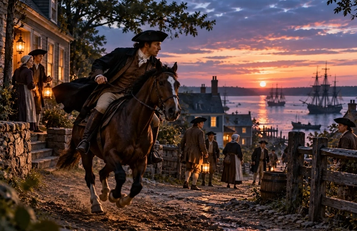
Then his cultural reputation changed dramatically in the twenty-first century, particularly after Ron Chernow’s biography inspired Lin-Manuel Miranda’s musical Hamilton.
Suddenly millions of people who had barely thought about the first Treasury secretary were discussing his childhood, political philosophy, marriage, rivalries, writing, and death.
Hamilton had not been discovered.
He had been reintroduced.
Ulysses S. Grant’s Reputation Fell and Then Rose Again
Historical reputations can also change because historians reconsider the political assumptions behind older interpretations.
Ulysses S. Grant provides a particularly striking example.
For decades, Grant’s presidency was often portrayed primarily through corruption scandals associated with members of his administration. His military achievements during the Civil War remained respected, but his presidency frequently appeared near the bottom of traditional presidential assessments.
Modern scholarship has complicated that picture.
Historians have paid greater attention to Grant’s support for Reconstruction, his efforts to protect the rights of formerly enslaved Americans, and his administration’s actions against the Ku Klux Klan.
The scandals did not disappear.
Instead, the context expanded.
A presidency previously summarized as corrupt could also be examined through the federal government’s attempt to defend Black citizenship against organized racial violence.
Grant did not change.
The historical questions did.
Reconstruction Itself Was Rediscovered
The changing reputation of Grant is connected to a much larger transformation in how historians understand Reconstruction.
For decades, influential historical narratives portrayed Reconstruction after the Civil War as a disastrous period of corrupt governments imposed on the South.
Those interpretations frequently reflected racist assumptions about Black political participation.
Popular culture reinforced them.
Black elected officials were portrayed as incompetent, while white Southern resistance was sometimes romanticized.
Beginning particularly with major twentieth-century scholarship and continuing through later generations, historians fundamentally reassessed Reconstruction.
Researchers emphasized the political achievements of formerly enslaved people, the creation of public institutions, constitutional changes, Black officeholding, and the violent campaigns used to destroy interracial democracy.
Suddenly, people who had barely appeared in older textbooks became historically significant.
The evidence had often been available.
What changed was historians’ willingness to ask different questions of it.
Women Were Frequently Present in the Records but Missing From the Story
For much of professional historical writing, political and military history dominated.
That naturally produced histories filled primarily with men because men overwhelmingly occupied formal positions in government and military command.
Women were not absent from historical events.
They were often absent from the categories historians considered most important.
When scholars increasingly studied family life, labor, education, reform movements, medicine, community organizations, consumer culture, and social networks, enormous amounts of women’s history became visible.
Figures such as Ida B. Wells, Frances Perkins, Pauli Murray, Mary Church Terrell, and countless others received greater attention.
This was not necessarily because someone discovered a hidden box containing proof that these women had existed.
Often, their papers and accomplishments were already known.
The question changed from “Who held official political power?” to “How did change actually happen?”
That question produces a much larger cast.
Harriet Tubman Became Larger Than the Simplified Version of Her Story
Harriet Tubman never disappeared completely from American memory, but the way she has been remembered has expanded considerably.
Many Americans first learned about Tubman primarily through the Underground Railroad and her work helping enslaved people escape.
That alone would make her historically important.
But her life extended far beyond that familiar chapter.
During the Civil War, Tubman worked for the Union cause in multiple capacities and participated in intelligence and military activities. She later supported women’s suffrage and continued advocating for formerly enslaved people.
As historians examined her entire life rather than reducing her to one famous role, Tubman became a more complex historical figure.
This is another form of rediscovery.
Sometimes a person does not vanish.
Most of their life does.
Indigenous Figures Were Often Remembered Through Someone Else’s Story
Native American historical figures have frequently suffered from an additional problem: their lives were recorded primarily through sources created by colonists, soldiers, missionaries, government officials, and later writers.
That meant Indigenous leaders often appeared in American history only when they interacted with the United States.
Their importance within their own communities could be minimized.
Sitting Bull became a character in the story of American westward expansion.
Sacagawea became a character in the story of Lewis and Clark.
Pocahontas became a character in the story of Jamestown.
Those connections matter, but they can distort perspective.
Modern historians increasingly use Indigenous oral traditions, archaeology, tribal records, linguistic evidence, and different interpretations of familiar documents to reconstruct these figures within their own political and cultural worlds.
The result can look like rediscovery.
In reality, it is often a shift in whose perspective organizes the story.
Some People Fade Because Their Cause Lost
Winners do not literally write all history, but victory certainly helps determine who gets remembered.
Political movements that collapse can take their leaders’ reputations with them.
A politician who appeared destined for national importance can become obscure after losing a crucial election.
A general celebrated during one war can disappear if later conflicts become more important.
A reform movement can dominate national discussion for twenty years and then become almost invisible once the issue it addressed disappears.
Historical fame depends partly on whether later generations can connect someone to a story they still care about.
If the movement dies and the institutions disappear, the people associated with them become harder to remember.
Ironically, that can happen even when they were extraordinarily famous during their lifetimes.
Some People Fade Because Someone Else Gets the Credit
Historical memory prefers clear ownership.
Who invented the telephone?
Who invented the light bulb?
Who discovered something?
Who started a movement?
Real innovation rarely works that neatly.
Multiple researchers may work on similar problems simultaneously. Assistants contribute experiments. Engineers improve designs. Companies commercialize technologies developed elsewhere. Patent disputes determine whose name becomes legally attached to an invention.
Eventually, one person becomes the symbol.
Thomas Edison did not single-handedly invent modern electrical technology, but his name became closely associated with it.
Alexander Graham Bell became attached to the telephone despite a complicated history of competing inventors and technologies.
The Wright brothers became synonymous with powered flight, while many other aviation pioneers became specialist knowledge.
Once one name becomes culturally dominant, everyone else becomes harder to see.
Sometimes the Person Who Gets Forgotten Was Deliberately Pushed Aside
Historical disappearance is not always accidental.
Institutions can minimize inconvenient people.
Political movements can rewrite their own histories.
Families can destroy correspondence.
Governments can suppress records.
Companies can emphasize founders while overlooking workers or collaborators.
Scientific institutions can give disproportionate credit to senior researchers.
Women and minorities have sometimes seen their contributions attributed to colleagues who possessed greater institutional power.
These patterns do not mean every forgotten historical figure was intentionally erased.
But power influences preservation.
People who controlled newspapers, publishing houses, universities, museums, archives, political offices, and cultural institutions had enormous influence over whose documents were saved and whose stories were considered important.
Historical memory is partly shaped by whoever had access to the filing cabinet.
Archives Determine Who Can Be Rediscovered
Historians depend on evidence.
Letters, diaries, government documents, photographs, newspapers, financial records, court files, oral histories, and institutional archives allow researchers to reconstruct lives.
Famous people often leave enormous documentary collections.
Presidents have libraries.
Generals have official records.
Writers preserve correspondence.
Wealthy families donate papers to universities.
Ordinary people historically left much thinner archives.
An enslaved person might appear primarily in property records created by enslavers.
A domestic worker might survive in a census but leave no diary.
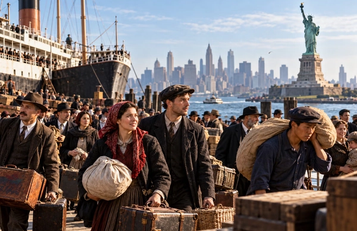
An immigrant laborer might appear only in employment records or a passenger list.
This creates what historians sometimes describe as archival silence.
The people with the least power were often the least able to preserve their own versions of events.
Rediscovering them therefore requires different methods and much more detective work.
Digitization Has Changed Who Can Be Found
The internet has transformed historical research in ways that are easy to underestimate.
Millions of newspapers, census records, military files, photographs, books, immigration documents, and genealogical records have been digitized.
A researcher who once needed to travel across the country and spend weeks searching microfilm can sometimes search millions of pages from a laptop.
Names that once disappeared inside local newspapers can suddenly be found.
Connections between people become easier to trace.
Genealogists can reconstruct families.
Local historians can bring regional figures into broader conversations.
Digitization does not eliminate archival inequality, because documents that were never created or preserved cannot magically reappear.
But it makes surviving evidence dramatically easier to connect.
Some historical rediscoveries happen simply because searching the past has become much faster.
DNA Has Created an Entirely New Kind of Historical Evidence
Genetic technology has also changed historical research.
DNA can help identify previously unknown remains, establish biological relationships, test genealogical claims, and reconstruct population movements.
One of the most famous examples involving American historical memory concerns Thomas Jefferson and Sally Hemings.
For generations, claims that Jefferson had fathered children with Hemings, an enslaved woman at Monticello, were disputed and often dismissed by defenders of Jefferson’s reputation.
Historical evidence had long existed, but late twentieth-century DNA testing provided powerful additional evidence supporting a Jefferson paternal connection to Hemings’s descendants. Combined with documentary research, the evidence substantially changed mainstream historical understanding of their relationship and family.
Technology did not create the history.
It changed what could be demonstrated about it.
Popular Culture Can Revive Someone Almost Overnight
Professional historians are not the only people determining who gets remembered.
Movies, television programs, novels, musicals, podcasts, and documentaries can dramatically change historical visibility.
A successful film can introduce millions of people to someone who previously appeared mainly in academic books.
Sometimes the portrayal is accurate.
Sometimes it takes major liberties.
Usually it does both.
The cultural revival can then create a feedback loop.
Audiences become curious.
Publishers commission biographies.
Museums create exhibitions.
Journalists write articles.
Teachers introduce the figure into classrooms.
Researchers revisit archives.
Within a few years, someone who seemed obscure can become a familiar historical name.
That process happened spectacularly with Alexander Hamilton, but it is far from unique.
Historical fame now depends partly on whether someone’s life can be turned into compelling modern storytelling.
Anniversaries Bring People Back
Historical anniversaries have enormous influence over public memory.
The fiftieth anniversary of an event generates documentaries.
The hundredth anniversary produces exhibitions.
The bicentennial creates books, conferences, museum programs, and government commemorations.
Suddenly, journalists and historians need stories connected to the anniversary.
They begin looking beyond the most famous people.
Who else was there?
Whose experience has not been told?
What did women experience?
What did minority communities experience?
What happened outside the famous location?
Anniversaries create deadlines for remembering.
Some people return to public consciousness simply because the calendar gives society a reason to look at them again.
Social Movements Change the Questions We Ask the Past
Historical rediscovery often follows political and cultural change.
The civil rights movement encouraged greater study of Black history.
The women’s movement encouraged greater study of women’s history.
Indigenous activism encouraged historians to reconsider Native American experiences and sovereignty.
Labor movements encouraged interest in workers rather than only industrialists.
LGBTQ+ movements encouraged researchers to examine lives and communities that older histories often ignored or deliberately concealed.
These changes sometimes generate accusations that historians are imposing modern politics on the past.
That can happen if researchers ignore historical context.
But asking new questions is not inherently distortion.
Earlier historians also approached the past with assumptions shaped by their own societies.
Choosing to write primarily about presidents and generals was itself a decision about what mattered.
There has never been a perfectly neutral list of important historical subjects.
Reputation Changes When Society’s Values Change
Historical figures can also decline in reputation when later generations become less willing to overlook parts of their lives.
Someone once celebrated primarily for military victory might later be examined through the experiences of civilians affected by that campaign.
An industrialist remembered for building a corporation might also be studied through labor conditions.
A political leader praised for expanding territory might be reconsidered through the displacement of Indigenous communities.
This does not require pretending that historical people should have possessed exactly the values of the twenty-first century.
It means examining more consequences of their actions.
Historical reputation changes when society changes what it considers worth measuring.
The same person can look different depending on which questions are being asked.
Statues Can Freeze One Version of a Person in Time
Monuments create an especially powerful form of historical memory.
A statue appears permanent.
It gives the impression that society has reached a final judgment about the person standing on the pedestal.
But monuments are created at particular moments for particular reasons.
A statue erected in 1910 may reveal as much about 1910 as it does about the person being commemorated.
This is why monument controversies can become so intense.
People are not only arguing about a historical figure.
They are arguing about which version of history deserves public honor.
Removing, relocating, contextualizing, or preserving a monument does not erase the underlying history.
The historical person continues to exist in documents, museums, books, archives, and scholarship.
What changes is the public message surrounding that person.
Sometimes Rediscovery Goes Too Far
There is another danger in historical rediscovery.
A forgotten figure can become fashionable enough that the correction produces a new simplification.
Someone once ignored may suddenly be portrayed as the secret genius behind an entire movement.
A newly popular biography may exaggerate a person’s influence because “important but previously overlooked contributor” sounds less exciting than “the person who really changed everything.”
History then replaces one hero myth with another.
The better approach is usually not to remove one famous person and install another.
It is to understand the network around both of them.
Historical change is normally collaborative, contested, and cumulative.
Rediscovered figures should make the picture larger rather than simply changing the face in the center.
Local History Is Filled With People Waiting to Be Rediscovered
National history represents only a tiny fraction of the past.
Every American city, town, neighborhood, university, church, company, and community contains people who were once locally important but have nearly disappeared from memory.
A woman may have organized a school decades before women held major public offices.
An immigrant entrepreneur may have transformed a neighborhood.
A local newspaper editor may have shaped political debate.
A Black business owner may have created institutions during segregation.
A teacher may have educated generations of children without ever appearing in a national archive.
These lives rarely become famous because national history has limited space.
Yet local archives increasingly allow communities to recover them.
Sometimes historical rediscovery begins not with a famous professor but with someone finding an old photograph and asking who the person in it was.
The Internet Can Rediscover People, but It Can Also Invent Them
Social media has created an extraordinary appetite for forgotten historical stories.
Posts about “the woman history forgot” or “the inventor you’ve never heard of” spread rapidly because they offer the satisfaction of discovering something supposedly hidden.
Many introduce audiences to genuinely overlooked people.
Others oversimplify the evidence.
A historical figure’s contribution can be exaggerated until they become credited with something they did not actually do.
A complicated scientific development becomes “this woman invented it, but a man stole the credit.”
A photograph receives the wrong name.
A quotation is attached to someone who never said it.
A dramatic story spreads thousands of times before anyone checks the original source.
Rediscovery therefore requires the same skepticism as traditional history.
A forgotten story is not automatically true because it feels corrective.
Fame and Importance Are Not the Same Thing
One of the most useful lessons of historical research is that fame is a poor measurement of importance.
Some famous people had enormous influence.
Others became famous because their stories were easy to tell.
Some relatively unknown people made decisions that affected millions.
Others changed one community in ways that never reached national attention.
Historical importance depends on the question being asked.
If the subject is presidential power, presidents matter enormously.
If the subject is how ordinary Americans experienced industrialization, presidents may matter much less than factory workers, families, immigrants, employers, and local officials.
There is no single ranking of everyone who mattered.
History changes when the question changes.
People Fade When Their Stories Stop Answering Our Questions
Historical memory ultimately reflects the relationship between past and present.
A society remembers people who help it explain itself.
During wars, military figures receive attention.
During struggles over civil rights, activists return to public consciousness.
During technological revolutions, forgotten inventors become interesting.
During debates about inequality, labor leaders and industrialists receive renewed scrutiny.
During arguments about immigration, earlier immigrant experiences suddenly feel relevant again.
People fade when their stories no longer seem useful.
They return when a new generation realizes that an old life contains an answer to a current question.
That does not mean historians should judge the past only by modern concerns.
It means every generation inevitably approaches history from somewhere.
History Is Constantly Being Rewritten, and That Is Usually a Good Thing
The phrase “rewriting history” often sounds suspicious, as though someone is changing facts for political reasons.
Facts can certainly be distorted.
But legitimate historical scholarship constantly rewrites history because new evidence appears and new questions reveal dimensions of old evidence that previous scholars overlooked.
A history of the American Revolution written in 1900 will not look exactly like one written today.
Modern historians have access to more archaeology, digitized documents, demographic research, Indigenous perspectives, scholarship on slavery, women’s history, economic data, and countless other sources.
The events did not change.
The resolution improved.
That process will continue.
People considered central today may become less prominent.
Figures currently known only to specialists may become widely recognized.
Archives that nobody has fully explored may contain evidence that changes familiar stories.
Technologies we have not invented yet may answer questions historians currently consider impossible.
Being Forgotten Is Not the Same as Being Unimportant
Most people who shaped history never became famous.
They raised families, built communities, organized workplaces, taught children, migrated across continents, served in wars, created businesses, protested injustice, cared for neighbors, and passed knowledge from one generation to another.
Their names rarely appear in textbooks because history at national scale requires compression.
That compression can create the illusion that a few extraordinary individuals built the world while everyone else watched.
They did not.
The people we remember are partly those whose actions mattered, partly those whose records survived, partly those historians chose to study, and partly those whose stories later generations found useful.
Historical fame is therefore not a permanent verdict.
It is a conversation between the present and the past.
Every generation enters the archive carrying different questions, and sometimes those questions illuminate a person who has been sitting quietly in the historical record for a century.
That is why history never really finishes deciding who matters.
The past stays where it is.
We are the ones who keep moving around it.