The Diaries and Journals That Reveal Everyday American Life
By Gil Cohen on October 15, 2026

History tends to preserve unusual days. Elections, battles, assassinations, disasters, protests, discoveries, and presidential decisions fill textbooks because they produced consequences large enough to be remembered. Diaries preserve something different. They record the Tuesday when nothing happened, the dinner someone disliked, the money a family did not have, the neighbor who visited unexpectedly, the weather that ruined the crops, the argument between spouses, and the frightening rumor that turned out to be wrong.
That is exactly why diaries and journals can be among the most revealing historical sources.
Official documents show what governments decided. Newspapers show what editors considered important. Speeches show what leaders wanted audiences to hear. A diary can show what an individual thought when there was no audience at all, although even private writers could censor themselves, exaggerate, misunderstand events, or imagine that someone might eventually read their words.
Taken together, American diaries reveal a country that feels much less organized than the one presented in textbooks. People worry about rent while revolutions unfold, complain about food during wars, fall in love during economic depressions, and continue doing laundry while political institutions collapse around them. They remind us that people living through history rarely realize which parts of their lives future generations will consider historically important.
Samuel Sewall’s Diary Opens a Window Into Colonial New England
Samuel Sewall lived in Massachusetts during the late seventeenth and early eighteenth centuries and kept a diary for decades. He was a merchant, public official, and judge, and his writings provide an unusually detailed look at life in colonial New England.
His diary contains religion, politics, family events, weather, illness, deaths, social visits, business matters, and community relationships. The entries reveal a society in which personal life and religious belief were deeply intertwined.
Sewall is also remembered because he served as one of the judges during the Salem witch trials.
Years later, he publicly acknowledged his guilt and accepted blame for his role.
That admission gives his diary additional historical importance. It allows readers to encounter someone who participated in an event now remembered as a terrible injustice and later struggled with his own responsibility.
Historical people rarely divide neatly into heroes and villains.
Diaries make that difficult to forget.
Martha Ballard Recorded Thousands of Days That Historians Almost Lost
Martha Ballard was a midwife living in Maine who kept a diary from 1785 until 1812.
At first glance, many entries seem ordinary.
She recorded births, illnesses, deaths, household work, weather, travel, neighbors, payments, and community disputes.
Yet historian Laurel Thatcher Ulrich demonstrated the extraordinary value of the diary in A Midwife’s Tale.
Ballard’s records revealed an entire world of women’s labor and community life that traditional political histories barely documented.
She attended hundreds of births.
She traveled through difficult weather.
She treated sick neighbors.
She produced goods within her household.
She participated in networks of women who exchanged labor, information, and assistance.
None of these activities usually appears in accounts centered on presidents and wars.
Yet communities could not function without them.
Ballard’s diary demonstrates one of the central lessons of social history: ordinary life becomes historically important when someone bothers to record it.
William Byrd II Shows the Private World of Colonial Elites
William Byrd II of Virginia kept diaries that reveal another side of colonial America.
Byrd was wealthy, educated, politically connected, and part of the plantation elite.
His private writings document daily routines, reading, exercise, business, relationships, family life, religion, sexuality, and plantation management.
They also expose the disturbing normality of slavery within elite colonial households.
This is one reason private diaries can be so valuable.
Public figures often present carefully constructed versions of themselves.
Private writing can reveal assumptions they did not feel required to defend because those assumptions seemed normal within their social world.
Byrd’s diary therefore provides more than information about one man’s habits.
It shows how power can become embedded in ordinary routines.
Systems such as slavery were maintained not only through laws and spectacular violence but through thousands of daily decisions made by people who treated ownership of other human beings as part of ordinary economic and domestic life.
George Washington’s Diaries Make the Monument Human Again
George Washington’s surviving diaries are not primarily dramatic political manifestos.
That is what makes them interesting.
Washington recorded travel, weather, farming, land, social visits, expenses, and other practical matters.
The person who appears in these records is not the silent marble figure found in monuments.
He is a landowner managing complicated property, observing agricultural conditions, worrying about practical problems, and moving through an eighteenth-century world that required constant attention to crops, transportation, labor, and money.
His writings also provide evidence about slavery at Mount Vernon.
Reading Washington’s diaries alongside plantation records and the experiences of enslaved people prevents his life from being separated from the labor system supporting his estate.
The diary makes Washington more human.
It also makes his world more complicated.
Lewis and Clark Recorded America One Day at a Time
The journals of the Lewis and Clark Expedition contain some of the most famous travel writing in early American history.
The expedition began in 1804 and traveled through enormous territories before returning in 1806.
Modern summaries turn the journey into a clean line moving west across a map.
The journals reveal something far less tidy.
There were mosquitoes, injuries, unfamiliar foods, difficult river conditions, weather problems, disagreements, illness, trade, hunting, uncertainty, and constant encounters with Indigenous nations.
The explorers recorded plants and animals unfamiliar to Euro-American science, but they also relied heavily on landscapes and knowledge already familiar to Native communities.
Reading the journals day by day changes the meaning of exploration.
The expedition did not feel like a completed historical achievement to the people participating in it.
It felt like tomorrow’s river might contain another obstacle.
Women’s Diaries Reveal the Work Hidden Inside the Word “Home”
For much of American history, enormous amounts of women’s labor occurred within households and therefore generated fewer formal records than paid employment, military service, or political office.
Diaries help recover that labor.
Women recorded cooking, sewing, cleaning, gardening, preserving food, caring for children, assisting sick relatives, managing household finances, hosting visitors, helping neighbors, and producing goods for family use or sale.
A historical description might simply say that a woman “kept house.”
Her diary can reveal that keeping house involved an exhausting combination of physical labor, logistics, healthcare, childcare, food production, and financial management.
The sources also demonstrate how differently domestic life operated depending on class, race, region, and time period.
A wealthy woman’s household depended on servants or enslaved workers.
A farm woman might perform agricultural work alongside domestic labor.
A factory worker could complete a paid shift and then return home to another set of responsibilities.
Diaries expose how much history has been hidden inside ordinary work.
Civil War Diaries Capture the Waiting Between the Battles
Civil War history naturally concentrates on Gettysburg, Antietam, Vicksburg, Shiloh, and other major battles.
Soldiers spent most of their time somewhere else.
Their diaries contain marching, waiting, cooking, sickness, boredom, homesickness, rumors, arguments, weather, card games, letters from home, religious reflection, and fear about battles that might never occur.
That everyday material is essential to understanding the war.
Disease killed enormous numbers of soldiers.
Poor sanitation shaped military life.
Food mattered.
Shoes mattered.
Rain mattered.
A delayed letter from home could matter more emotionally to a soldier than a political speech in Washington.
Civil War diaries also reveal changing attitudes toward slavery, emancipation, military leadership, and the purpose of the conflict.
People did not necessarily finish the war believing exactly what they believed when they enlisted.
History changed them while they were living through it.
Mary Chesnut Recorded the Confederacy From the Inside
Mary Boykin Chesnut kept one of the most famous diaries associated with the Civil War.
She belonged to the wealthy white Southern elite, and her husband was politically prominent within the Confederacy.
Her writing provides an intimate view of Confederate society during the war.
She recorded conversations, fears, social relationships, military developments, political frustrations, and the gradual collapse of the world around her.
Her observations about slavery are particularly significant.
Chesnut recognized some of the moral corruption produced by the institution, including the sexual exploitation of enslaved women by white men.
At the same time, she remained deeply embedded in the slaveholding society benefiting from that system.
The contradiction makes her diary valuable.
Historical witnesses do not need to possess modern moral clarity to provide important evidence.
Sometimes their contradictions reveal more about a society than a perfectly consistent account would.
Slave Narratives and Personal Records Preserve Lives the System Tried to Reduce to Property
Enslaved Americans faced enormous barriers to keeping written diaries.
Literacy was restricted in many places, writing materials were difficult to obtain, and personal documents were vulnerable to destruction.
As a result, historians do not possess the same quantity of diaries from enslaved people that survives from wealthy white Americans.
That absence is itself historically meaningful.
Power determines who has the opportunity to create records and whose records institutions preserve.
Other forms of first-person testimony therefore become especially important, including autobiographies, letters, narratives, interviews, and accounts recorded after emancipation.
These sources reveal family relationships, work, violence, religion, resistance, escape, community, and the constant effort to maintain personal identity within a system designed to deny individual autonomy.
The uneven historical archive reminds us that silence does not mean people had nothing to say.
Sometimes it means society made it extraordinarily difficult for them to leave records behind.
Sarah Morgan’s Diary Shows the Civil War From a Young Woman’s Perspective
Sarah Morgan was a young white woman from Louisiana who kept a diary during the Civil War.
Her writings reveal how military conflict entered civilian life.
She described fear, shortages, displacement, rumors, family relationships, encounters with soldiers, and the emotional instability of living through war.
Like other Confederate diarists, Morgan carried the racial and political assumptions of her social environment.
Those views must be read critically.
But that is precisely why the diary matters.
Primary sources allow us to see how people justified, questioned, or simply accepted the systems around them.
Morgan did not know she was documenting a society that would lose the war and undergo enormous transformation.
She was documenting the world she knew while that world was breaking apart.
Walt Whitman’s Civil War Notebooks Reveal the Hospital War
Walt Whitman is remembered primarily as a poet, but his Civil War notebooks and related writings reveal another side of the conflict.
Whitman spent significant time visiting wounded soldiers in military hospitals.
He brought small gifts, wrote letters for men who could not write themselves, listened to their stories, and observed suffering on an intimate scale.
Battle histories measure armies and casualties.
Whitman’s notes encounter wounded individuals.
The difference is profound.
A statistic might report thousands of casualties after a battle.
A hospital notebook reveals what one injured soldier asked for while lying in bed.
War becomes personal again.
Whitman’s experience also influenced his later writing, demonstrating how historical events reshape artists who then influence how future generations remember those events.
Louisa May Alcott’s Hospital Writing Shows Another Side of the War
Before Little Women made Louisa May Alcott famous, she worked briefly as a nurse during the Civil War.
Her experiences contributed to Hospital Sketches, based partly on letters she had written home.
Alcott described military hospitals with humor, frustration, sympathy, and sharp observation.
She saw wounded soldiers not as abstract heroes but as patients requiring exhausting care.
Her writing also reveals the growing role of women in wartime nursing.
The Civil War created opportunities for women to perform public and professional roles that challenged older assumptions about appropriate female work.
Those opportunities did not immediately produce gender equality.
They did, however, expand expectations.
Personal writing allows us to watch those boundaries moving.
Pioneer Diaries Complicate the Romance of Westward Expansion
Westward migration has often been presented through images of covered wagons crossing spectacular landscapes toward opportunity.
Diaries kept by migrants reveal a harsher experience.
Travelers recorded illness, accidents, dangerous river crossings, broken equipment, bad weather, deaths, food shortages, exhaustion, childbirth, and the emotional consequences of leaving family behind.
The journey could also contain excitement and wonder.
People described landscapes unlike anything they had previously seen.
They formed temporary communities along trails.
They helped strangers.
They argued.
They celebrated.
They buried people beside the road and continued moving.
These diaries also need to be read alongside Native perspectives.
What migrants described as entering new land was often movement into territories inhabited and used by Indigenous nations.
The same landscape could represent opportunity to one family and invasion to another community.
Gold Rush Diaries Show How Quickly Dreams Meet Reality
When gold was discovered in California in 1848, people rushed toward the region from across the United States and around the world.
Their diaries frequently begin with optimism.
Some expected rapid wealth.
Reality was considerably more complicated.
Mining was physically difficult.
Prices could be extraordinarily high.
Disease spread through camps.
Violence and discrimination shaped mining communities.
Many people discovered that providing goods and services to miners could be more reliable than searching for gold.
The diaries reveal a recurring American pattern.
Economic booms attract people through stories of extraordinary opportunity.
Once they arrive, most experience something more ordinary: hard work, competition, high living costs, uncertainty, and occasional success.
The psychology of a gold rush is not entirely different from the psychology surrounding later speculative booms.
The Diary of Alice James Shows History Through Illness and Intellect
Alice James, sister of novelist Henry James and philosopher William James, kept a diary during the final years of her life in the nineteenth century.
She suffered from chronic illness and spent significant periods confined by poor health.
Her diary contains observations about family, literature, society, gender, illness, and her own emotional life.
It offers a perspective often missing from histories centered on public achievement.
People who were ill, disabled, or confined to domestic spaces still experienced and interpreted the world around them.
James’s diary also demonstrates how gender shaped intellectual opportunity.
A woman could belong to one of America’s most prominent intellectual families while having dramatically fewer possibilities for public recognition than her brothers.
The diary became a space in which her intelligence could operate with unusual freedom.
Theodore Roosevelt’s Journals Show a Future President Before He Became One
Theodore Roosevelt’s youthful diaries provide something historians rarely receive from famous political figures: a record created before the writer knew what he would eventually become.
Young Roosevelt recorded family experiences, travel, natural history, health, reading, relationships, and personal ambitions.
Later, he would become president, a war hero, conservationist, author, and one of the most recognizable political figures of his era.
But the young diarist did not know any of that.
This makes early diaries especially fascinating.
Autobiographies written later in life tend to organize childhood around the person the author eventually became.
A childhood diary cannot do that.
It preserves a younger self without the benefit of hindsight.
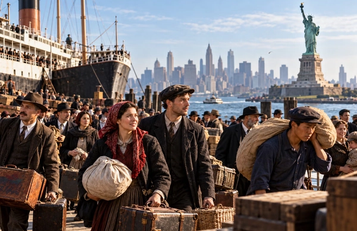
Immigrant Diaries Record the Process of Becoming American
Immigration is usually measured through numbers.
How many arrived?
From where?
When?
Where did they settle?
Diaries reveal the cultural process hidden inside those statistics.
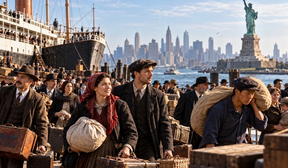
Immigrants described unfamiliar foods, languages, workplaces, schools, religious communities, crowded neighborhoods, discrimination, and the gradual development of new identities.
Some desperately missed home.
Others embraced American life quickly.
Many occupied an emotional space between the two.
Children could adapt faster than parents, creating tension inside families.
Names changed.
Languages mixed.
Traditions evolved.
Letters and diaries reveal that assimilation was rarely a simple process in which one identity disappeared and another replaced it.
People created combinations.
That process helped create American culture itself.
Farmers’ Journals Reveal How Much Weather Once Controlled Life
Before modern forecasting, irrigation systems, crop insurance, refrigeration, and global supply chains, weather could determine a family’s economic survival with brutal efficiency.
Farm diaries are filled with observations about rain, frost, heat, snow, planting, harvests, livestock, and soil.
The repetition can initially seem boring.
Then the pattern becomes clear.
Weather was not small talk.
It was economics.
A late frost could destroy crops.
Too little rain could threaten income.
A severe winter could kill animals.
A successful harvest could determine whether debts were paid.
These journals remind modern readers how directly human survival once depended on local environmental conditions.
They also provide valuable evidence for historians studying climate and agricultural change.
The most ordinary sentence about rainfall can become scientifically significant generations later.
Factory Workers’ Diaries Reveal Industrial America From the Floor
Industrialization is often told through inventors and industrialists.
Workers experienced it through clocks.
Factory labor reorganized time.
Work increasingly began and ended according to schedules established by employers rather than the rhythms of agricultural seasons or independent craft production.
Personal journals and working-class autobiographies describe noise, fatigue, machinery, wages, accidents, supervisors, boarding houses, strikes, and relationships among workers.
They also reveal pride.
Industrial labor was not experienced only as exploitation.
A factory job could provide independence, wages, community, or a path away from rural poverty.
Historical reality often contains both.
People can resent working conditions while valuing the opportunities a job provides.
Diaries are especially good at preserving contradictions that political arguments tend to simplify.
Anne Frank Is Famous, but America Has Its Own Wartime Youth Diaries
The diary of Anne Frank became one of the world’s most widely read personal accounts of World War II.
American wartime diaries provide a different perspective on the same global conflict.
Teenagers recorded rationing, school, dances, military news, relatives serving overseas, victory gardens, scrap drives, and fears about casualties.
Japanese American teenagers incarcerated with their families recorded something dramatically different.
Their diaries describe school, friendships, boredom, uncertainty, discrimination, and the attempt to create ordinary routines inside confinement.
The contrast matters.
There was no single American home-front experience.
A teenager in a Midwestern town, a Black teenager in the segregated South, and a Japanese American teenager inside an incarceration camp were all living through the same war.
Their countries were technically the same.
Their Americas were not.
Japanese American Diaries Make Incarceration Personal
Government records can explain how Japanese Americans were forcibly removed from the West Coast during World War II.
Diaries reveal what removal felt like.
Writers described receiving orders, deciding what possessions to take, leaving homes, entering temporary detention centers, dealing with dust and extreme weather, attending makeshift schools, and attempting to maintain family life.
Some expressed anger.
Others tried to remain optimistic.
Many did both.
This emotional complexity is important.
People experiencing injustice do not spend every hour articulating a historical argument about it.
They still cook, study, fall in love, become irritated with relatives, celebrate birthdays, and worry about ordinary problems.
That normality does not diminish the injustice.
It shows how human beings attempt to preserve ordinary life under extraordinary circumstances.
The Mass Observation of Soldiers’ Lives Makes World War II Less Cinematic
American soldiers’ diaries from World War II contain surprisingly little of what later war movies emphasize.
Combat could be terrifying, but much of military life involved transportation, maintenance, waiting, training, bad food, weather, homesickness, paperwork, and boredom.
A soldier could spend weeks preparing for an event that lasted hours.
This rhythm matters.
Historical narratives naturally compress time.
Three uneventful months can become one sentence.
A twenty-minute battle can become an entire chapter.
Diaries reverse that proportion.
They restore all the waiting that history edits out.
The result is less cinematic but more human.
The Diary of a Young Civil Rights Activist Reveals the Movement Between Famous Marches
The civil rights movement is often remembered through enormous public events.
The Montgomery Bus Boycott.
The March on Washington.
Birmingham.
Selma.
Personal journals and movement records reveal what happened between those moments.
Organizers traveled from town to town.
They attended endless meetings.
They tried to register voters.
They found places to sleep.
They raised money.
They trained volunteers.
They dealt with internal disagreements.
They worried about violence.
They tried again after campaigns failed.
This is one of the most important things diaries teach about social movements.
Historical change contains enormous amounts of administrative work.
The famous march exists because someone printed leaflets, arranged transportation, contacted churches, found lawyers, collected donations, and convinced people to show up.
Movements are built from logistics as much as speeches.
Vietnam War Diaries Reveal a Generation’s Uncertainty
The Vietnam War produced diaries from American soldiers, nurses, journalists, antiwar activists, students, and civilians.
Together they reveal a conflict increasingly surrounded by uncertainty.
Soldiers might struggle to understand military objectives.
Families followed casualty reports.
Students debated the draft.
Antiwar activists argued over tactics.
Supporters of the war worried about communism and American credibility.
The diary format captures how opinions evolved.
A person might support the war in one year and oppose it later.
Someone skeptical of the conflict might still admire individual soldiers.
The categories that appear clear in retrospect were often unstable in real life.
Personal writing preserves the process of changing one’s mind.
That can be more historically revealing than knowing the final opinion.
The AIDS Crisis Was Documented in Diaries Before the Country Fully Understood It
During the early years of the AIDS epidemic, individuals and communities recorded illness, fear, grief, activism, discrimination, friendship, and extraordinary levels of loss.
Personal journals from people living with HIV/AIDS, their partners, healthcare workers, and activists preserve experiences that official government responses often failed to acknowledge adequately.
These records show communities learning about a disease while simultaneously fighting misinformation and stigma.
They also reveal the emotional consequences of repeated loss.
People attended funerals and then another funeral.
Friends became caregivers.
Activists became experts because they felt institutions were moving too slowly.
Medical progress eventually transformed HIV from a frequently fatal diagnosis into a manageable chronic condition for many people with access to effective treatment.
The diaries preserve what it felt like before that future was visible.
September 11 Produced a New Kind of Diary
After the attacks of September 11, 2001, people recorded their experiences through handwritten journals, emails, online forums, photographs, voicemail messages, and early forms of digital diaries.
The variety of sources reflects a transition in how Americans documented their lives.
People described where they were when they heard the news, attempts to contact relatives, confusion about what was happening, fear of additional attacks, and the atmosphere in cities far from New York and Washington.
Later political consequences can make September 11 appear immediately connected to everything that followed.
Contemporary diaries restore the first hours.
People did not yet know about the wars that would follow, the Department of Homeland Security, airport security changes, or the political debates of the next two decades.
They simply knew something terrible had happened.
Again, the future had not yet arrived.
Blogs Became the Diaries of the Early Internet
By the late 1990s and early 2000s, personal writing increasingly moved online.
Blogs allowed ordinary people to publish daily observations to potentially enormous audiences.
This changed the meaning of a diary.
Traditional diaries were often private.
Blogs could be intentionally public.
People documented parenting, politics, travel, illness, careers, relationships, technology, food, and ordinary routines.
Future historians studying the early internet will encounter an enormous amount of personal material that previous generations could never have produced so easily.
They will also encounter a preservation problem.
Websites disappear.
Platforms close.
Links break.
Digital archives can vanish much faster than a notebook stored in an attic.
The era producing more personal writing than perhaps any previous period may also struggle to preserve it.
Social Media Is Creating a Massive, Strange Historical Diary
In some ways, social media has turned hundreds of millions of people into daily diarists.
People record meals, relationships, political opinions, travel, work frustrations, celebrations, grief, jokes, photographs, and reactions to major events.
But social media differs from traditional diaries in one crucial way.
It is performed for an audience.
People select what to show.
They edit photographs.
They delete embarrassing moments.
They exaggerate happiness.
They participate in trends.
Algorithms influence which experiences receive attention.
A future historian using social media to understand twenty-first-century American life will therefore face the same problem historians face with older diaries, only on an enormous scale.
The record is intimate without necessarily being honest.
It reveals what people experienced, but also what they wanted other people to believe they were experiencing.
Both are historically important.
Diaries Can Lie Without Becoming Useless
Private writing has a reputation for honesty.
That reputation deserves caution.
People lie to themselves.
They rationalize behavior.
They exaggerate grievances.
They misremember conversations.
They interpret other people’s motives incorrectly.
Some diarists expected publication and wrote accordingly.
Others destroyed entries they did not want preserved.
A diary is therefore not a perfect record of what happened.
It is a record of what someone believed, remembered, noticed, or wanted to preserve at a particular moment.
That distinction is extremely valuable.
If a diarist incorrectly believes a rumor about an approaching army, the rumor is still historically significant because it affected the writer’s behavior.
History includes not only what was true.
It includes what people thought was true.
The Missing Diaries Matter Too
Historical archives are unequal.
We possess extensive diaries from presidents, wealthy families, educated professionals, and people whose descendants had the resources to preserve their papers.
We have far fewer from enslaved people, extremely poor workers, migrants who traveled with few possessions, people who could not write, and communities whose records were destroyed or never collected by major institutions.
That imbalance can distort history.
If one group leaves ten thousand pages of records and another leaves ten, historians naturally know more about the first.
The challenge is to avoid mistaking archival visibility for historical importance.
Sometimes historians reconstruct ordinary lives through court records, census documents, advertisements, oral traditions, archaeological evidence, photographs, business records, and the writings of other people.
The absence of a diary is itself a reminder of who historically had the time, literacy, privacy, materials, and security required to keep one.
Everyday Life Is Where Historical Change Actually Lands
A new law becomes historically significant when it changes someone’s daily routine.
An economic crisis becomes real when a family cannot pay rent.
A war becomes real when a letter stops arriving.
Immigration becomes real when a child translates for a parent.
Technological change becomes real when a worker discovers that a machine can perform part of a job.
Civil rights become real when someone walks through a door previously closed to them.
Diaries capture those transitions at the smallest possible scale.
They show where enormous historical forces meet individual lives.
That is why a diary entry about buying groceries can sometimes tell us as much about an economy as a presidential speech.
One describes policy.
The other describes what policy feels like.
The Ordinary Days May Be the Most Valuable Ones
The dramatic diary entries naturally attract attention.
The day war begins.
The day someone dies.
The day a president is assassinated.
The day a disaster strikes.
But historians often learn just as much from the pages where almost nothing happens.
What did people eat?
When did they wake?
How often did they bathe?
What did things cost?
How far did they travel?
Who visited?
What illnesses worried them?
What did children do after school?
How did couples divide work?
What did people complain about?
What did they consider too ordinary to explain?
Those details reconstruct a world.
They also reveal how dramatically normal life changes over time.
The past becomes strange not because everyone was constantly experiencing historical events, but because their ordinary routines were different from ours.
A Diary Lets Us Meet History Before It Knows It Is History
Perhaps the most powerful thing about diaries is that they preserve the present tense of the past.
The writer does not know the ending.
A Civil War soldier does not know whether he will return home.
A woman crossing the plains does not know whether her family will reach California.
A teenager during the Depression does not know when jobs will return.
A Japanese American family entering an incarceration camp does not know when it will leave.
A civil rights activist does not know whether Congress will eventually change the law.
A person writing on September 11 does not know what the next twenty years will bring.
We know.
That knowledge makes us poor at remembering what uncertainty feels like.
Diaries give some of that uncertainty back.
They show history before the monuments, documentaries, anniversaries, and textbook chapters arrived. They preserve people dealing with incomplete information, worrying about things that never happened, overlooking developments that later became enormously important, and trying to make plans without knowing what tomorrow would bring.
In that sense, diaries may be the historical sources closest to our own lives.
Most of us do not experience the present as history either.
We experience it as another day that needs to be lived.