What the Past Can Actually Teach Us About the Present
By Sonia Frankel on October 15, 2026

Whenever the world feels unstable, people reach for history. Political crises are compared with the fall of Rome, economic downturns with the Great Depression, international tensions with the years before the world wars, new technologies with the Industrial Revolution, and almost every controversial political figure eventually gets compared with someone from the past. The underlying assumption is understandable: if something similar has happened before, perhaps history can tell us what happens next.
Unfortunately, history is not a prediction machine.
There is no historical event that perfectly matches the present because technology changes, institutions evolve, populations move, economies become more interconnected, and people themselves react to what they know about earlier events. Looking for an exact historical parallel can therefore be misleading. The past is much more useful when we treat it as a collection of patterns, experiments, mistakes, adaptations, and consequences rather than a script that the present is destined to follow.
History rarely tells us exactly what will happen. What it can do is show us what humans have done before when confronted with fear, uncertainty, power, inequality, technological disruption, economic pressure, war, disease, and rapid social change. That is often more useful.
The First Lesson Is That People in the Past Did Not Know What Happened Next
One of the easiest mistakes to make when studying history is forgetting that historical people experienced events forward while we study them backward.
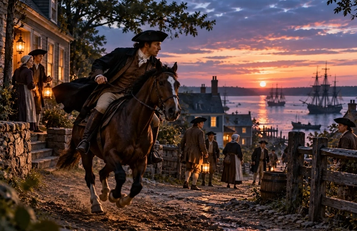
We know that the American Revolution succeeded.
People living in 1776 did not.
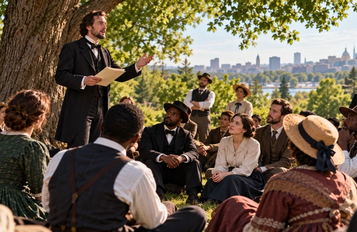
We know the Union eventually won the Civil War.
Americans living through its early years did not.
We know the Great Depression eventually ended.
Families watching banks collapse in the early 1930s did not.
We know the Cuban Missile Crisis did not end in nuclear war.
People following the confrontation in October 1962 could not know that.
Once an event has a conclusion, everything leading toward it begins to look more inevitable than it actually was. Historians can identify causes, turning points, and warning signs because they already know which developments became important.
People inside the event see thousands of possibilities.
So do we.
That is one of history’s most useful lessons: uncertainty is normal.
History Shows That Crisis Often Feels Permanent While It Is Happening
Economic depressions, wars, political upheavals, epidemics, and social conflicts can create the impression that ordinary life will never return.
Sometimes they produce permanent changes.
But the emotional experience of crisis can make temporary conditions feel eternal.
During the Great Depression, unemployment and bank failures created genuine despair about the future of capitalism and democracy. During World War II, there was no guarantee that democratic governments would defeat the Axis powers. During the Cold War, nuclear destruction was a realistic possibility rather than an abstract movie plot.
Yet people adapted.
Institutions changed.
New policies emerged.
Technologies developed.
Political coalitions shifted.
Societies eventually moved into different problems.
This does not mean every crisis automatically resolves itself.
It means the conditions surrounding a crisis are rarely as permanent as they feel from inside it.
Economic Booms Encourage People to Believe the Good Times Are Different
History contains an almost comical number of moments when investors convinced themselves that old economic rules no longer applied.
Asset prices rise.
A new technology or industry creates enormous wealth.
People who were cautious begin watching others become rich.
Borrowing increases.
Speculation spreads.
Then someone explains why this particular boom cannot possibly end like previous ones.
Sometimes the innovation underneath the boom really is transformative.
Railroads genuinely changed economies.
Electricity genuinely changed industry.
The internet genuinely changed the world.
But a revolutionary technology does not automatically justify every price investors are willing to pay for companies associated with it.
The railroad booms of the nineteenth century, the speculation of the 1920s, the dot-com bubble, and the housing boom before 2008 all differed significantly.
They nevertheless reveal a recurring psychological pattern.
Humans become unusually creative at explaining why rising prices will continue rising.
History cannot tell us exactly when a bubble will burst.
It can teach us to become suspicious when people insist that bubbles are no longer possible.
Panic Can Be Just as Dangerous as the Original Problem
Fear changes behavior.
A rumor that a bank might fail can cause depositors to withdraw money, potentially helping create the failure they feared.
Fear of shortages can cause consumers to hoard products, creating actual shortages.
Political fear can convince voters to tolerate actions they would reject during calmer periods.
Fear of an enemy can produce suspicion toward entire communities.
American history contains repeated examples.
During wartime, civil liberties have sometimes been restricted in the name of national security. Japanese American incarceration during World War II demonstrated how fear, racism, and government power could combine to violate the rights of people who had not individually committed crimes.
The Red Scares showed how fear of political subversion could damage reputations and careers.
After terrorist attacks, debates over surveillance and security repeatedly raised questions about how much liberty citizens should surrender for protection.
History does not teach that threats are imaginary.
It teaches that fear itself becomes a political force.
Institutions Matter Most When People Are Angry With Them
Constitutions, courts, elections, legislatures, bureaucracies, and legal procedures can seem frustratingly slow.
That slowness is sometimes deliberate.
Democratic institutions are designed partly to prevent every surge of public anger from immediately becoming permanent policy.
History shows what happens when institutions fail, but it also shows that institutions do not protect themselves.
Rules work because people agree to follow them.
Political norms survive because leaders decide that preserving the system matters more than gaining one temporary advantage.
Courts possess authority because governments generally obey their decisions.
Elections function because losers eventually surrender power.
None of those behaviors is automatic.
The American system has survived periods of extraordinary stress, including a civil war, contested elections, assassinations, economic collapse, and political scandal.
Its survival was never guaranteed simply because the Constitution existed.
Documents create rules.
People determine whether those rules remain meaningful.
Political Polarization Is Not New
Modern political debate can make it seem as though Americans once disagreed politely before social media destroyed national harmony.
American history offers little support for that comforting picture.
The election of 1800 involved vicious personal attacks.
The decades before the Civil War produced political violence and increasingly irreconcilable divisions.
In 1856, Representative Preston Brooks attacked Senator Charles Sumner with a cane inside the U.S. Senate chamber after an antislavery speech.
The election of 1860 was followed by secession.
The late nineteenth century contained intensely partisan elections.
The 1960s and 1970s brought protests, riots, assassinations, bombings, and profound disagreement over race and war.
Political conflict is therefore not new.
What changes are the issues, institutions, communication technologies, and intensity.
History can provide perspective without encouraging complacency.
The fact that polarization happened before does not mean every form of polarization is harmless.
It means we should study which conditions allowed societies to reduce conflict and which allowed it to become dangerous.
New Media Always Changes Politics
Social media feels historically unprecedented because in many ways it is.
Never before have billions of people possessed devices allowing them to publish information instantly to potentially enormous audiences.
But the broader relationship between communication technology and political disruption has precedents.
Cheap newspapers transformed nineteenth-century politics.
The telegraph accelerated news.
Radio allowed politicians to speak directly to mass audiences.
Television changed political presentation.
Cable news expanded the twenty-four-hour political cycle.
The internet shattered older information monopolies.
Each technological change altered who could speak, how quickly information traveled, and which emotional messages were most effective.
Each also generated concerns about manipulation, misinformation, sensationalism, and declining attention.
The useful historical lesson is not that social media is “just like” newspapers or radio.
It is that societies usually need time to develop norms and institutions around new communications technologies.
Technology moves faster than social adaptation.
It almost always has.
Misinformation Is Old, but Its Speed Is New
False information did not begin with the internet.
Political pamphlets spread outrageous accusations during the early republic.
Newspapers published rumors and partisan attacks.
Propaganda flourished during wars.
Conspiracy theories circulated through communities long before anyone had a smartphone.
What has changed is scale and speed.
A false rumor that once traveled through a town over several days can now reach millions of people within hours.
Images can be manipulated.
Video and audio can increasingly be fabricated convincingly.
Algorithms can reward emotionally provocative material regardless of accuracy.
History therefore gives us only part of the answer.
Humans have always been vulnerable to information that confirms what they already believe.
Modern technology has industrialized the process.
Understanding the older psychological pattern helps us recognize why the new technology can be so powerful.
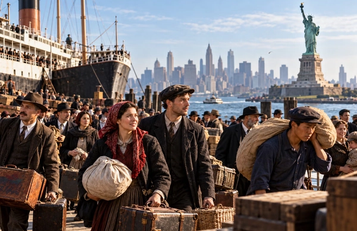
Immigration Debates Repeat More Than We Remember
Every major period of immigration produces arguments that sound surprisingly familiar.
New arrivals are accused of refusing to assimilate.
Their languages create anxiety.
Their religions are portrayed as incompatible with American values.
They are blamed for crime, political radicalism, wage pressure, or cultural decline.
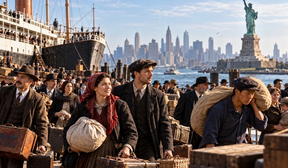
In the nineteenth century, Irish Catholics faced intense hostility.
Chinese immigrants became targets of discriminatory laws and violence.
Southern and Eastern European immigrants were portrayed by some Americans as racially and culturally inferior.
Later generations directed similar anxieties toward immigrants from Latin America, Asia, the Middle East, Africa, and elsewhere.
Historical comparison does not mean immigration creates no genuine policy challenges.
Borders, labor markets, asylum systems, integration, housing, education, and public services involve real questions.
History simply reminds us that predictions that a particular immigrant group can never become American have been made many times before.
Many descendants of those supposedly unassimilable groups are now considered completely ordinary Americans.
Technological Change Creates Winners and Losers at the Same Time
Technological progress is often described as though society moves smoothly from an inferior technology to a better one.
People living through the transition experience something much more complicated.
Industrial machinery increased production but transformed skilled trades.
Railroads created enormous economic opportunities while destroying older transportation businesses.
Automobiles created industries while disrupting communities built around earlier forms of transportation.
Automation eliminated certain jobs while creating others.
The internet destroyed some businesses and created entire industries that had never existed.
Artificial intelligence is likely to produce similarly uneven effects.
The lesson from history is not that displaced workers should simply accept change because new jobs will eventually appear.
“Eventually” can represent decades in a human life.
A technology can benefit society overall while imposing enormous costs on particular workers, industries, and regions.
Economic statistics can show progress while individual communities experience decline.
Both can be true simultaneously.
Inequality Becomes Politically Important When People Stop Believing the System Is Fair
Economic inequality has existed throughout American history, but its political effects depend partly on how people interpret it.
The Gilded Age produced enormous fortunes alongside dangerous working conditions and widespread poverty.
Industrialists built railroads, factories, and corporations that transformed the economy.
They also accumulated unprecedented economic power.
Workers responded through labor organizations, strikes, and political movements.
Reformers eventually pushed for antitrust enforcement, workplace protections, financial regulation, and progressive taxation.
The historical lesson is not that wealth itself automatically produces instability.
It is that societies become politically vulnerable when large numbers of people conclude that the economic system is structured so that effort no longer produces meaningful opportunity.
Perceptions of fairness matter almost as much as economic statistics.
Public Health Depends on Trust
Epidemics repeatedly reveal the relationship between science, government, and public trust.
During disease outbreaks, authorities must persuade people to change behavior, accept inconvenience, and sometimes follow guidance that evolves as scientists learn more.
That is difficult even under ideal circumstances.
The influenza pandemic of 1918 produced disputes over public gatherings, masks, closures, and government restrictions.
COVID-19 generated similar debates on a vastly different technological and political landscape.
The specific diseases were different.
Medical knowledge was different.
Communication systems were different.
But one pattern remained recognizable: public-health measures become much harder to implement when citizens do not trust the institutions issuing them.
Trust cannot easily be manufactured during an emergency.
It is accumulated beforehand.
Wars Are Easier to Start Than to Control
History is filled with wars whose consequences were dramatically different from what political leaders expected.
Governments often imagine short conflicts.
Wars expand.
Alliances pull additional countries into fighting.
Civilian populations become involved.
Economic costs grow.
Political objectives change.
World War I is perhaps the classic example of a crisis escalating into catastrophe. European leaders did not begin the summer of 1914 with a shared plan to produce years of industrial slaughter.
The Vietnam War demonstrated how incremental commitments could grow into a conflict far larger than initially imagined.
The wars after September 11 showed how military victories against governments could lead to far more complicated struggles over occupation, insurgency, and state-building.
History does not prove that war is never necessary.
It shows why predictions about war deserve extreme skepticism.
Governments control how wars begin far more easily than they control what wars become.
Rights Can Expand, but They Can Also Be Restricted
One comforting version of history presents freedom as a steadily rising line.
Reality is less predictable.
The United States abolished slavery and later tolerated decades of segregation.
Black political participation expanded during Reconstruction and was then systematically suppressed across much of the South.
Women’s legal rights expanded gradually but unevenly.
Immigration policies became more open during some periods and more restrictive during others.
Civil liberties expanded through court decisions while governments also increased surveillance during periods of perceived danger.
Progress is real.
It is simply not irreversible.
Every generation inherits institutions and rights created through earlier struggles.
Whether those protections remain meaningful depends on what later generations do with them.
Protest Movements Usually Look Less Organized From the Inside
Historical movements often become extremely tidy after the fact.
A few leaders are selected.
Several famous speeches are remembered.
The movement appears to have possessed clear goals and a coherent strategy.
People living through those movements experienced arguments, mistakes, rivalries, uncertainty, and competing approaches.
The civil rights movement contained disagreements over nonviolence, electoral politics, economic justice, federal power, self-defense, and the pace of change.
The women’s movement included major ideological divisions.
Labor movements disagreed over tactics and political alliances.
The American Revolution itself contained competing visions of what independence should mean.
Modern movements can therefore appear unusually chaotic only because we are comparing them with edited versions of historical ones.
Successful movements rarely begin knowing exactly what success will look like.
Progress Often Comes From People Who Seem Unreasonable at First
Ideas that later become mainstream can initially appear radical.
Abolitionists demanding an end to slavery were once considered dangerous extremists by many Americans.
Women’s suffrage was mocked for decades.
Labor organizers demanding shorter working hours faced fierce opposition.
Civil rights activists challenging segregation were accused of creating disorder.
Disability rights activists demanding accessible public spaces confronted institutions that treated accessibility as unrealistic or excessively expensive.
Not every radical demand becomes wise simply because some historical radicals were eventually vindicated.
The lesson is different.
Popularity is not a reliable measurement of moral or political correctness.
A society can become accustomed to injustice simply because it has existed for a long time.
Ordinary People Matter More Than Historical Narratives Suggest
History books naturally focus on presidents, generals, billionaires, and movement leaders because their actions are well documented and their decisions affect large numbers of people.
But major change often depends on millions of smaller decisions.
Consumers change markets.
Workers organize workplaces.
Parents change expectations for their children.
Migrants reshape cities.
Voters alter political coalitions.
Students create movements.
Communities adopt technologies.
People decide which social behaviors they will tolerate and which they will challenge.
The civil rights movement required famous leaders, but it also required ordinary people willing to boycott buses, register to vote, attend meetings, and face retaliation.
Economic transformations require entrepreneurs, but they also require millions of consumers willing to change habits.
History happens at the top.
It also happens everywhere else.
Nostalgia Is a Terrible Historical Method
Every generation creates an edited version of the period when its members were younger.
Music was better.
Communities were stronger.
People were more respectful.
Politics was less hostile.
Families were more stable.
Life was simpler.
Some things genuinely were better in earlier periods.
Others were considerably worse.
Nostalgia selects what felt comforting and removes much of the surrounding context.
The 1950s can represent economic security and expanding homeownership while also containing segregation, discrimination, Cold War fear, and limited opportunities for many women.
The 1990s can feel peaceful in retrospect while containing terrorism, wars, violent crime, economic insecurity, and international conflict.
Historical perspective becomes useful when it allows us to compare actual conditions rather than memories of atmosphere.
The Future Rarely Arrives in the Form People Predict
People are surprisingly bad at imagining how major changes will unfold.
New technologies create consequences their inventors did not anticipate.
Political reforms produce unexpected coalitions.
Wars reshape societies in ways their planners never intended.
Economic policies create secondary effects that appear years later.
Predictions often focus on the most dramatic possibility while overlooking quieter transformations.
The internet was once imagined primarily as an information network.
It became a shopping center, entertainment system, political battlefield, workplace, dating service, advertising platform, social environment, and infrastructure for countless industries.
Smartphones looked like better phones before they became cameras, maps, wallets, televisions, offices, newspapers, and social identities carried in a pocket.
The future usually emerges through combinations of changes rather than one dramatic invention.
History teaches humility about prediction.
There Is Almost Never a Perfect Historical Analogy
Calling a modern recession “another Great Depression” can exaggerate similarities while ignoring differences.
Calling every international confrontation “another Munich” can push leaders toward military action by suggesting compromise always produces disaster.
Calling every political scandal “another Watergate” can distort what actually happened.
Calling every technological innovation “the new printing press” eventually makes the comparison meaningless.
Analogies can help us identify questions.
They become dangerous when they supply answers automatically.
The useful question is not, “Which historical event is this exactly like?”
It is, “Which parts resemble earlier situations, which parts are different, and what happened under different responses?”
History works best as a comparison tool rather than a template.
The Past Shows How Quickly “Normal” Can Change
Perhaps one of history’s most useful lessons is how temporary normality really is.
Before 1929, certain economic assumptions seemed normal.
Before 1945, nuclear weapons did not exist.
Before the 1960s, legally enforced racial segregation remained ordinary across large parts of the United States.
Before the internet, information moved through completely different institutions.
Before smartphones, being unreachable for several hours was ordinary.
Before COVID-19, millions of office workers had never seriously considered working from home.
People adapt remarkably quickly.
What initially feels revolutionary eventually becomes routine.
Then a generation grows up unable to imagine the world that existed before it.
That should make us cautious whenever someone claims that a current institution, technology, political arrangement, or social habit is permanent.
History is full of permanent things that disappeared.
What History Really Gives Us Is Perspective
The past cannot tell us who will win the next election, when the next recession will arrive, whether a particular technology will succeed, or which international crisis will become dangerous.
What it can do is expand the range of possibilities we are capable of imagining.
History shows that democracies can survive severe crises and that they can also fail.
It shows that economies recover and that recovery can take years.
It shows that technologies create prosperity while disrupting lives.
It shows that propaganda works because people want certain stories to be true.
It shows that rights can expand after decades of struggle and disappear when institutions fail to defend them.
It shows that people frequently underestimate dangers that develop gradually and overestimate dangers that arrive dramatically.
Most importantly, history reminds us that the people living through famous events were ordinary humans dealing with incomplete information.
So are we.
History Does Not Repeat, but Human Behavior Rhymes Remarkably Well
The details of the present are new.
Human nature is much older.
People still fear losing status.
They still follow crowds.
They still search for simple explanations during complicated crises.
They still become overconfident during prosperity and pessimistic during downturns.
They still divide the world into groups.
They still respond to charismatic leaders.
They still cooperate during disasters.
They still sacrifice for strangers.
They still organize against injustice.
They still make terrible decisions under pressure and extraordinary decisions under equally difficult circumstances.
That is why the past remains useful even when circumstances change.
History does not give us instructions.
It gives us case studies in being human.
The smartest way to use those case studies is neither to assume that everything has happened before nor to insist that the present is completely unprecedented. It is to recognize familiar patterns while paying close attention to what has genuinely changed.
The past cannot tell us exactly what comes next.
But it can make us much better at recognizing what is happening while we are living through it.