The American Inventors Who Changed the World (And Got Forgotten)
By Roy Kaden on October 15, 2026
The history of American invention tends to revolve around a surprisingly small collection of names.
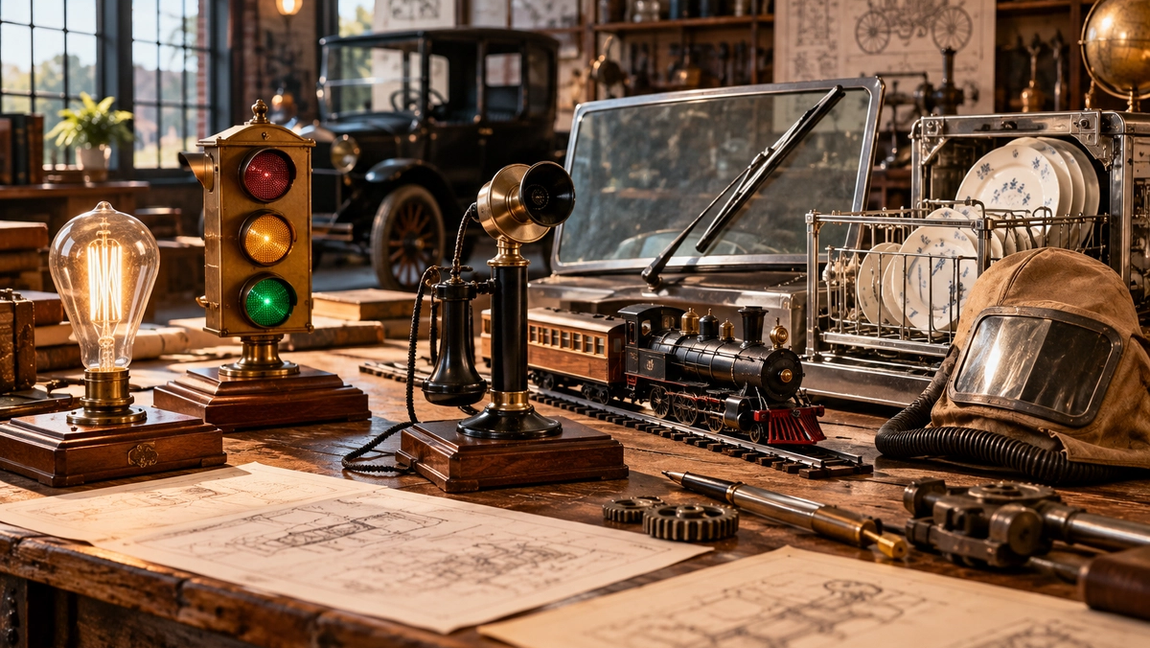
Thomas Edison gave us the light bulb. Alexander Graham Bell invented the telephone. The Wright brothers made powered flight possible. Henry Ford transformed the automobile industry.
The real stories behind even those inventions are more complicated than the familiar versions suggest. Technologies rarely appear because one brilliant person suddenly has an idea. They develop through experimentation, competition, earlier discoveries, improvements, financing, manufacturing, and sometimes bitter fights over patents and credit.
That process has left plenty of important inventors outside the popular story.
Some were women working when patents and engineering careers were overwhelmingly dominated by men. Others were Black inventors navigating segregation and discrimination. Some created technologies that became everyday necessities while their names disappeared almost completely.
You probably use the descendants of their inventions all the time.
Lewis Latimer Helped Make Electric Light Practical
Thomas Edison is permanently associated with electric lighting, but the development of a practical electrical world involved many inventors and engineers.
Lewis Latimer was one of them.
Born in Massachusetts in 1848 to parents who had escaped slavery, Latimer served in the U.S. Navy before becoming skilled in technical drawing and patent work.
He worked with several major inventors and eventually became involved in the emerging electric-light industry. Latimer developed improvements related to carbon filaments and manufacturing processes used in incandescent lamps. He later worked for the Edison Electric Light Company.
His expertise extended beyond lighting. Earlier in his career, he had prepared technical drawings associated with Alexander Graham Bell’s telephone patent application.
Latimer’s career placed him remarkably close to two technologies that transformed modern life: electric lighting and telecommunications.
Yet while Edison and Bell became household names, Latimer remained largely outside the popular version of invention history.
Garrett Morgan Made Dangerous Streets Safer
Garrett Morgan was an inventor, businessman, and entrepreneur who approached everyday problems with a practical question: how could this work better?
One of his inventions was an early three-position traffic signal.
Traffic signals already existed, but Morgan patented a system in 1923 that introduced an intermediate warning position between stop and go. The basic idea—giving traffic time to transition rather than instantly switching directions—became fundamental to modern traffic management.
Morgan also developed a safety hood designed to protect people from smoke and harmful gases.
In 1916, after an explosion trapped workers in a tunnel beneath Lake Erie, Morgan and others used versions of his breathing device during rescue efforts.
His inventions addressed problems created by a rapidly industrializing America: crowded roads, dangerous workplaces, smoke, machinery, and growing cities.
Millions of people would eventually benefit from technologies built around the same safety principles.
Few would know Morgan’s name.
Mary Anderson Saw a Problem Through a Snowy Window
Sometimes a transformative invention begins with an inconvenience everyone else has simply accepted.
In the early twentieth century, Mary Anderson was visiting New York City when she noticed the difficulty drivers experienced keeping windshields clear during bad weather.
Drivers sometimes had to stop and clean their windows manually or drive with sections of the windshield open.
Anderson imagined a better solution.
In 1903, she received a patent for a manually operated windshield-cleaning device. A lever inside the vehicle controlled a blade that moved across the exterior glass.
The idea resembles the basic mechanism of the windshield wiper.
Anderson reportedly struggled to commercialize her invention, and her patent eventually expired. As automobiles became increasingly common, windshield wipers became standard equipment.
Today it is difficult to imagine a car without them.
That is one of the strange patterns of invention: an idea can become almost universally adopted while the person behind an early version of it disappears from memory.
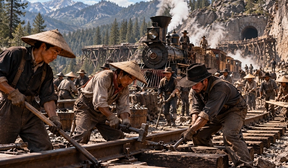
Granville T. Woods Improved the Railway Age
Granville T. Woods became one of the most prolific Black American inventors of the late nineteenth century.
Much of his work focused on electricity and railway systems.
Woods developed and patented technologies involving electrical railway equipment, communications, braking systems, and power transmission. One of his best-known innovations involved communication between moving trains and railway stations.
That mattered enormously in an era when railroads were becoming the arteries of the American economy.
Better communication could make railway operations more efficient and safer.
Woods became successful enough that his inventions attracted the attention of major companies and other inventors. His career also involved patent disputes, including conflicts associated with Thomas Edison.
Popular accounts sometimes call Woods the “Black Edison,” but the nickname unintentionally illustrates the problem with how invention is remembered.
Woods does not need to be described through Edison.
His own record was remarkable.
Josephine Cochrane Wanted a Machine to Wash Dishes
Josephine Cochrane was frustrated.
According to the familiar story, household servants were occasionally chipping her fine china while washing it by hand. Rather than simply accepting the problem, Cochrane began thinking about a machine that could clean dishes safely.
Earlier dishwashing devices had existed, but Cochrane developed a more practical mechanical design that used water pressure rather than scrubbers.
She patented her dishwasher in 1886.
At first, the machine was particularly attractive to commercial customers such as hotels and restaurants because early versions were expensive and required plumbing infrastructure that many homes lacked.
Cochrane continued developing the business around her invention and exhibited it at the 1893 World’s Columbian Exposition in Chicago.
Her company eventually became connected through later corporate developments to what became KitchenAid.
The dishwasher is now so ordinary that it barely feels like an invention.
That is often the ultimate fate of successful technology: once it works well enough, people stop thinking about who created it.
Elijah McCoy Made Machines Work Better
Elijah McCoy was born in Canada in 1844 to parents who had escaped slavery in the United States.
After studying engineering in Scotland, he returned to North America and eventually worked around steam-powered railway equipment.
Steam engines required regular lubrication. Machinery often had to be stopped so workers could apply oil manually.
McCoy developed automatic lubricating devices that allowed machinery to remain lubricated while operating.
It sounds like a relatively small improvement compared with inventing a locomotive or engine from scratch.
Economically, however, improvements like this can be enormously valuable.
Machines that operate longer with fewer interruptions increase productivity, reduce downtime, and make industrial systems more efficient.
McCoy ultimately received numerous U.S. patents during his career.
There is a popular claim that the phrase “the real McCoy” originated because customers specifically demanded McCoy’s authentic lubricating devices rather than inferior copies. The expression’s actual origin remains disputed.
His inventions, however, do not depend on the legend to be impressive.
Margaret E. Knight Changed Manufacturing With a Paper Bag
Look at a traditional flat-bottomed paper shopping bag and you are looking at the descendant of a nineteenth-century manufacturing breakthrough.
Margaret E. Knight developed a machine capable of automatically cutting, folding, and gluing paper to produce flat-bottomed bags.
Her path to receiving credit was not straightforward.
While Knight was developing her machine, another person attempted to patent a similar design. Knight challenged the claim and produced evidence demonstrating her work on the invention.
She eventually received her patent in 1871.
Knight went on to receive patents for numerous other inventions involving machinery and mechanical devices.
Her career challenged assumptions about women and engineering at a time when women had extremely limited access to technical professions.
She was not simply someone with one clever idea.
She was an engineer and prolific inventor.
Jan Matzeliger Transformed Shoe Manufacturing
In the nineteenth century, making shoes required significant skilled manual labor.
One particularly difficult stage was “lasting,” the process of shaping and attaching the upper portion of a shoe around a form before connecting it to the sole.
Jan Ernst Matzeliger helped mechanize that process.
Born in what was then Dutch Guiana, now Suriname, Matzeliger eventually settled in Lynn, Massachusetts, an important center of American shoe manufacturing.
He developed a lasting machine capable of performing work that had previously required skilled hand labor.
The invention dramatically increased the number of shoes that could be produced and helped reduce manufacturing costs.
Matzeliger died young, in his thirties, and never enjoyed the long-term financial rewards that the importance of his invention might suggest.
But his machine helped transform an entire industry.
Sometimes the inventions with the greatest impact are not glamorous consumer products. They are machines hidden inside factories that quietly change how everything else gets made.
Hedy Lamarr Was More Than a Hollywood Star
Hedy Lamarr is remembered primarily as a glamorous Hollywood actress.
She was also an inventor.
During World War II, Lamarr worked with composer George Antheil on a communication system based on rapidly changing radio frequencies. Their concept was intended to make radio-controlled torpedoes more difficult for enemies to detect or jam.
They received a U.S. patent in 1942.
The technology was not immediately adopted for its original intended purpose, and it would be misleading to say that Lamarr single-handedly invented Wi-Fi, as some simplified internet stories claim.
However, frequency-hopping concepts became important in the broader development of spread-spectrum communications, technologies that would later have applications in wireless systems.
For decades, Lamarr’s technical work received far less public attention than her film career.
Her story is a useful reminder that the categories we place people into can determine which parts of their lives history remembers.
Why Do Some Inventors Become Famous?
Invention and fame are not the same thing.
Some inventors were brilliant at developing technologies but less successful at commercializing them. Others sold their patents, worked for companies, died young, or created improvements that became absorbed into larger systems.
Race, gender, wealth, education, and professional connections also affected who had access to laboratories, investors, patent lawyers, manufacturers, and publicity.
Then there is storytelling.
History prefers a simple sentence.
“Edison invented the light bulb” is easier to remember than explaining decades of experimentation by numerous inventors who developed different components of practical electrical lighting.
But simplicity comes at a cost.
It creates the impression that technological progress happens through isolated flashes of genius rather than networks of people building on one another’s work.
The Best Inventions Eventually Become Invisible
There is something almost unfair about a truly successful invention.
If it works well enough, later generations stop noticing it.
You turn on a light. Start a car. Wait at a traffic signal. Wash dishes. Buy something in a paper bag. Board a train. Connect wirelessly to another device.
None of those actions feels revolutionary anymore.
That is precisely because generations of inventors solved the problems so thoroughly that their solutions became ordinary.
The famous names still deserve their place in history.
But they should not stand there alone.
Behind nearly every major technological transformation are people who improved the machinery, solved practical problems, challenged existing designs, and created the small breakthroughs that allowed the larger ones to work.
Some became legends.
Others simply changed the world and disappeared from the story.