The Civil Rights Leaders Beyond the Ones in Textbooks
By Sonia Frankel on October 15, 2026
The American civil rights movement is often taught through a handful of unforgettable names and moments.
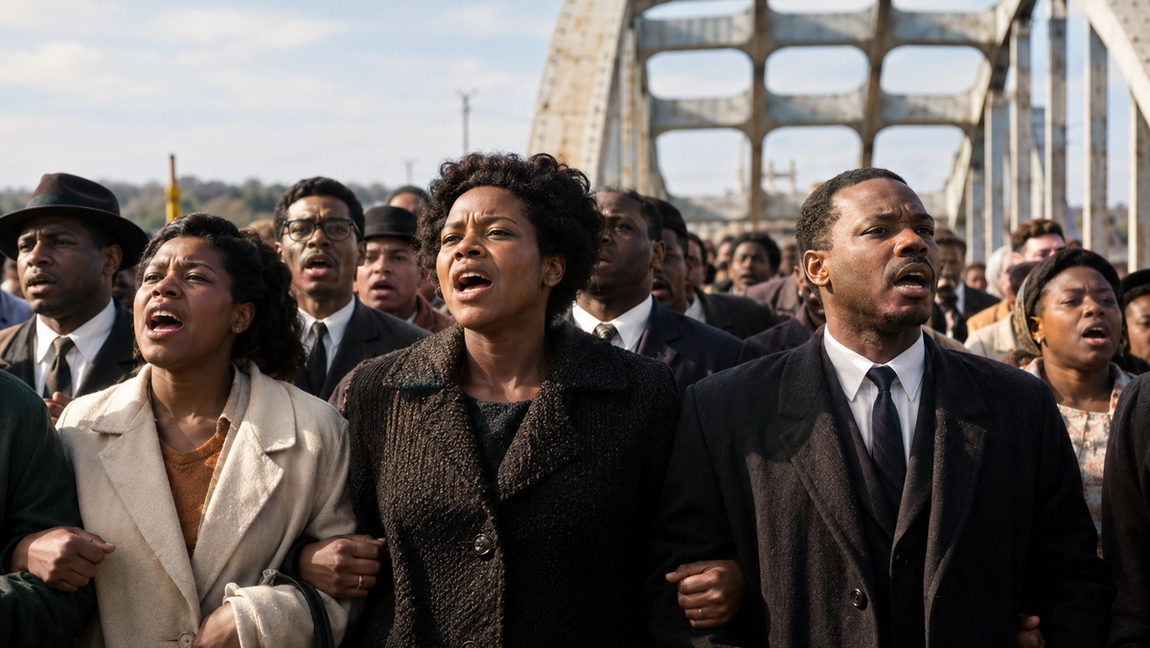
Martin Luther King Jr. delivered the “I Have a Dream” speech. Rosa Parks refused to give up her seat. Malcolm X challenged America with a more confrontational vision of Black freedom. John Lewis crossed the Edmund Pettus Bridge.
Those stories matter enormously. But they can also create the impression that the movement was driven by a few extraordinary individuals.
It was not.
Behind the famous speeches and photographs were organizers who spent years registering voters, training activists, raising money, challenging segregation in court, building local organizations, coordinating boycotts, protecting demonstrators, and persuading ordinary people to take extraordinary risks.
Many never became household names.
Without them, some of the most famous moments of the civil rights movement might never have happened.
Ella Baker Believed Movements Needed People, Not Heroes
Ella Baker rarely sought the spotlight.
That was partly the point.
Born in Virginia in 1903, Baker became one of the most important organizers of the twentieth-century civil rights movement. She worked with several major organizations, including the NAACP and the Southern Christian Leadership Conference.
But Baker was skeptical of movements built around charismatic leaders.
She believed ordinary people already possessed the ability to understand their communities and organize for change. Leadership, in her view, should be developed from the bottom up rather than concentrated in one famous individual.
That philosophy became particularly important during the student movement of the 1960s.
When young activists began organizing sit-ins across the South, Baker helped bring them together at a conference that contributed to the formation of the Student Nonviolent Coordinating Committee, better known as SNCC.
SNCC would become one of the most important organizations of the civil rights era.
Baker’s influence was enormous precisely because she spent so much of her career helping other people become leaders.
Bayard Rustin Organized One of America’s Most Famous Marches
The 1963 March on Washington is one of the most recognizable events in American history.
Hundreds of thousands of people gathered in the nation’s capital. Martin Luther King Jr. delivered his most famous speech from the steps of the Lincoln Memorial.
Behind the scenes, much of the enormous organizational challenge fell to Bayard Rustin.
Rustin was an experienced strategist who had spent years working on nonviolent protest, racial equality, labor rights, and pacifism. He had studied Gandhian nonviolence and became an important adviser to King during the Montgomery Bus Boycott.
For the March on Washington, Rustin helped coordinate transportation, security, scheduling, volunteers, logistics, and countless other details required to bring a massive demonstration together.
Yet he often remained outside the public spotlight.
Rustin was openly gay later in life and had faced discrimination because of his sexuality. Political opponents attempted to use his personal life against the movement, contributing to efforts to keep him away from prominent leadership roles.
History remembers the speech.
It should also remember the organizer who helped make the stage possible.
Septima Clark Built a Movement Through Classrooms
Not every revolution begins with a march.
Some begin with someone learning to read a ballot.
Septima Poinsette Clark was a teacher and civil rights activist from South Carolina who understood that political participation required more than simply telling people to vote.
Black citizens across the South faced literacy tests, intimidation, discriminatory registration practices, and other barriers designed to prevent them from voting.
Clark helped develop Citizenship Schools that taught adults literacy alongside practical information about voting, civic participation, and community leadership.
The idea was powerful because education became a tool for political independence.
Instead of activists simply arriving in a community and telling residents what to do, Citizenship Schools helped people develop skills they could use themselves.
Thousands participated in programs inspired by this model.
Clark’s work demonstrates that some of the civil rights movement’s most consequential victories were built slowly, one classroom and one community at a time.
Fannie Lou Hamer Made America Listen
Fannie Lou Hamer did not begin her life with political power.
She was born into a Mississippi sharecropping family in 1917 and spent much of her early life working in cotton fields.
In 1962, she attended a meeting where activists explained that Black citizens had the constitutional right to vote.
Hamer decided to register.
The consequences were immediate. She lost her job and faced threats and violence. Instead of withdrawing, she became an organizer.
Working with SNCC and other activists, Hamer encouraged Black Mississippians to register to vote despite enormous risks.
In 1964, she helped establish the Mississippi Freedom Democratic Party, which challenged the legitimacy of Mississippi’s all-white delegation to the Democratic National Convention.
Hamer testified publicly about the violence and discrimination Black voters faced.
Her nationally televised testimony forced Americans far beyond Mississippi to confront what voter suppression actually looked like.
Hamer had little of the traditional background associated with political leadership.
That was exactly what made her presence so powerful.
Diane Nash Turned Student Protest Into Strategy
Diane Nash was a college student when she became one of the central strategists of the Nashville civil rights movement.
She helped organize sit-ins challenging segregated lunch counters and became a leader within the emerging student movement.
But Nash’s influence extended far beyond one campaign.
In 1961, when Freedom Riders attempting to challenge segregation in interstate travel were violently attacked, some organizers considered stopping the rides because of the danger.
Nash helped ensure they continued.
She coordinated new groups of riders who were willing to travel into the Deep South despite the possibility of arrest and violence.
Nash later worked on voting rights campaigns and contributed to organizing efforts that helped create pressure for major federal civil rights legislation.
She was remarkably young while doing much of this work.
The movement was not simply led by established adults giving instructions to students. In many places, students themselves were making strategic decisions that pushed the movement forward.
Claudette Colvin Refused Her Seat Before Rosa Parks
Nine months before Rosa Parks was arrested in Montgomery, Alabama, 15-year-old Claudette Colvin refused to surrender her bus seat to a white passenger.
Police arrested her.
Her story raises an obvious question: why did Parks become the symbol of the Montgomery Bus Boycott while Colvin remained relatively unknown?
Movement strategy was complicated.
Civil rights organizations needed plaintiffs and public cases that could survive enormous scrutiny from hostile officials, newspapers, and courts. Colvin was young, and after her arrest she became pregnant, circumstances movement leaders feared segregationists would exploit.
Rosa Parks, meanwhile, was not simply a tired passenger who spontaneously refused to move. She was an experienced activist with strong connections to local civil rights organizations.
But Colvin did not disappear from the struggle.
She later became one of the plaintiffs in Browder v. Gayle, the federal case that successfully challenged segregation on Montgomery’s buses.
The famous boycott has one central symbol.
The legal victory behind it involved several women.
Fred Shuttlesworth Challenged Segregation in One of the Most Dangerous Cities
Birmingham, Alabama, became one of the defining battlegrounds of the civil rights movement.
Long before national television cameras arrived, Fred Shuttlesworth was already confronting segregation there.
A Baptist minister and activist, Shuttlesworth helped establish the Alabama Christian Movement for Human Rights after Alabama authorities effectively forced the NAACP to stop operating in the state.
His activism made him a target.
In 1956, Ku Klux Klan members bombed his home. Shuttlesworth survived and continued organizing.
He challenged segregated schools, buses, and public facilities despite repeated arrests and violence.
Later, he helped persuade Martin Luther King Jr. and the Southern Christian Leadership Conference to focus national attention on Birmingham.
The 1963 Birmingham campaign produced some of the civil rights era’s most shocking images, including police dogs and powerful fire hoses being used against demonstrators.
Those images reached the world.
But the campaign rested on years of local resistance that people like Shuttlesworth had already built.
Pauli Murray Saw Connections Others Missed
Pauli Murray spent a lifetime challenging categories.
A lawyer, writer, activist, and later Episcopal priest, Murray developed legal arguments that influenced both the civil rights and women’s rights movements.
Years before Brown v. Board of Education, Murray wrote extensively about segregation laws and argued that “separate but equal” should be directly challenged as unconstitutional.
Thurgood Marshall and other civil rights lawyers used Murray’s legal research.
Murray later argued that discrimination based on sex had important legal parallels with racial discrimination. That thinking influenced future women’s rights litigation, including the work of Ruth Bader Ginsburg.
Murray’s career connected struggles that were often treated separately.
Race, gender, law, economic inequality, and personal freedom were not isolated issues in Murray’s thinking. They overlapped.
Many of the ideas that later became central to American civil rights law were being developed years earlier by someone whose name remained unfamiliar to much of the public.
A. Philip Randolph Connected Civil Rights With Economic Power
Long before the famous March on Washington in 1963, A. Philip Randolph understood that economic pressure could force political change.
Randolph was a labor organizer and leader of the Brotherhood of Sleeping Car Porters, a predominantly Black union representing workers employed on passenger railways.
The porters performed demanding service work while facing racial discrimination and poor working conditions.
Randolph spent years organizing them.
In 1941, he threatened to lead a massive march on Washington to protest discrimination in defense industries and the military.
President Franklin D. Roosevelt responded by issuing an executive order prohibiting racial discrimination in defense employment and establishing a federal committee to investigate complaints.
Randolph later pressured President Harry Truman over segregation in the armed forces.
By 1963, he was one of the senior figures behind the March on Washington for Jobs and Freedom.
The full name matters.
Civil rights activists were not fighting only for access to restaurants and voting booths. Economic opportunity, wages, employment, and labor rights were deeply connected to their demands for equality.
The Movement Was Larger Than Its Most Famous Faces
The civil rights movement needed people like Martin Luther King Jr., Rosa Parks, John Lewis, and Malcolm X.
But it also needed Ella Baker building organizers instead of followers.
It needed Bayard Rustin planning logistics. Septima Clark teaching citizenship. Fannie Lou Hamer confronting voter suppression. Diane Nash keeping dangerous campaigns alive. Claudette Colvin challenging segregation before the country was watching. Fred Shuttlesworth organizing when doing so could get him killed. Pauli Murray developing legal ideas that would influence future generations. A. Philip Randolph connecting racial justice with economic power.
And even those names represent only a fraction of the movement.
Thousands of people opened their homes to activists, drove neighbors to meetings, registered voters, printed flyers, raised bail money, attended demonstrations, filed lawsuits, cooked meals, protected organizers, and risked their jobs and safety.
Most never appeared on television.
That does not make their contribution smaller.
It reveals something important about how social change actually happens.
History tends to remember the person standing at the microphone.
Movements depend just as much on everyone standing behind it.