The Economic Panics and Crashes Every American Should Know About
By Roy Kaden on October 15, 2026
American economic history has a recurring pattern.
Things are going well. People become confident. Credit becomes easier to obtain. Investors decide that whatever is rising will probably keep rising. Money pours into land, stocks, railroads, houses, technology, or some other exciting opportunity.
Then something breaks.
Prices fall. Borrowers cannot repay loans. Banks become nervous. Investors panic. Businesses cut spending. Workers lose jobs. Everyone suddenly wonders how nobody saw the disaster coming.
Then, eventually, the economy recovers.
And a new generation becomes convinced that this time things are different.
From nineteenth-century bank runs to the Great Depression, the dot-com bubble, and the 2008 financial crisis, America’s biggest economic disasters are surprisingly connected. The details change, but the combination of speculation, debt, fear, and human behavior appears again and again.
The Panic of 1819 Was America’s First Major Financial Crisis
The young United States experienced its first major peacetime financial crisis in 1819.
The years after the War of 1812 had brought rapid economic expansion.
Land prices increased. Credit was widely available. Banks issued loans. Farmers and speculators borrowed money to purchase western land.
For a while, the boom seemed sustainable.
Then conditions changed.
Agricultural prices fell, credit tightened, and heavily indebted borrowers struggled to repay their loans.
Banks failed.
Businesses collapsed.
Unemployment increased.
Farmers lost land through foreclosure.
For many Americans, it was their first experience with a national economy capable of producing prosperity and misery on a large scale.
It also introduced a political question that would return during almost every later crisis.
Who should be blamed when the financial system collapses?
Banks? Borrowers? Speculators? Government policy?
Americans have been arguing about that ever since.
The Panic of 1837 Turned a Boom Into a Long Depression
The 1830s produced another wave of speculation.
Land prices were rising rapidly, and credit helped fuel the boom.
President Andrew Jackson was deeply suspicious of concentrated financial power and opposed the Second Bank of the United States, which functioned as an important national financial institution.
His administration also issued the Specie Circular, requiring many purchases of federal land to be made using gold or silver rather than paper currency.
Meanwhile, international financial conditions were tightening.
The boom collapsed.
In 1837, banks began suspending payments, businesses failed, unemployment increased, and the country entered a severe economic downturn.
The crisis became politically devastating for President Martin Van Buren, who had entered office only weeks before the panic.
That would become another familiar American pattern.
Presidents often receive enormous credit when the economy is strong and enormous blame when it collapses, even when the causes extend far beyond the White House.
The Panic of 1857 Showed How Connected the Economy Had Become
By the 1850s, railroads were transforming the United States.
They connected cities, opened western lands to development, encouraged investment, and became some of the country’s largest businesses.
They also attracted enormous speculation.
When economic conditions weakened in 1857, railroad investments suffered.
The failure of the Ohio Life Insurance and Trust Company, a major financial institution, helped trigger panic.
Banks came under pressure.
Businesses failed.
Stock prices fell.
The downturn spread quickly enough to demonstrate something important.
America’s regional economies were becoming increasingly connected.
A financial failure in one place could now create problems hundreds of miles away.
Technology and transportation were making the country richer.
They were also allowing financial trouble to travel faster.
The Panic of 1873 Started America’s First Great Depression
Long before the 1930s became known as the Great Depression, Americans used similar language for the prolonged downturn that followed the Panic of 1873.
Again, railroads were at the center of the story.
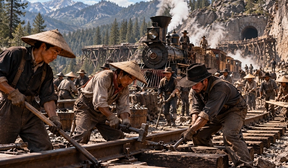
After the Civil War, railroad construction exploded.
Investors poured money into new lines, sometimes based on wildly optimistic expectations about future growth.
One of the major investment firms financing railroad expansion was Jay Cooke & Company.
When the firm collapsed in September 1873, panic spread through the financial system.
The New York Stock Exchange temporarily closed.
Banks and businesses failed.
Railroad construction slowed dramatically.
Unemployment increased.
The economic hardship contributed to labor unrest, including the Great Railroad Strike of 1877, one of the largest labor conflicts in nineteenth-century America.
The crisis showed that financial bubbles did not simply hurt wealthy investors.
When investment collapsed, ordinary workers paid the price through unemployment and lower wages.
The Panic of 1893 Was Another Railroad Disaster
If the story is beginning to sound repetitive, that is the point.
By the early 1890s, America had once again experienced aggressive railroad expansion and financial speculation.
Then major railroad companies began failing.
Confidence collapsed.
Banks failed.
Businesses closed.
Unemployment surged.
The Panic of 1893 became one of the most severe economic downturns in American history before the 1930s.
The crisis also intensified political arguments about money.
Should the United States remain closely tied to gold, or should silver play a larger role in expanding the money supply?
That debate may sound painfully technical today, but in the 1890s it was one of the biggest political questions in America.
Farmers and debtors often wanted easier money and some inflation, which could make debts easier to repay.
Creditors generally preferred a stronger currency that protected the value of the money they were owed.
Monetary policy had become a political battle over who benefited from the economic system.
The Panic of 1907 Nearly Broke the Financial System
In 1907, another crisis revealed a major weakness in American banking.
There was no modern central bank capable of quickly injecting money into the financial system during a panic.
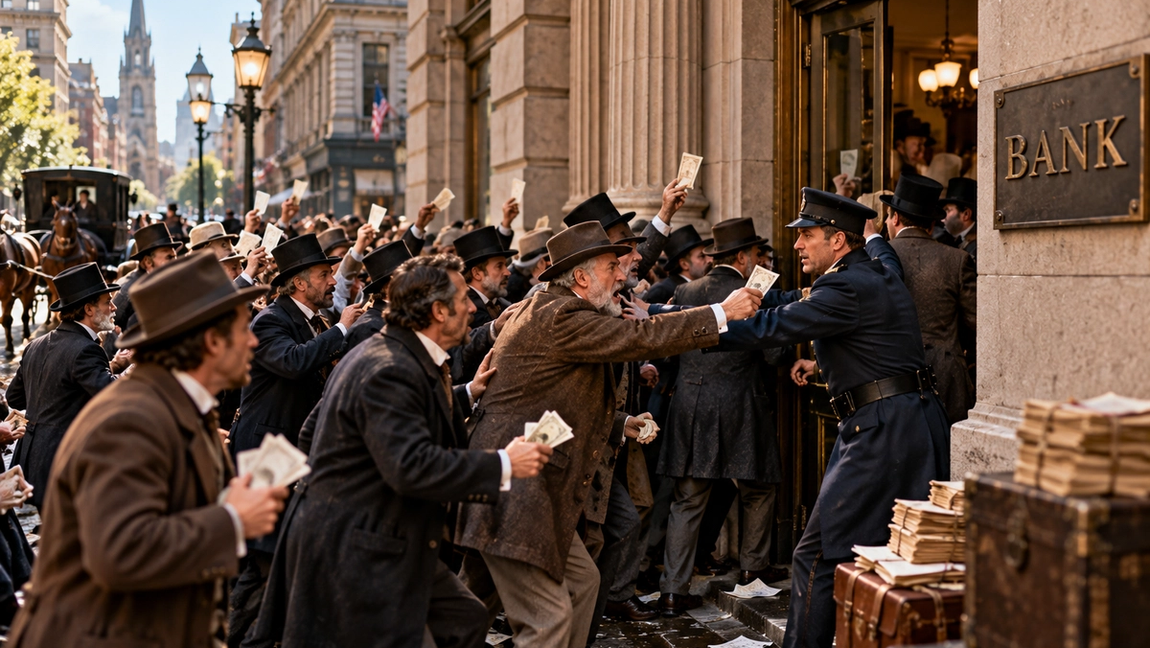
When several financial institutions came under pressure, frightened depositors began withdrawing money.
Trust companies and banks struggled to meet demands for cash.
The crisis became severe enough that one private banker emerged as the unofficial rescuer of the financial system.
J. P. Morgan.
Morgan gathered powerful bankers and financiers and helped organize emergency support for struggling institutions.
The strategy helped stabilize the crisis.
But it raised an obvious question.
Should the survival of the American financial system depend on one extremely wealthy private citizen organizing a rescue from his library?
The answer increasingly became no.
The Panic of 1907 helped build political support for creating a central banking system.
In 1913, Congress established the Federal Reserve.
America had decided it needed something capable of responding when financial panic threatened the entire economy.
The Crash of 1929 Became the Disaster Everyone Remembers
The 1920s produced one of the most famous financial bubbles in American history.
Stock prices soared.
Ordinary Americans increasingly participated in the market, sometimes purchasing stocks with borrowed money.
Optimism seemed endless.
Then came October 1929.
Stock prices collapsed during a series of chaotic trading sessions.
Black Tuesday, October 29, became the most famous.
But the stock market crash was only the beginning.
Banks failed.
Credit disappeared.
Consumer spending collapsed.
Businesses reduced production.
Unemployment soared.
International trade contracted.
By 1933, roughly one-quarter of the American labor force was unemployed.
The Great Depression became much larger than a Wall Street crisis.
It transformed politics, banking, regulation, welfare, and Americans’ expectations of the federal government.
President Franklin D. Roosevelt’s New Deal introduced major reforms, including federal deposit insurance and stronger regulation of financial markets.
Many of the financial protections Americans now consider normal were created because the existing system had failed catastrophically.
Black Monday Proved Markets Could Still Panic
On October 19, 1987, the Dow Jones Industrial Average fell more than 22 percent in a single day.
It remains one of the most dramatic one-day percentage declines in the history of the American stock market.
The crash became known as Black Monday.
There was no single explanation.
Concerns about market valuations, international economic conditions, computerized trading strategies, and investor psychology all contributed.
As prices fell, automated trading systems could generate additional selling.
That selling pushed prices lower.
Lower prices triggered more selling.
The process accelerated rapidly.
It sounded terrifyingly familiar.
Yet unlike 1929, the crash did not develop into another Great Depression.
The Federal Reserve moved quickly to reassure markets and provide liquidity.
The economy continued growing.
Black Monday demonstrated an important lesson.
A stock market crash and an economic depression are not the same thing.
Markets can collapse dramatically without destroying the broader economy if the financial system remains functional and policymakers prevent panic from spreading.
The Dot-Com Bubble Turned the Internet Into a Gold Rush
By the late 1990s, everyone understood that the internet was going to change the world.
They were correct.
That did not mean every internet company was worth billions of dollars.
Investors poured money into technology companies, including businesses with limited revenue and unclear paths to profitability.
Simply attaching “.com” to a business idea could generate enormous excitement.
Stock prices climbed.
Technology-heavy markets soared.
Then investors started asking an inconvenient question.
When are these companies actually going to make money?
The bubble burst in 2000.
Technology stocks collapsed.
Many internet startups disappeared.
Investors lost enormous amounts of money.
But something interesting happened afterward.
The internet still transformed the economy.
The bubble had been excessive, but the underlying technology really was revolutionary.
That is another recurring feature of financial history.
A genuinely important innovation can still become wildly overpriced.
The technology can be right while the investment is wrong.
The 2008 Financial Crisis Started With Houses
For years, American housing prices had been rising.
People increasingly assumed they would continue rising.
Banks and mortgage companies expanded lending, including loans to borrowers with weak credit histories.
Many mortgages were then packaged together into complicated financial products and sold to investors around the world.
The system appeared to spread risk.
Instead, it spread exposure to the same risk throughout the financial system.
Then housing prices began falling.
Borrowers defaulted.
Mortgage-related investments lost value.
Financial institutions discovered that assets they had considered relatively safe were far riskier than expected.
In September 2008, investment bank Lehman Brothers collapsed.
Panic intensified.
Credit markets froze.
Major financial institutions required emergency support.
Businesses struggled to borrow.
The crisis spread from Wall Street into the broader economy.
Millions of Americans lost jobs.
Millions lost homes or faced foreclosure.
Retirement accounts fell dramatically.
The downturn became known as the Great Recession.
Once again, a financial crisis had become an everyday crisis.
The Government Rescue Became Almost as Controversial as the Crash
The federal government responded to 2008 with extraordinary measures.
Congress approved a major financial rescue program.
The Federal Reserve cut interest rates and created emergency lending programs.
The government intervened to stabilize banks, financial markets, and parts of the automobile industry.
Supporters argued that allowing major financial institutions to collapse simultaneously could have produced another Great Depression.
Critics asked why institutions that had taken enormous risks received government assistance while ordinary families faced foreclosure and unemployment.
Both reactions shaped American politics for years afterward.
The crisis damaged public trust in banks, regulators, government, and economic institutions.
It also produced major financial reforms intended to reduce systemic risk and strengthen oversight.
As with the 1930s, the crash changed the rules.
The COVID-19 Crash Was Different From Almost Everything Before It
In early 2020, financial markets experienced one of the fastest collapses in modern history.
But this crisis had a very different origin.
The problem did not begin with banks, railroads, housing speculation, or technology stocks.
It began with a pandemic.
As COVID-19 spread internationally, businesses closed, travel stopped, supply chains were disrupted, and millions of workers suddenly faced unemployment.
Financial markets plunged.
Several extraordinary daily declines triggered automatic trading halts designed to slow panic.
The government responded with enormous fiscal and monetary support.
Congress approved direct payments, expanded unemployment benefits, loans and assistance for businesses, and other emergency programs.
The Federal Reserve acted aggressively to stabilize financial markets.
The economy experienced a historically sharp contraction followed by an unusually rapid recovery in many areas.
But the aftermath brought new problems, including significant inflation, supply disruptions, housing pressures, and major changes in the labor market.
It was a reminder that economic crises do not always begin inside the economy.
Sometimes something from outside crashes into it.
Why Do These Crashes Keep Happening?
The details change.
Human behavior does not change nearly as much.
During good times, people become optimistic.
Optimism encourages borrowing.
Borrowing pushes asset prices higher.
Rising prices appear to confirm that the optimism was justified.
More people join.
Eventually, people begin believing that an investment cannot fall because it has not fallen recently.
That is usually when things become dangerous.
Then something changes.
A company fails. Interest rates rise. Borrowers default. Investors become nervous. An unexpected event occurs.
Suddenly, everyone wants out at the same time.
Greed can spread through a market.
Fear spreads faster.
The Most Dangerous Words Are Usually “This Time Is Different”
Every financial boom has its own explanation for why old rules supposedly no longer apply.
Railroads were transforming America.
Stocks had entered a new era of permanent prosperity.
The internet was changing everything.
Housing prices never fell nationally.
Complex financial engineering had made the system safer.
Some of those claims contained pieces of truth.
Railroads really did transform America.
The internet really did change the world.
Housing really was an enormously important asset.
The mistake was assuming that something valuable could therefore be purchased at any price without risk.
Financial history repeatedly teaches the same uncomfortable lesson.
A good idea can become a bad investment when enough people become convinced it cannot fail.
Crashes Changed America Even After Markets Recovered
The most important economic crashes did more than destroy wealth.
They changed institutions.
The Panic of 1907 helped lead to the Federal Reserve.
The Great Depression produced deposit insurance, Social Security, securities regulation, and a much larger federal role in economic management.
The 2008 crisis led to another major wave of financial regulation.
The pandemic produced government intervention on a scale that would have seemed extraordinary during many earlier crises.
Each disaster forced Americans to reconsider how much risk society should tolerate and what government should do when private markets break down.
Those arguments never disappear.
They simply wait for the next crisis.
The Charts Recover Faster Than People Do
Eventually, almost every major American financial crisis became a historical chart.
Markets recovered.
Banks reopened.
Businesses returned.
New industries emerged.
Another boom eventually began.
But economic statistics can hide what those periods actually felt like.
A bank failure meant someone’s savings disappeared.
A stock market crash could erase a retirement account.
A recession could mean losing a house.
Unemployment could mean telling children that the family had to move.
That is why America’s economic panics matter beyond Wall Street.
The numbers explain what happened to markets.
The stories explain what happened to people.
And if there is one pattern running through two centuries of American financial history, it is surprisingly simple.
Booms convince people that the old rules no longer matter.
Crashes remind them that they do.