The Elections That Actually Changed the Country
By Gil Cohen on October 15, 2026
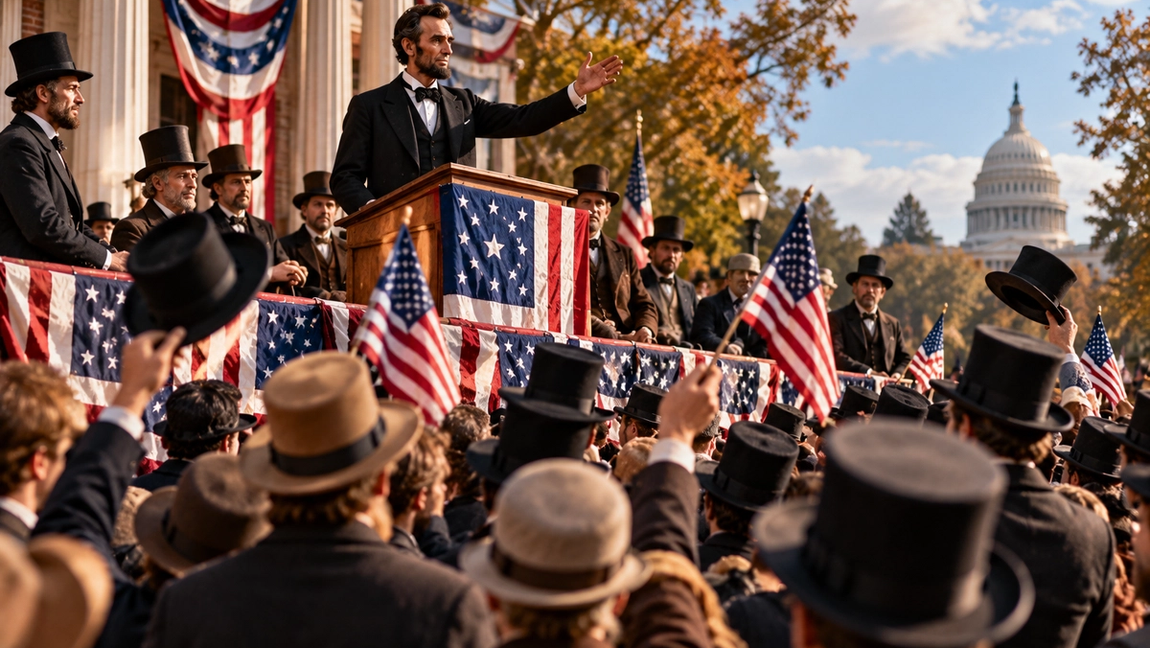
Every four years, Americans hear that the upcoming presidential election could change the course of history. Campaign advertisements make dramatic promises, candidates warn about the consequences of losing, and political commentators describe the contest as a defining moment for the nation.
Most elections do influence the country’s direction, but some have consequences that extend far beyond the next four years. They reshape political parties, transform the relationship between citizens and government, redefine who has political power, or expose divisions that change American society for generations.
Looking back at American history reveals that the most consequential elections were not always the closest or the most dramatic on election night. Sometimes their importance became clear only decades later, when the policies, political movements, and institutional changes they produced had permanently altered the country.
The Election of 1800 Proved That Political Power Could Change Hands Peacefully
The presidential election of 1800 took place when the United States was still a young republic, and the idea that political opponents could peacefully exchange power was far from guaranteed.
President John Adams represented the Federalist Party, which favored a relatively strong national government, while Thomas Jefferson represented the Democratic-Republicans, who were more suspicious of centralized federal authority. Their disagreements involved taxation, foreign policy, constitutional interpretation, and the direction of the new republic.
The campaign was bitter, and both sides portrayed the other as a threat to the country’s future. Jefferson ultimately defeated Adams, although an Electoral College tie between Jefferson and his running mate, Aaron Burr, forced the House of Representatives to decide the presidency after 36 ballots.
The significance of the election extended beyond Jefferson’s victory because it marked the first transfer of presidential power between rival political parties in American history. Adams left office, Jefferson assumed the presidency, and the constitutional system survived a deeply contentious political transition.
The electoral confusion also exposed weaknesses in the original constitutional system, contributing to the ratification of the Twelfth Amendment in 1804, which established separate Electoral College votes for president and vice president. (National Archives)
The Election of 1828 Helped Create Modern American Party Politics
Andrew Jackson’s victory over John Quincy Adams in 1828 represented a major change in how American politicians appealed to voters.
Four years earlier, Jackson had received more electoral votes than any other candidate but failed to secure a majority. The House of Representatives selected Adams, leading Jackson’s supporters to accuse political elites of ignoring the public’s preferences.
By 1828, Jackson had built a powerful political movement around the idea that government should be more responsive to ordinary white male voters rather than established political families and institutions.
His campaign relied on organized political networks, newspapers, rallies, and personal appeals that anticipated many features of modern campaigning. During this period, more states were also removing property requirements for white male voters, expanding electoral participation while continuing to exclude women and most Black Americans.
Jackson’s presidency strengthened the emerging Democratic Party and intensified arguments over federal authority, banking, and territorial expansion. His administration also pursued Indian removal policies that resulted in the forced displacement and suffering of Indigenous nations.
The election helped establish a more participatory form of politics for white men, but that expansion occurred alongside policies that denied fundamental rights to other populations. (National Archives)
The Election of 1860 Helped Push America Toward Civil War
Few American elections had consequences as immediate as Abraham Lincoln’s victory in 1860.
By that point, the country had spent decades struggling over slavery, territorial expansion, and the balance of political power between free and slaveholding states.
Lincoln represented the relatively new Republican Party, which opposed the expansion of slavery into western territories. The Democratic Party was divided, allowing Lincoln to win the presidency with a majority of Electoral College votes despite receiving less than half of the national popular vote.
His victory convinced many Southern political leaders that their influence over the federal government was declining and that slavery’s long-term political security was threatened.
South Carolina seceded from the Union in December 1860, followed by other Southern states. The Civil War began in April 1861, shortly after Lincoln took office.
The election did not create the conflict over slavery, which had shaped American politics since the country’s founding, but it exposed the inability of the existing political system to contain that conflict.
The resulting war preserved the Union, led to the abolition of slavery, and transformed the constitutional foundations of American citizenship. (National Archives)
The Election of 1876 Changed the Future of Reconstruction
The presidential election of 1876 remains one of the most disputed contests in American history.
Republican Rutherford B. Hayes faced Democrat Samuel J. Tilden during a period when the federal government was still attempting to enforce the rights of formerly enslaved people in the South.
Tilden won the popular vote, but disputed electoral returns from several states prevented an immediate determination of the winner.
Congress established an electoral commission to resolve the controversy, and Hayes ultimately received the presidency by a single electoral vote.
The political negotiations surrounding the outcome became associated with the end of Reconstruction. In 1877, federal troops were withdrawn from their remaining positions supporting Republican state governments in the South.
Reconstruction had already been weakening, but the withdrawal helped accelerate the collapse of federal protection for Black political participation in the region.
Over the following decades, Southern governments imposed segregation, voting restrictions, and discriminatory laws that undermined many of the rights established after the Civil War.
The election demonstrated that political compromises in Washington could have consequences for millions of Americans whose rights depended on federal enforcement.
The Election of 1896 Reshaped America’s Economic Politics
The election of 1896 occurred during a period of industrial expansion, economic instability, and growing conflict between different parts of the American economy.
Republican William McKinley faced Democrat William Jennings Bryan, whose campaign became closely associated with demands for expanding the money supply through the free coinage of silver.
The debate reflected serious economic divisions. Many farmers and debtors favored policies that could raise prices and ease debt burdens, while financial institutions and business interests generally supported maintaining the gold standard.
McKinley’s victory helped establish a Republican political coalition strongly connected with industrial growth, business interests, and urban economic development.
The election also demonstrated the increasing importance of campaign organization, fundraising, advertising, and communication with large national audiences.
As America moved toward the twentieth century, presidential elections were becoming increasingly shaped by industrial capitalism and the political interests created by a rapidly changing economy.
The Election of 1932 Changed What Americans Expected From Government
When Franklin D. Roosevelt defeated Herbert Hoover in 1932, the United States was experiencing the Great Depression.
Banks were failing, businesses were closing, and unemployment had reached catastrophic levels. Millions of Americans had lost confidence in the ability of existing institutions to restore economic stability.
Roosevelt campaigned on the promise of a New Deal, offering a more active federal response to the crisis.
After taking office, his administration introduced programs designed to stabilize banks, create employment, support agriculture, regulate financial markets, and provide economic security.
The New Deal eventually produced institutions and programs including Social Security, federal deposit insurance, and stronger securities regulation.
These changes did not end economic hardship immediately, and their effectiveness remains a subject of historical and economic debate. Nevertheless, they fundamentally expanded the federal government’s responsibilities.
The election also transformed American party politics by bringing together an influential Democratic coalition that included urban workers, labor organizations, immigrant communities, Southern voters, and increasing numbers of Black voters in Northern cities.
For decades afterward, political arguments about government spending, social welfare, economic regulation, and federal responsibility unfolded within a framework substantially shaped by Roosevelt’s presidency. (National Archives)
The Election of 1964 Accelerated a Major Political Realignment
Lyndon B. Johnson’s victory over Republican Barry Goldwater in 1964 came during a period of enormous social and political change.
The Civil Rights Movement had placed racial equality at the center of national politics, and Congress had recently passed the Civil Rights Act of 1964.
Johnson supported an expanded federal role in addressing poverty, education, healthcare, and civil rights, while Goldwater advocated a more limited federal government and opposed the Civil Rights Act on constitutional grounds.
Johnson won an overwhelming electoral victory, providing political support for the Great Society agenda.
His administration subsequently oversaw the creation of Medicare and Medicaid, major education initiatives, and the Voting Rights Act of 1965.
The election also revealed important changes in regional political loyalties. Although the Democratic Party had traditionally dominated much of the South, several Deep South states supported Goldwater.
The gradual movement of many white Southern conservative voters toward the Republican Party had multiple causes and unfolded over decades, but the 1964 election became an important moment in that transformation.
Its consequences helped reshape the geographic and ideological foundations of American party politics.
The Election of 1968 Reflected a Country Divided by War and Social Change
The presidential election of 1968 took place during one of the most turbulent years in modern American history.
The Vietnam War continued, antiwar protests intensified, and the assassinations of Martin Luther King Jr. and Robert F. Kennedy deepened national uncertainty.
Democratic President Lyndon Johnson had decided not to seek another term, while the Democratic Party struggled with internal divisions over Vietnam and the direction of the country.
Republican Richard Nixon campaigned on restoring law and order and pursuing a path toward ending the war.
His victory reflected growing political frustration with social unrest, changing cultural expectations, and the prolonged conflict in Southeast Asia.
The election also demonstrated the appeal of conservative messages to voters who believed national institutions were failing to maintain stability.
Nixon’s presidency would later include major foreign policy initiatives, including opening relations with China, alongside the Watergate scandal that ultimately forced his resignation.
The 1968 election helped establish political themes involving public order, cultural change, and distrust of institutions that continued influencing American campaigns for decades.
The Election of 1980 Marked a Shift Toward Conservative Economic Policies
Ronald Reagan’s victory over Jimmy Carter in 1980 occurred after a difficult economic decade marked by inflation, energy crises, slow growth, and declining confidence in government institutions.
Reagan argued that excessive regulation, high taxes, and an expanding federal government were limiting economic opportunity.
His administration pursued major tax reductions, deregulation in several sectors, and a more confrontational approach toward the Soviet Union during much of his presidency.
Reagan also communicated a renewed emphasis on individual responsibility, entrepreneurship, and American national confidence.
His economic policies became closely associated with supply-side economics, although economists continue debating their effects on growth, inequality, federal deficits, and long-term economic performance.
The election strengthened the modern conservative movement and helped consolidate a Republican coalition that included business conservatives, religious conservatives, and voters dissatisfied with the political direction of the 1970s.
Reagan’s influence extended beyond his own presidency because later political debates frequently returned to the role of taxation, regulation, and the size of government. (National Archives)
The Election of 2000 Exposed the Complexity of America’s Electoral System
The presidential election of 2000 between George W. Bush and Al Gore demonstrated how an extremely close election could place enormous pressure on American electoral institutions.
Gore won more votes nationally, but the Electoral College outcome depended on Florida, where the margin between the candidates was exceptionally narrow.
Disputes over ballot design, vote counting, and recount procedures led to weeks of legal challenges.
The Supreme Court’s decision in Bush v. Gore effectively ended the recount process, leaving Bush ahead in Florida and securing his Electoral College victory.
The controversy renewed national debate about the Electoral College, election administration, voting technology, and the role of courts in resolving electoral disputes.
The historical consequences extended beyond the election process itself.
Bush entered office in January 2001, and the September 11 attacks later that year transformed the priorities of his administration. The subsequent wars in Afghanistan and Iraq, changes in national security policy, and expansion of federal surveillance powers shaped the following decades.
The election illustrated how a very small electoral margin could determine which political leadership would confront events that nobody could fully anticipate. (National Archives)
The Election of 2008 Broke a Historic Racial Barrier
Barack Obama’s victory in 2008 made him the first Black president of the United States.
The election occurred during the global financial crisis, when major banks were failing, housing markets were collapsing, and Americans were increasingly worried about unemployment and economic security.
Obama’s campaign emphasized political change, economic recovery, and expanding access to healthcare.
His victory carried particular historical significance in a country where Black Americans had been denied full political rights for much of its history.
The administration subsequently oversaw major economic recovery measures, financial regulatory reforms, and the passage of the Affordable Care Act.
At the same time, Obama’s presidency unfolded during a period of intense partisan conflict, including major disagreements over healthcare, taxation, immigration, and the federal government’s role.
The election changed the symbolic possibilities of American political leadership while also demonstrating that a historic electoral milestone did not eliminate longstanding racial or political divisions.
The Election of 2016 Changed Political Communication and Party Coalitions
Donald Trump’s victory over Hillary Clinton in 2016 represented a significant departure from many established expectations about presidential campaigns.
Trump entered politics as a businessman and television personality without previous elected office or military service.
His campaign emphasized immigration restrictions, trade protection, criticism of political elites, and an America First approach to foreign policy.
He relied heavily on rallies, direct communication through social media, and messages that challenged the leadership of both major political parties.
Although Clinton received more votes nationally, Trump won the Electoral College by securing several closely contested states, including Michigan, Pennsylvania, and Wisconsin.
His presidency brought changes in immigration policy, trade relations, judicial appointments, taxation, and the Republican Party’s political priorities.
The election also intensified debates about misinformation, media trust, political polarization, and the influence of digital platforms on democratic participation.
It demonstrated that traditional campaign experience and support from established political institutions were not always necessary to win the presidency.
The Election of 2020 Tested the Peaceful Transfer of Power
The 2020 presidential election took place during the COVID-19 pandemic, which disrupted everyday life and required major adjustments to election administration.
Democrat Joe Biden defeated incumbent President Donald Trump, winning both the national popular vote and the Electoral College.
The election involved exceptionally high voter participation and extensive use of mail voting.
After the results became clear, Trump repeatedly challenged the outcome, alleging widespread election fraud. Courts rejected numerous legal challenges, and officials responsible for election administration found no evidence of fraud sufficient to change the result.
On January 6, 2021, a crowd of Trump supporters attacked the U.S. Capitol while Congress was meeting to count electoral votes.
The attack interrupted the certification process, although Congress reconvened and completed the count.
Biden was inaugurated on January 20, 2021.
The election and its aftermath renewed debates about election security, public trust, political violence, and the institutional safeguards surrounding presidential transitions.
Its longer-term historical significance continues to be studied, but the events surrounding the transfer of power made it an important case in understanding the resilience and vulnerabilities of American democratic institutions.
The Election of 2024 Marked Another Major Political Shift
The 2024 election returned Donald Trump to the presidency after four years out of office.
Trump defeated Democratic nominee Kamala Harris, who entered the race after President Joe Biden withdrew his candidacy.
The election unfolded amid public concerns about inflation, immigration, international conflicts, and the direction of federal policy.
Trump won both the Electoral College and the national popular vote, becoming the first former president since Grover Cleveland to win a second, nonconsecutive term.
The result also marked the return of a political figure whose previous presidency had significantly reshaped the Republican Party and national political debate.
Because the second Trump administration is still underway, its full historical consequences cannot yet be established. The election’s significance lies partly in the unusual return to power of a former president and in the policy changes and political realignments that may become clearer over time.
Why Some Elections Matter Long After the Votes Are Counted
Presidential elections are often remembered through winners, losers, campaign slogans, and electoral maps, but their deeper importance usually lies in the institutions and political relationships that change afterward.
The election of 1800 demonstrated that competing parties could exchange power within the constitutional system. The election of 1860 exposed divisions that led to civil war. The election of 1932 transformed expectations about federal responsibility during economic crises. The elections of the 1960s reflected changing debates over civil rights, social policy, and political identity, while later contests reshaped economic priorities, party coalitions, and the relationship between voters and national institutions.
Not every consequence can be traced to a single election, and presidents rarely control the historical circumstances they inherit. Congress, courts, social movements, economic conditions, international events, and ordinary citizens all influence what happens after Election Day.
Nevertheless, elections create moments when the country chooses between competing political directions, sometimes with consequences that extend far beyond the candidates themselves.
The most revealing question is therefore not simply who won an election, but what became possible, what changed, and what remained unresolved because of its outcome.
That is where the history of American elections becomes the history of America itself.