The Fashion Trends That Defined Every American Decade
By Gil Cohen on October 15, 2026
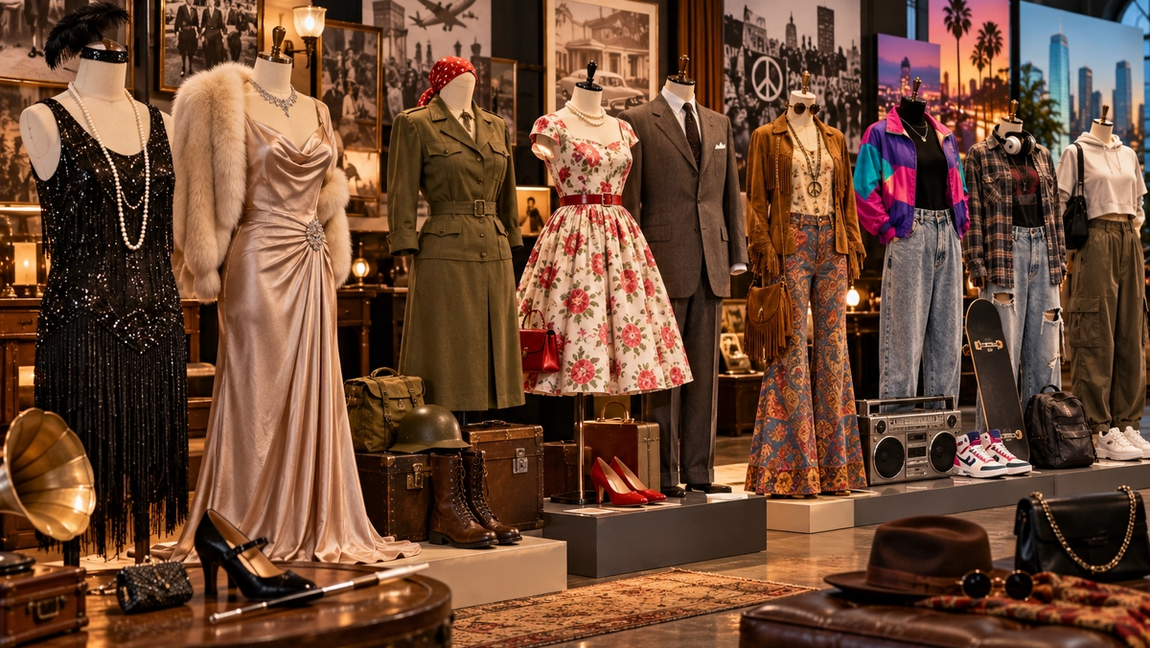
Fashion has never been just about clothes.
What Americans wore throughout the twentieth and early twenty-first centuries reflected changing ideas about money, gender, work, rebellion, beauty, music, technology, and status. A skirt could become a political statement. A leather jacket could signal rebellion. A business suit could represent ambition. A pair of sneakers could move from athletic equipment to a status symbol worth hundreds of dollars.
Some trends disappeared almost as quickly as they arrived. Others became so ordinary that we forget they were once revolutionary.
Look closely at the defining clothes of each American decade and you can see something much bigger than changing hemlines.
You can see the country changing with them.
The 1920s: Flappers, Shorter Hemlines, and a New Kind of Freedom
Few fashion images are as closely associated with a decade as the flapper is with the 1920s.
After World War I, women’s fashion moved away from some of the restrictive silhouettes of earlier decades. Dresses became looser and hemlines generally rose. Bobbed hair became fashionable, and cosmetics became increasingly visible and commercially available.
The flapper became the symbol of the era: young, urban, fashionable, dancing to jazz and willing to challenge traditional expectations about how women should behave.
Not every woman dressed like a flapper, of course. The image represented an idealized slice of American life rather than the entire country.
Men’s fashion also became more relaxed in certain settings, while suits remained central to respectable public dress.
Fashion reflected a larger cultural shift. Cars, movies, jazz, advertising, and consumer culture were transforming everyday life.
Modernity had a new look.
The 1930s: Hollywood Glamour During Hard Times
The Great Depression changed what millions of Americans could afford.
Yet the decade also produced some of the most glamorous fashion imagery in American history.
Hollywood played a major role.
Movie stars appeared in elegant evening gowns, carefully tailored suits, luxurious fabrics, and dramatic silhouettes that offered audiences a temporary escape from economic hardship.
Women’s dresses often became longer and more fitted than the loose styles associated with the previous decade. Bias-cut gowns created flowing silhouettes that became closely associated with Hollywood glamour.
For ordinary families, however, practicality mattered.
Clothes were repaired, altered, reused, and passed between relatives. Home sewing remained important, and people found ways to imitate fashionable styles with limited resources.
The contrast was striking.
On screen, fashion represented fantasy.
At home, it often represented resourcefulness.
The 1940s: Wartime Fashion Made Practicality Stylish
World War II transformed American clothing.
Materials were needed for the war effort, and restrictions affected the amount of fabric available for civilian clothing.
Fashion responded.
Women’s clothing became more structured and practical, with narrower skirts and simpler designs. Military influences appeared in jackets, shoulders, and utilitarian details.
Women entering factories and other jobs in greater numbers also needed practical work clothing. Trousers became increasingly acceptable for women in certain settings.
Rosie the Riveter, with her work clothes and famous headscarf, became one of the era’s defining images.
Men’s fashion was also shaped by military service.
When the war ended, clothing changed again. Returning prosperity created demand for styles that felt less restricted.
Fashion had spent several years asking people to make do with less.
Consumers were ready for something different.
The 1950s: Full Skirts, Perfect Suits, and Carefully Constructed Respectability
The 1950s are often remembered through highly polished fashion.
For women, Christian Dior’s postwar “New Look,” introduced in 1947, influenced the decade with fitted waists and full skirts. American versions of the silhouette appeared everywhere.
The ideal emphasized an hourglass shape and a carefully groomed appearance.
Men were often represented in conservative suits, white shirts, ties, and neatly styled hair.
But another fashion story was developing alongside that polished image.
Teenagers were becoming a distinct consumer group.
Jeans, T-shirts, leather jackets, and casual clothing became associated with youthful rebellion, helped by movie stars such as James Dean and Marlon Brando.
Denim had begun primarily as durable workwear.
Now it could represent attitude.
The decade therefore contained two competing images: the perfectly dressed suburban adult and the teenager who did not want to look anything like them.
The 1960s: Fashion Became Younger, Shorter, and More Experimental
By the 1960s, youth culture was driving fashion forward.
The changes were impossible to miss.
Miniskirts became symbols of the decade. Bright colors, geometric patterns, go-go boots, and experimental synthetic fabrics reflected the futuristic optimism of the early and mid-1960s.
Jackie Kennedy influenced American fashion with her polished dresses, suits, sunglasses, and pillbox hats.
But as the decade progressed, the counterculture created a very different look.
Long hair, bell-bottoms, tie-dye, fringe, embroidered clothing, and styles inspired by non-Western cultures became associated with hippies and anti-establishment movements.
Fashion increasingly communicated political and cultural identity.
What you wore could suggest how you felt about authority, war, sexuality, race, music, and traditional social expectations.
Clothing was no longer simply following society.
It was arguing with it.
The 1970s: Bell-Bottoms, Disco, and Individual Expression
The 1970s did not have one fashion identity.
They had several happening at once.
Bell-bottoms and flared trousers became enormously popular. Platform shoes appeared on both men and women. Denim moved further into everyday fashion.
The disco scene introduced another level of glamour.
Nightclubs filled with shiny fabrics, jumpsuits, halter tops, dramatic collars, and clothing designed to look good under flashing lights.
At the same time, punk emerged with an almost opposite philosophy. Torn clothing, leather jackets, safety pins, and deliberately aggressive styling rejected polished mainstream fashion.
The decade also saw growing interest in natural hair and styles connected to Black pride. The Afro became both a hairstyle and, for many people, a statement about identity.
Fashion was fragmenting.
Instead of everyone chasing the same ideal, different communities increasingly used clothing to announce who they were.
The 1980s: Bigger Was Better
Subtlety was not the defining fashion principle of the 1980s.
Shoulder pads grew. Hair grew. Logos grew.
The decade embraced excess.
Power dressing became especially important as more women entered corporate and professional environments. Structured suits with broad shoulders created a visual language of authority.
Fitness culture also escaped the gym.
Leggings, leotards, sweatbands, sneakers, and brightly colored athletic clothing became fashionable beyond exercise.
Music television accelerated trends.
Artists such as Madonna, Michael Jackson, and Prince influenced what young people wore almost instantly. Lace gloves, leather jackets, bold jewelry, military-inspired pieces, and dramatic accessories moved from music videos into everyday wardrobes.
Designer branding also became increasingly visible.
A logo was no longer something hidden inside a garment.
It could be the point of wearing it.
The 1990s: Grunge Met Minimalism
After the visual excess of the 1980s, parts of 1990s fashion moved in the opposite direction.
Grunge became one of the decade’s defining styles.
Inspired by the music scene of the Pacific Northwest, flannel shirts, ripped jeans, oversized sweaters, combat boots, and deliberately unpolished clothing became fashionable.
The irony was perfect.
A style associated with rejecting mainstream fashion quickly became mainstream fashion.
At the same time, minimalism offered another influential aesthetic. Slip dresses, simple silhouettes, neutral wardrobes, and understated clothing became popular.
Hip-hop created another powerful fashion language.
Baggy jeans, oversized shirts, tracksuits, sneakers, baseball caps, and prominent brands became enormously influential, eventually reshaping mainstream American fashion.
By the end of the decade, teen pop introduced yet another style built around crop tops, denim, shiny fabrics, and highly coordinated outfits.
The 1990s were less about one dominant look than competing subcultures becoming mass culture.
The 2000s: Low-Rise Everything and Celebrity Culture
The early 2000s produced fashion that people have spent years mocking and, inevitably, bringing back.
Low-rise jeans dominated. Velour tracksuits became status symbols. Tiny handbags, trucker hats, cargo pants, layered tank tops, oversized sunglasses, and visible logos appeared everywhere.
Denim was particularly unstoppable.
People wore denim jeans, jackets, skirts, dresses, bags, and occasionally several of them simultaneously.
Celebrity culture heavily influenced fashion.
Paparazzi photographs, reality television, tabloid magazines, and red carpets allowed people to follow celebrity wardrobes almost daily.
The internet was beginning to accelerate this process.
Fashion inspiration no longer came only from magazines, stores, or television.
It could circulate online.
That shift would completely transform the following decade.
The 2010s: Instagram Changed the Fashion Cycle
The 2010s were shaped by social media.
Instagram, fashion blogs, YouTube, and eventually other platforms gave ordinary people access to a constant stream of outfits, trends, tutorials, and brands.
Fashion moved faster.
Skinny jeans dominated much of the decade. Athleisure turned leggings, sneakers, hoodies, and athletic clothing into everyday outfits.
Streetwear grew into a major force.
Sneakers became collectible objects, limited releases generated enormous demand, and collaborations between designers, musicians, athletes, and brands blurred the boundaries between luxury and casual clothing.
Influencers became powerful fashion figures.
For the first time, someone did not necessarily need to be an actor, musician, model, or magazine editor to influence how millions of people dressed.
A phone and a large enough audience could do it.
The 2020s: Everything Is Trending at the Same Time
Fashion in the 2020s has become difficult to define because almost every decade seems to be returning simultaneously.
Early-2000s styles came back. Wide-leg jeans challenged the long dominance of skinny jeans. Cargo pants returned. Oversized tailoring became popular. Sneakers remained central while vintage clothing and secondhand shopping grew more visible.
Microtrends began appearing and disappearing at extraordinary speed.
Social media platforms could turn a particular shoe, aesthetic, skirt, or color into a global trend almost overnight.
At the same time, consumers became more aware of sustainability, fast fashion, resale, and the environmental consequences of constantly buying new clothes.
Personal style became both easier and harder.
People had access to more inspiration than any previous generation.
They also faced more pressure to keep up.
Fashion Has Always Been About More Than Clothes
Every American decade developed a visual language.
The 1920s flapper represented changing ideas about women’s freedom. The 1940s workwear reflected wartime necessity. The 1950s leather jacket became shorthand for teenage rebellion. The 1960s miniskirt represented a changing youth culture. The 1970s turned fashion into personal expression. The 1980s power suit communicated ambition. The 1990s flannel shirt rejected polish. The 2000s celebrated celebrity excess. The 2010s turned everyone with a smartphone into a potential fashion publisher.
The clothes changed because America changed.
Work changed. Music changed. Gender expectations changed. Technology changed. Ideas about beauty, success, rebellion, and status changed.
And then, because fashion has a sense of humor, many of the clothes came back.
The jeans your parents once embarrassed you by wearing eventually become vintage. The shoes everyone threw away return with a new price tag. The outfit that looked ridiculous twenty years ago suddenly appears on someone half your age.
Fashion keeps reinventing itself.
But if you look closely, it is usually reinventing something that was already there.