The Founding Fathers You Were Taught About (And the Ones You Weren’t)
By Helen Poole on October 15, 2026
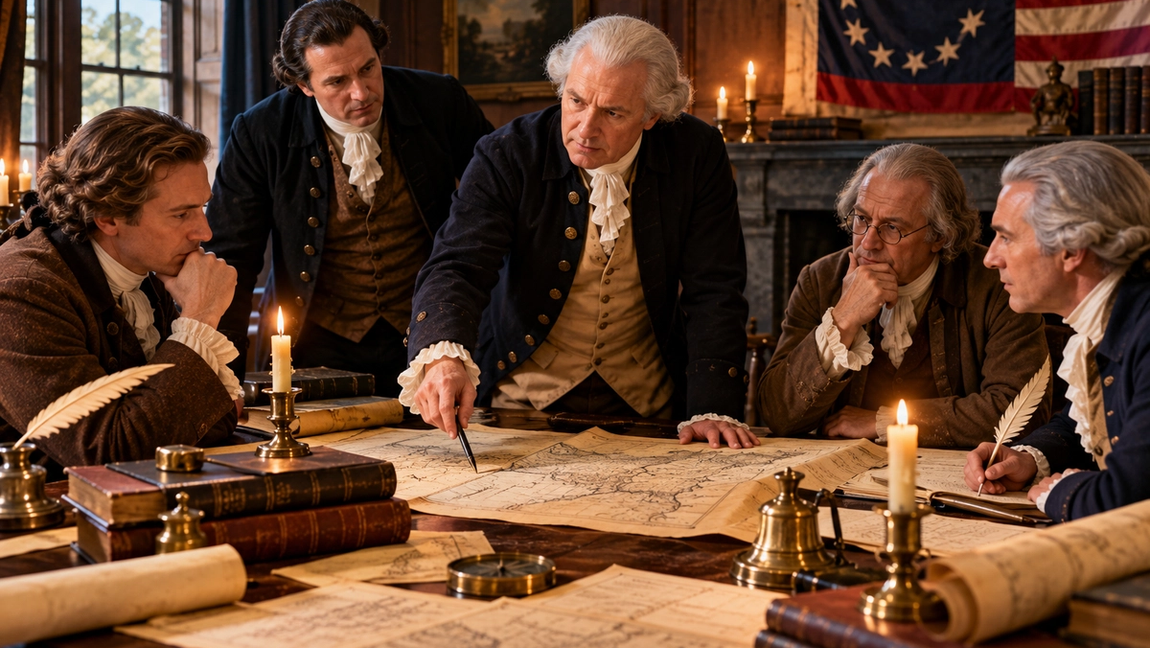
The story of the American founding tends to arrive with a familiar cast.
George Washington commanded the Continental Army and became the first president. Thomas Jefferson wrote the Declaration of Independence. Benjamin Franklin was the brilliant diplomat and inventor. James Madison helped design the Constitution. Alexander Hamilton built the foundations of the country’s financial system.
They deserve their place in the story. But they were never the whole story.
The United States emerged from a revolution involving thousands of soldiers, writers, organizers, diplomats, enslaved people, Indigenous nations, women, immigrants, merchants, and political thinkers. Some influenced the country’s founding documents directly. Others made independence possible without ever being invited into the rooms where those documents were written.
Looking beyond the most famous Founding Fathers does not diminish Washington, Jefferson, or Madison. It makes the founding itself more interesting, more complicated, and much closer to what actually happened.
The Founders Everyone Knows
George Washington became the indispensable public figure of the Revolution. His military leadership helped hold the Continental Army together through years of war, and his decision to relinquish power after the conflict strengthened the idea that the new republic would not simply replace a king with another permanent ruler.
Thomas Jefferson supplied some of the Revolution’s most enduring language. The Declaration’s assertion that “all men are created equal” became far more consequential than the political reality of 1776, particularly because Jefferson himself enslaved people throughout his life.
James Madison played a central role in shaping the Constitution and later helped write the Federalist Papers alongside Alexander Hamilton and John Jay. Hamilton, meanwhile, became one of the strongest advocates for a powerful federal government and designed much of the young nation’s financial architecture.
Benjamin Franklin was already internationally famous before independence. His diplomatic work in France proved enormously important in securing French support for the American cause.
But even this familiar group disagreed profoundly about what the new country should become. The Founders were not one unified team working from a shared blueprint. They fought over federal power, banking, foreign policy, representation, slavery, and the meaning of republican government.
And beyond them stood an even larger group of people who shaped the Revolution.
John Jay: The Founder People Often Forget
John Jay is technically one of the best-known Founders, yet he rarely receives the attention given to Hamilton or Madison.
His résumé is remarkable. Jay served as president of the Continental Congress, helped negotiate the Treaty of Paris that formally ended the Revolutionary War, contributed to the Federalist Papers, became the first chief justice of the United States, and later served as governor of New York.
He was particularly important in American diplomacy. Independence had to be achieved on the battlefield, but it also had to be recognized internationally. Jay helped turn military victory into a political settlement.
His complicated relationship with slavery also reflects the contradictions of the founding generation. Jay enslaved people himself but later became involved in New York’s antislavery movement and signed legislation that began the state’s gradual abolition process.
Gouverneur Morris Gave the Constitution Its Voice
James Madison is often called the Father of the Constitution, but another delegate played an enormous role in giving the document its final language.
Gouverneur Morris of Pennsylvania served on the Committee of Style, which prepared the Constitution’s final draft. He is widely credited with shaping some of its most memorable wording, including the opening phrase “We the People of the United States.”
That language mattered.
The earlier Articles of Confederation had emphasized the states as separate political entities. “We the People” presented a much larger idea: that the new federal government ultimately derived its authority from the people themselves.
Morris was also unusually outspoken about slavery during the Constitutional Convention. He condemned the institution even while participating in a political process that ultimately produced compromises protecting slaveholding interests.
His name never became as culturally famous as Washington’s or Jefferson’s, but his fingerprints are all over the country’s founding document.
Thomas Paine Changed What Ordinary People Thought Was Possible
Thomas Paine did not sign the Declaration of Independence or attend the Constitutional Convention. He was not even born in America.
Yet few writers did more to transform independence from a radical idea into a popular political cause.
Paine arrived from England in 1774 and published Common Sense in early 1776. Written in direct, accessible language, the pamphlet attacked monarchy and argued that the colonies should break completely from Britain.
Its importance was not simply that Paine supported independence. Other revolutionaries already did. His achievement was explaining the argument in language that ordinary readers could understand and repeat.
During the war, he continued writing in support of the revolutionary cause. His words helped turn political philosophy into something closer to a mass movement.
Revolutions need generals and politicians. They also need people capable of convincing everyone else that radical change is possible.
Haym Salomon Helped Finance the Revolution
Wars require ideals, but they also require money.
Haym Salomon, a Polish-born Jewish immigrant, became an important financier associated with the American revolutionary effort. After settling in New York, he supported the Patriot cause and was arrested by British authorities.
Later, working in Philadelphia, Salomon helped raise and broker funds at a moment when the revolutionary government faced severe financial difficulties. He worked closely with Robert Morris, the superintendent of finance, who was attempting to keep the government’s finances functioning.
Salomon’s role has sometimes been exaggerated in popular retellings, but his genuine contribution points to a broader reality that simplified founding stories often miss: independence depended heavily on networks of merchants, financiers, immigrants, and creditors operating far beyond the battlefield.
James Armistead Lafayette Risked His Life as a Spy
Some people who helped create American independence were fighting for a freedom they did not personally possess.
James Armistead was an enslaved man in Virginia who served the American cause during the Revolutionary War. Working under the Marquis de Lafayette, he operated as a spy, entering British circles while presenting himself as someone willing to assist their forces.
He gathered information about British troop movements and plans and passed intelligence back to the Americans. His work became particularly valuable during the campaign that culminated in the British surrender at Yorktown in 1781.
Yet American victory did not automatically make him free.
Armistead later petitioned the Virginia legislature for emancipation. Lafayette supported his case, and Armistead eventually gained his freedom. He later adopted Lafayette’s surname.
His story exposes one of the Revolution’s deepest contradictions: people denied liberty themselves helped win a war fought in liberty’s name.
Women Were Political Actors Too
The phrase “Founding Fathers” creates another obvious problem: it can make the Revolution sound almost entirely male.
It was not.
Abigail Adams famously urged her husband John Adams to “remember the ladies” as revolutionary leaders considered new systems of government. Her letters reveal a politically sophisticated observer who understood the contradiction between demanding freedom from British rule while maintaining legal systems that gave women little independence.
Mercy Otis Warren went even further into public political debate. A writer and historian, she used plays, poems, and political commentary to criticize British authority and later wrote an extensive history of the Revolution.
Women also organized boycotts, managed farms and businesses during wartime, produced goods previously imported from Britain, raised money, carried messages, and sometimes accompanied armies.
They generally lacked formal political power, but that did not mean they were absent from political life.
Native Nations Were Not Watching From the Sidelines
The Revolution was also a struggle over land, which meant Indigenous nations had enormous stakes in its outcome.
Native communities were not a single political bloc. Different nations—and sometimes different groups within the same nation—made different strategic choices about whether to support Britain, the Americans, or attempt neutrality.
For many, British victory appeared less threatening than an independent United States because colonial settlement was already pushing westward onto Indigenous lands. The British government had previously attempted, however inconsistently, to limit colonial expansion beyond the Appalachian Mountains.
The Revolution therefore looked very different depending on where you stood. What became a national story of liberation for the United States could simultaneously represent expanding danger for Native nations.
That perspective fundamentally changes the meaning of the founding.
The Founding Was Bigger Than a Few Great Men
There is a reason history gravitates toward famous individuals. People make complicated events easier to remember.
Washington crossed the Delaware. Jefferson wrote the Declaration. Franklin went to France.
Those stories are useful. They are simply incomplete.
The American Revolution depended on famous political leaders, but also on printers distributing arguments, financiers finding money, soldiers surviving terrible conditions, women sustaining households and political networks, enslaved people navigating competing promises of freedom, Indigenous nations defending their own interests, immigrants joining the revolutionary cause, and ordinary people deciding whether independence was worth the enormous risk.
Understanding those people does not require replacing one set of heroes with another.
It requires abandoning the idea that a country can be founded by a handful of men in a room.
The familiar Founding Fathers helped design the United States. But the people usually left outside the frame reveal something just as important: who made the Revolution possible, who benefited from its promises, who was excluded from them, and how unfinished the meaning of American freedom was from the very beginning.