The Presidents History Judges Differently Than Their Time Did
By Gil Cohen on October 15, 2026
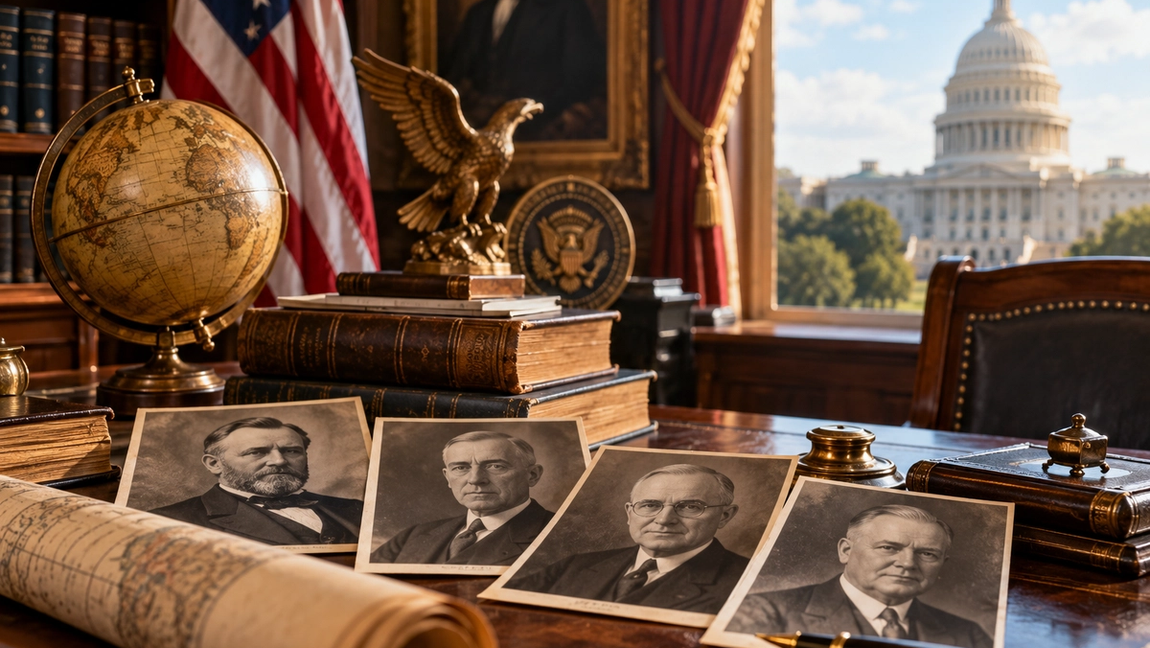
Being a popular president and being remembered as a successful president are two very different things.
Some American presidents left office celebrated by their supporters, only to have later generations question their decisions. Others were dismissed as ineffective, unpopular, or even disastrous during their presidencies, yet historians eventually found achievements that earlier accounts had overlooked.
The interesting part is that the presidents themselves never change. The evidence available to historians expands, the consequences of decisions become clearer, and the questions people ask about leadership evolve.
A president praised for economic growth might later be examined for policies that deepened inequality. A leader criticized for taking unpopular action might eventually receive more attention for protecting constitutional rights. Decisions that appeared insignificant at the time can shape American life for generations.
These presidents show how complicated historical reputations can become.
Ulysses S. Grant: From Scandal-Ridden President to a More Complicated Legacy
Ulysses S. Grant entered the presidency in 1869 as one of the most celebrated military figures in American history.
His leadership during the Civil War had helped secure Union victory, and his popularity made him a powerful political figure. He won two presidential elections, but his administration became associated with corruption scandals, political favoritism, and economic difficulties.
For much of the twentieth century, historical accounts emphasized those failures.
Grant was frequently portrayed as an ineffective president whose military abilities did not translate into political leadership.
More recent scholarship has complicated that interpretation.
Historians have increasingly examined Grant’s efforts to protect the rights of formerly enslaved Americans during Reconstruction. His administration used federal authority to confront Ku Klux Klan violence, supported Black voting rights, and attempted to preserve some of the civil rights gains achieved after the Civil War.
His administration’s corruption problems remain part of the record, as do the harmful consequences of federal policies toward Native Americans. But the earlier picture of a presidency defined almost entirely by failure has become harder to sustain.
Grant illustrates how historical judgments change when previously neglected achievements receive greater attention. (Miller Center)
Woodrow Wilson: A Celebrated Reformer With a Troubling Civil Rights Record
Woodrow Wilson was once widely celebrated for his intellectual leadership, domestic reforms, and international vision.
Serving from 1913 to 1921, Wilson oversaw the creation of the Federal Reserve System, supported major economic reforms, and led the United States during World War I.
After the war, he advocated for the League of Nations, hoping to establish a framework for international cooperation that could help prevent future conflicts.
Those achievements shaped his reputation for decades.
But historians have increasingly emphasized another part of Wilson’s presidency.
His administration permitted and expanded racial segregation within parts of the federal government, undermining opportunities that Black federal employees had previously gained.
Wilson’s wartime administration also imposed severe restrictions on dissent through laws and prosecutions targeting opposition to American participation in the war.
His international idealism existed alongside military interventions abroad and policies that denied equal treatment to many Americans at home.
Wilson remains important to the history of American government and international relations. What has changed is the willingness to examine the contradictions between his democratic ideals and his administration’s actions. (Miller Center)
Harry Truman: An Unpopular President Whose Decisions Defined an Era
Harry Truman left office in 1953 with deeply unfavorable public approval ratings.
His presidency had been shaped by difficult decisions, including the final months of World War II, the beginning of the Cold War, the Korean War, and major domestic political conflicts.
He faced criticism over inflation, corruption allegations involving members of his administration, and the prolonged fighting in Korea.
Yet later historical assessments have given substantial attention to the institutions and policies developed during his presidency.
The Truman Doctrine established a major framework for American Cold War policy. His administration supported the Marshall Plan, which helped rebuild Western European economies after World War II. NATO was established during his presidency, and he ordered the desegregation of the U.S. armed forces.
These decisions had consequences extending far beyond his years in office.
Truman’s authorization of atomic bombings against Japan remains one of the most debated presidential decisions in American history. Historians continue to disagree about the available alternatives, military considerations, and ethical implications.
His legacy demonstrates that a presidency can be politically unpopular in its own time while producing policies that become central to later historical discussions.
Herbert Hoover: More Than the President of the Great Depression
Herbert Hoover is almost inseparable from the Great Depression.
He entered office in 1929 with a reputation as a highly capable administrator and humanitarian. Before becoming president, he had organized major relief efforts during and after World War I and served as secretary of commerce.
His presidency, however, became associated with economic collapse.
The stock market crashed shortly after he took office, and the Depression deepened during his administration. His responses were widely criticized as inadequate to the scale of the crisis.
For generations, Hoover’s name became shorthand for presidential failure.
That association has never disappeared, but historians have explored a more complicated picture.
Hoover did not simply refuse all government intervention. His administration supported public works spending and established the Reconstruction Finance Corporation to provide emergency financial support to banks and other institutions.
These measures did not reverse the Depression, and his handling of the crisis remains central to assessments of his presidency.
Still, his earlier humanitarian career and the actual scope of his economic policies complicate the popular image of a president who did nothing.
Lyndon B. Johnson: The President With Two Enormous Legacies
Lyndon B. Johnson’s historical reputation is shaped by two defining parts of his presidency that are difficult to reconcile.
At home, Johnson oversaw some of the most consequential civil rights and social policy legislation of the twentieth century.
The Civil Rights Act of 1964 prohibited major forms of discrimination. The Voting Rights Act of 1965 strengthened federal protections against racial discrimination in voting. Medicare and Medicaid expanded access to healthcare, while other Great Society programs addressed poverty, education, and economic opportunity.
These policies transformed American society.
But Johnson also dramatically escalated American military involvement in Vietnam.
The war produced enormous human costs, intensified domestic political divisions, and damaged public trust in government.
Johnson ultimately chose not to seek another presidential term in 1968.
Later assessments continue to grapple with both sides of his record.
His domestic legislation remains foundational to modern American government, while the Vietnam War remains central to debates about presidential decision-making, military intervention, and the limits of American power.
Johnson’s presidency demonstrates why historical reputations cannot always be reduced to a single judgment.
Richard Nixon: A Presidency Defined by Watergate, but Not Only Watergate
Richard Nixon resigned from office in 1974 following the Watergate scandal.
The investigation revealed abuses of presidential power, obstruction of justice, and attempts to interfere with the political process.
His resignation remains an extraordinary moment in American constitutional history.
For many Americans, Watergate became the defining feature of Nixon’s presidency.
Yet historians also examine substantial policy achievements and international developments during his administration.
Nixon’s 1972 visit to China helped transform relations between Washington and Beijing. His administration pursued détente with the Soviet Union and negotiated major arms control agreements.
Domestically, the Environmental Protection Agency was established during his presidency, and significant environmental legislation became law.
These achievements do not erase Watergate.
Instead, they make Nixon’s historical record more complicated than a single scandal, however consequential that scandal was.
His presidency raises an enduring question about political leadership: how should historians assess significant policy achievements alongside serious violations of public trust?
Jimmy Carter: A Presidency Reconsidered Through Diplomacy and Human Rights
Jimmy Carter entered the White House in 1977 promising honesty and a different approach to American politics.
His presidency was soon dominated by inflation, energy problems, economic uncertainty, and the Iran hostage crisis.
When Carter lost reelection in 1980, his administration was widely viewed as politically unsuccessful.
Over time, historians have paid greater attention to achievements that received less recognition during his presidency.
The Camp David Accords helped establish the framework for the 1979 peace treaty between Egypt and Israel. Carter also emphasized human rights in American foreign policy and signed legislation creating the Department of Energy.
His post-presidential career further influenced public perceptions.
Through the Carter Center, he worked on election observation, conflict resolution, disease prevention, and humanitarian initiatives.
That later work does not change the economic and political difficulties of his presidency. It does, however, contribute to a broader understanding of his public service and the priorities that shaped his political career.
Carter’s reputation also highlights an important distinction: assessments of a presidency are not necessarily the same as assessments of an individual’s entire life.
Andrew Jackson: Popular Democracy and the Cost of Expansion
Andrew Jackson was one of the most influential political figures of nineteenth-century America.
His supporters celebrated him as a defender of ordinary white male voters against established political elites.
His presidency helped reshape American political participation, party organization, and debates about federal power.
For generations, Jackson was frequently presented as a symbol of expanding American democracy.
But that interpretation leaves out the people excluded from his vision.
Jackson supported and signed the Indian Removal Act of 1830, which provided the legal framework for policies that forced Native American nations from their homelands.
The resulting removals, including the Cherokee Trail of Tears carried out after Jackson left office, caused widespread suffering and death.
Jackson was also an enslaver whose political vision did not extend equal rights to Black Americans or women.
Modern historical discussions therefore examine the limits of the democracy Jackson helped expand.
His presidency illustrates how a political achievement can look very different depending on whose experience is included in the story.
Why Presidential Reputations Keep Changing
Historical reassessment does not necessarily mean that earlier generations knew nothing or that modern historians have reached a final, perfect understanding.
It means that history is an ongoing process of investigation.
New documents become available. Previously overlooked communities receive greater scholarly attention. Researchers ask different questions about economics, race, gender, foreign policy, constitutional power, and social change.
Time also reveals consequences.
A decision that seemed successful during a president’s term may create problems decades later. An unpopular reform may eventually become an accepted part of American life.
Even presidential rankings reflect these changes. In C-SPAN’s 2021 historians survey, assessments of presidents’ pursuit of equal justice had shifted considerably since 2000, with Grant receiving greater recognition in that category and Wilson receiving a lower assessment. (static.c-span.org)
But rankings are only one way of interpreting history. They depend on which qualities are measured and how those qualities are weighted.
The more useful question is often not whether a president was simply good or bad, but what that presidency accomplished, whom its policies affected, and what consequences followed.
History Rarely Delivers a Final Verdict
Presidents govern in the present, but their decisions continue shaping the future long after they leave office.
They cannot know every consequence of their choices. Neither can the people judging them at the time.
That is why historical reputations remain open to reconsideration.
Grant’s commitment to Reconstruction receives attention that earlier accounts often minimized. Wilson’s racial policies receive scrutiny that older narratives frequently neglected. Truman’s Cold War decisions are examined through decades of international consequences. Johnson’s domestic reforms and Vietnam escalation remain inseparable parts of his record.
None of these reassessments requires treating presidents as entirely admirable or entirely unsuccessful.
The most revealing histories make room for contradiction.
Because understanding a presidency is not simply about discovering whether the person was celebrated or criticized.
It is about asking what their decisions meant at the time, what they changed afterward, and whose stories were missing from the original judgment.